Obsession Exposes the Horror of Entitlement
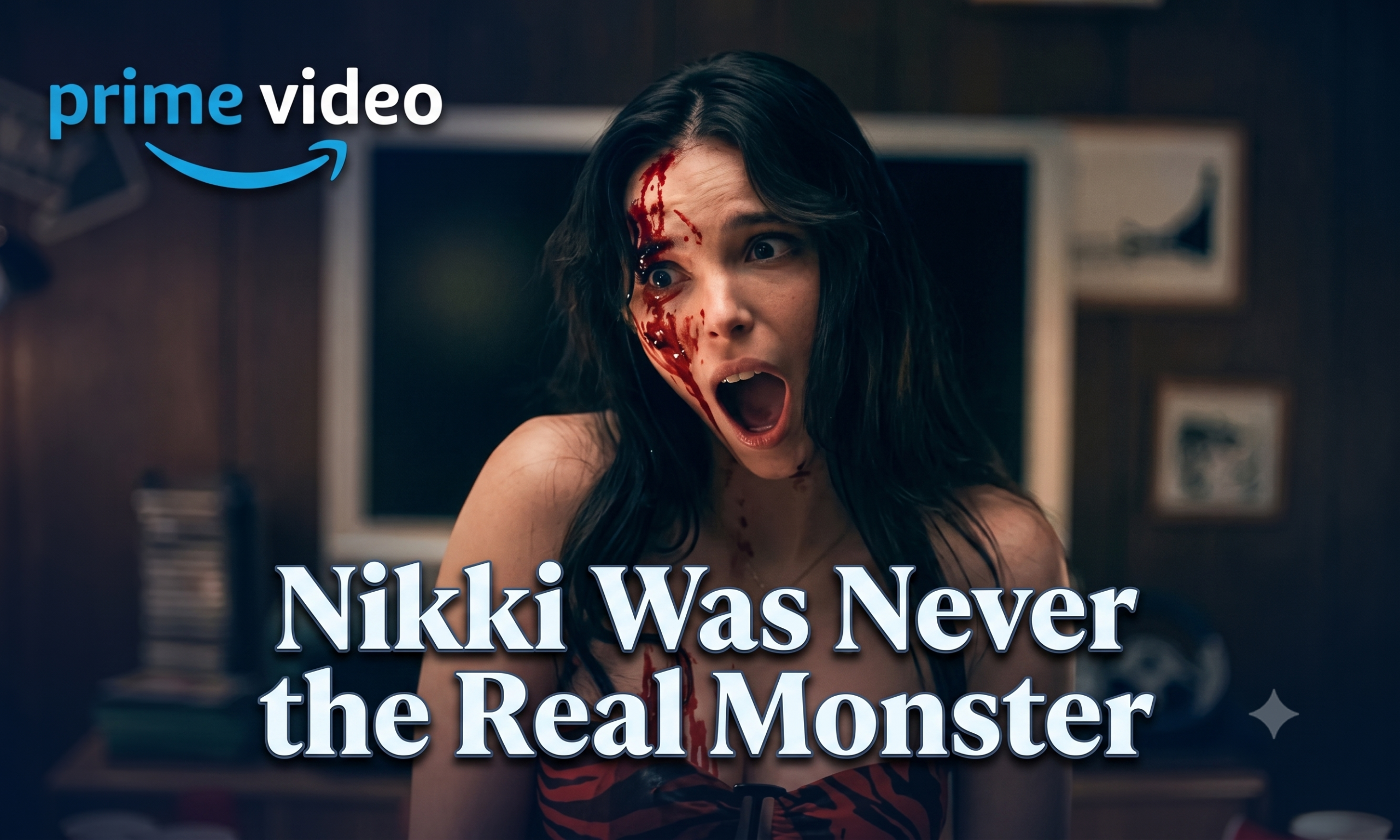
The more I think about Curry Barker’s Obsession, the less I see it as a simple horror movie about a woman becoming dangerously attached to a man.
To me, the real discussion is much more uncomfortable.
Is Nikki actually the monster, or is Bear the person who creates the horror in the first place?
At first, the setup feels familiar. Bear is lonely, awkward and unable to tell his childhood friend Nikki how he feels. Then he gets access to the One Wish Willow and wishes that Nikki would love him more than anyone else in the world.
The wish works.
The problem is that it works too well.
Nikki’s affection quickly becomes possessive, unstable and violent. From that point, the film starts looking like a supernatural stalker story. Bear is terrified, Nikki is increasingly dangerous and the wish becomes something he desperately wants to undo.
But I do not think the movie is really asking us to focus only on what Nikki becomes.
I think it is asking us to look at what Bear wanted.
He did not wish for courage.
He did not wish for the confidence to tell her how he felt.
He did not even wish for a chance with her.
He wished for her love.
That distinction matters because Bear removes the most important part of any relationship: choice.
He does not want Nikki to freely choose him. He wants certainty. He wants her feelings without having to risk rejection. He wants the reward of love without facing the possibility that she may simply not feel the same way.
That is where I think the real horror begins.
It does not begin when Nikki becomes violent.
It begins when Bear decides that changing her is easier than accepting her autonomy.
This is why I find the “nice guy” interpretation of the movie so interesting.
Bear does not look like a traditional villain. He is not aggressive, intimidating or openly controlling. He is quiet, insecure and emotionally vulnerable. He probably thinks of himself as a good person who has simply been unlucky in love.
That makes him easy to sympathize with.
Most people understand loneliness. Most people understand the fear of rejection. Most people have imagined what it would feel like if the person they wanted suddenly wanted them back.
The film takes that romantic fantasy and exposes the ugliness underneath it.
What does it actually mean to want someone to love you if their consent is removed from the process?
I think Bear’s wish reveals a form of entitlement that he does not fully recognize in himself. He believes his feelings are sincere, so on some level, he believes they deserve to be returned.
He may not think he is controlling Nikki, but the wish gives him the ultimate form of control. He rewrites her emotions while still seeing himself as harmless.
That is what makes the character disturbing.
He is not a monster because he planned the violence that follows. He is a monster because he values the outcome of being loved more than the reality of whether that love is genuine.
Nikki’s role becomes even more tragic when I look at the story this way.
Yes, she becomes the immediate threat. She is obsessive, frightening and increasingly destructive. The movie wants us to fear what she might do next.
But is that really Nikki?
Her obsession is not a natural expression of her personality. It is something imposed on her. The person pursuing Bear is the result of his wish, not the woman she originally was.
That means she is both the monster and the victim.
She is the visible danger in the story, but she is also trapped inside a version of herself that Bear created.
This is where the movie becomes morally complicated.
The audience spends much of the story experiencing events from Bear’s perspective. We feel his panic. We watch him suffer. We understand that he did not expect the situation to become so extreme.
That makes it tempting to see him as someone who made a foolish mistake.
I understand that interpretation, but I do not think it fully excuses him.
Bear may not understand the Willow’s exact power, and he clearly does not expect Nikki to become violent. But he understands the result he wants.
He wants her love without her decision.
He may not intend the consequences, but the original desire is still deeply selfish.
The curse does not invent Bear’s flaw.
It exposes it.
That is why I think the strongest reading of Obsession is not that love can become dangerous when it becomes too intense.
It is that forced love is already a form of violence, even before anyone gets physically hurt.
The supernatural element simply makes that violence visible.
The movie also taps into a much larger conversation about how romantic obsession is often framed in popular culture.
Films regularly present persistence as devotion. A character refuses to accept rejection, keeps pursuing someone and is eventually rewarded because the story treats their feelings as proof that the relationship is meant to happen.
Obsession takes that fantasy and pushes it to its logical extreme.
Bear gets exactly what he thinks he wants, and the result is horrifying.
The love is meaningless because it is not chosen.
The more Nikki gives him, the more obvious it becomes that none of it is real.
I also think the film is clever in how it manipulates sympathy.
Bear is emotionally understandable. That does not make him morally innocent.
The movie seems to know that audiences are more likely to forgive control when it comes from someone who appears vulnerable. If Bear were cruel or openly manipulative, the moral argument would be obvious.
Instead, he is awkward and lonely.
That makes the story more effective because it forces us to confront the idea that harmful entitlement does not always look threatening.
Sometimes it looks shy.
Sometimes it looks romantic.
Sometimes it looks like someone convincing himself that his pain matters more than another person’s freedom.
There is also a larger industry story surrounding the film.
Curry Barker came from low-budget online filmmaking, and Obsession appears to have transformed him into one of the most closely watched young horror directors. I find that part of the story almost as interesting as the film itself.
He did not rely on massive production scale. He relied on a simple concept, a strong psychological hook and a disturbing moral question.
That is often where horror works best.
The genre does not always need huge budgets or elaborate mythology. Sometimes it only needs to take an ordinary human desire and reveal how dangerous it becomes when pushed far enough.
For me, that is exactly what Obsession does.
It starts with a fantasy that sounds romantic.
What if the person you loved suddenly loved you back?
Then it asks the question most romantic stories avoid.
What if that love only exists because you took away their ability to say no?
That is why I do not see Nikki as the true source of the horror.
Nikki’s obsession is the consequence.
Bear’s entitlement is the cause.
The most disturbing part of the movie is not that Nikki loves him too much.
It is that Bear never believed her love needed to be real.