Xbox Layoffs Have Fallout 76 Players Nervous
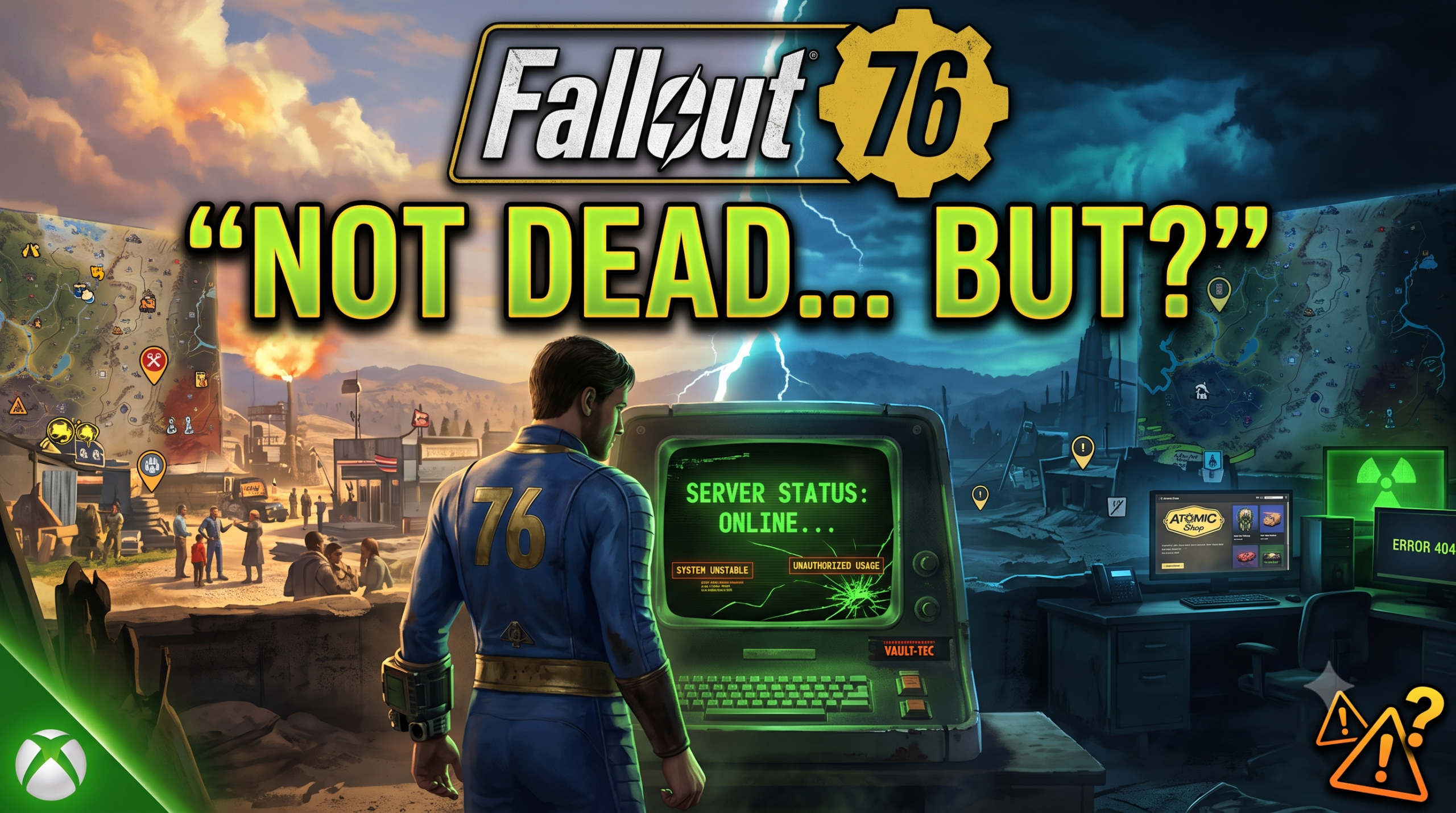
Fallout 76 has survived almost everything.
A disastrous launch. Years of technical problems. Endless jokes about bugs, broken promises and canvas bags. Yet somehow, Bethesda kept rebuilding it until Fallout 76 became one of the strangest redemption stories in modern gaming.
Now players are worried that the game may be entering a very different phase.
The latest concern is not about weapon balancing, seasonal rewards or Atomic Shop prices. It is about whether Fallout 76 still has enough developers behind it to keep growing.
Recent layoffs across Microsoft and Xbox reportedly affected several people connected to the Fallout 76 team, including developers who worked on quests and long-term content.
That has created an uncomfortable question:
Can Bethesda continue supporting Fallout 76 at the same level after losing experienced members of the team?
This matters because Fallout 76 is not a traditional single-player game that can simply remain finished.
It needs constant attention.
Every season requires new rewards, events, challenges and balance changes. Larger updates need writers, quest designers, artists, programmers and world builders. Even keeping the servers stable and fixing bugs requires a dedicated team.
Fallout 76 only recovered because Bethesda kept investing in it.
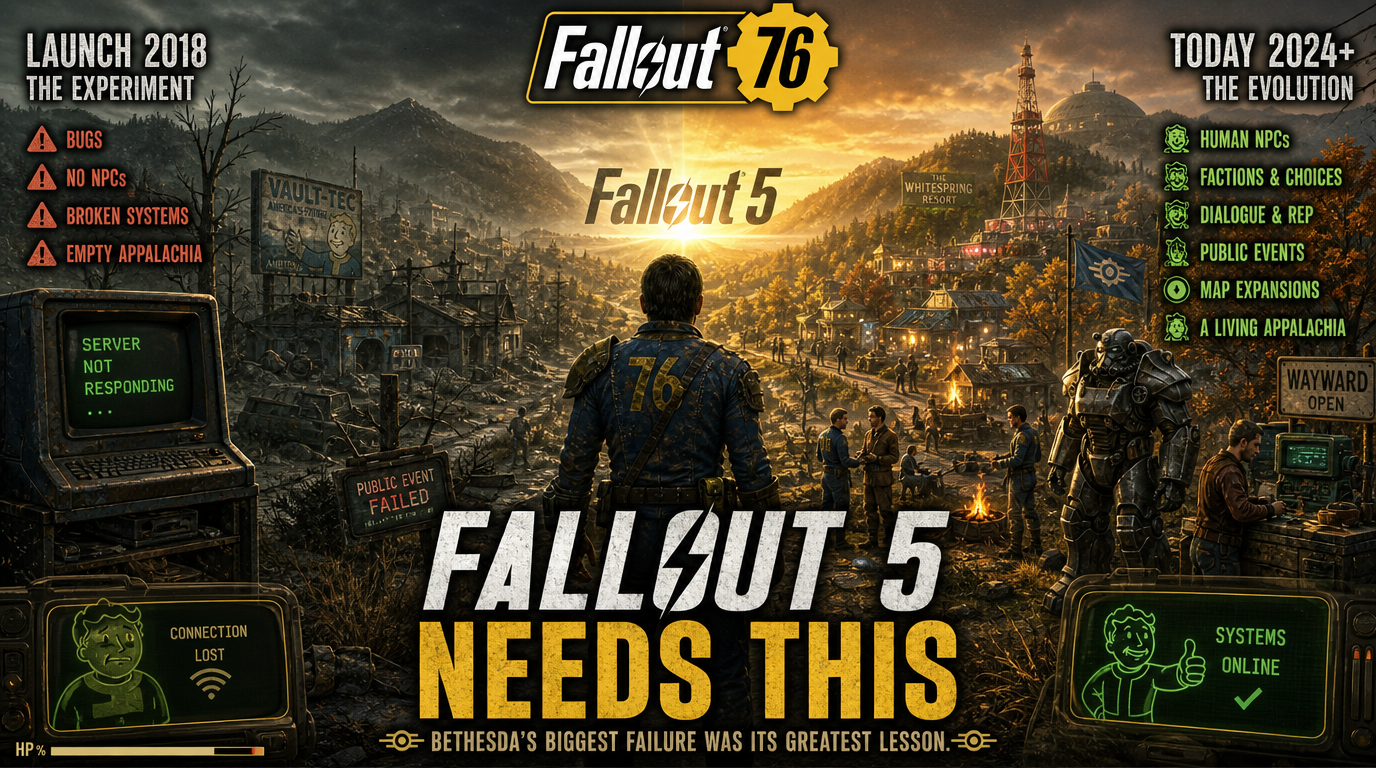
The game added human NPCs, factions, expeditions, public events, new areas and major systems that completely changed the experience. Bethesda did not fix Fallout 76 with one patch. It took years of continuous development.
That is why the layoffs have made players nervous.
The game recently received the Infestations update, which introduces hostile groups that can occupy existing locations around Appalachia. Players clear them out, fight powerful enemies and earn high-level legendary rewards.
On paper, that sounds like a solid live-service feature.
But some players are looking at it differently.
They are asking whether Infestations represents the future of Fallout 76: smaller systems placed inside the existing map instead of large expansions with new regions and substantial story content.
Dynamic events are easier and cheaper to produce than entirely new areas filled with characters, quests and environmental storytelling.
That does not automatically make them bad.
The problem is what happens if this becomes the main structure of every future update.
Fallout 76 could technically remain active for years while receiving less meaningful content each season.
The servers would stay online. The Atomic Shop would continue updating. Seasonal scoreboards would keep rotating.
But the game itself might stop feeling like an expanding Fallout world.
This is how many live-service games begin to decline.
They rarely disappear overnight. Instead, updates become smaller. Old locations are reused more often. Narrative expansions arrive less frequently. Seasonal grinds replace substantial new experiences.
The game is still alive, but the ambition slowly disappears.
The timing also makes the situation more frustrating.
Fallout is arguably more valuable now than it has been in years. The television series brought a massive new audience into the franchise, and interest in older Fallout games increased again.
Microsoft clearly understands that Fallout is important.
There are reports and rumors about future Fallout projects, and the company appears interested in reducing the long gap before the next major release.
But that creates an obvious contradiction.
Fallout 76 is currently the only active Fallout game receiving new content, yet the team behind it is reportedly losing experienced developers.
Players are now wondering whether resources are being redirected toward the next Fallout project.
From a business perspective, that would make sense.
From the perspective of Fallout 76 players, it feels like the game that kept the franchise alive between major releases could be slowly pushed aside.
There is still reason for optimism.
Bethesda has not announced the end of development. Updates are still being tested. New features remain in production. A native current-generation console version is also expected to improve performance and visual quality.
That does not look like a game preparing for immediate shutdown.
The real danger is not closure.
It is maintenance mode.
Fallout 76 could continue receiving enough content to keep players logging in, but not enough to feel like the world is genuinely evolving.
Future updates could become more focused on repeatable events, seasonal rewards and monetized cosmetics while major quest expansions become increasingly rare.
That would be especially disappointing because Fallout 76 has already proven what it can become when Bethesda gives the team enough time and resources.
The game went from an empty, hostile wasteland into a surprisingly rich multiplayer Fallout experience.
It earned back a large amount of trust.
Now the community is worried that the people responsible for that recovery are being removed just as the game has finally found its identity.
So the real question is not whether Fallout 76 will shut down tomorrow.
It probably will not.
The better question is whether Bethesda still wants Fallout 76 to grow, or whether Microsoft now sees it as a mature product that should generate steady revenue with a smaller budget.
How does Microsoft likely to treat the game after the acquisition?
Microsoft is likely to treat Fallout 76 as a valuable but increasingly cost-controlled franchise platform.
The acquisition itself is no longer new: Microsoft completed its purchase of Bethesda’s parent company, ZeniMax Media, in March 2021. Since then, Fallout 76 has remained multiplatform, received continuous updates and been heavily integrated into Game Pass rather than being converted into an Xbox-exclusive product. Microsoft’s current behavior suggests it values the game less as a prestige release and more as a dependable service that keeps Fallout active between major single-player games.
1. It will probably remain online for years
Microsoft has little reason to shut Fallout 76 down while it still supports Game Pass engagement, Fallout 1st subscriptions and Atomic Shop spending.
The game also serves an important strategic purpose: it is currently the only Fallout title producing regular new content. Xbox continued promoting its free Infestations update during the June 2026 Xbox Games Showcase, while Bethesda launched Season 25 shortly afterward. That indicates Fallout 76 is still part of the active Xbox portfolio, not an abandoned legacy product.
A shutdown would also create terrible optics while Microsoft is publicly prioritizing Fallout as one of Xbox’s central franchises.
2. Microsoft will demand greater efficiency
This is the dangerous part.
Microsoft’s latest Xbox restructuring included major workforce reductions across Bethesda and ZeniMax. Reporting indicates that Fallout 76 lost developers, including experienced quest and content staff. One affected developer publicly questioned how the remaining team could continue delivering updates without outside assistance.
That suggests Microsoft’s likely objective is not to kill Fallout 76 immediately. It is to make the game operate with fewer internal employees.
The probable model is:
- A smaller permanent Bethesda team
- More support from external studios
- Longer gaps between substantial story expansions
- Greater reuse of existing regions and assets
- More repeatable events and seasonal systems
- Continued monetization through Fallout 1st and the Atomic Shop
Fallout 76 can remain profitable under that structure, but it may become less ambitious.
3. Game Pass will remain central
Fallout 76 works well for Microsoft because it gives Game Pass subscribers a persistent game that can retain them for months rather than a campaign they finish once.
The game is available across Xbox, PC and cloud through Game Pass, and Microsoft continues using free-play periods and updates to bring new players into its ecosystem.
Microsoft does not necessarily need every player to buy Fallout 76 directly. It benefits when players:
- Maintain a Game Pass subscription
- Purchase Fallout 1st
- Buy cosmetic items or CAMP content
- Return during television-series or franchise marketing cycles
- Stay inside the Xbox account ecosystem
This makes the game useful even if it is no longer generating blockbuster sales.
4. It probably will not become Xbox-exclusive
Microsoft has already inherited Fallout 76 as a multiplatform community. Removing PlayStation support would shrink the player base and damage recurring revenue without providing a meaningful strategic benefit.
The more likely approach is continued platform parity, with Xbox and Game Pass receiving the strongest marketing position. Future technical upgrades or promotions may emphasize Xbox, but PlayStation support should continue as long as the population remains commercially worthwhile.
Fallout 76 is fundamentally more useful to Microsoft as a broad revenue-generating service than as an exclusivity weapon.
5. Content will likely become more systemic and less handcrafted
The Infestations update may reveal the direction Microsoft prefers.
Instead of creating a completely new region with a lengthy campaign, Infestations repurposes existing locations by dynamically filling them with enemies and rewards. Bethesda described it as a way to rediscover areas across Appalachia.
This type of content has several business advantages:
- It extends playtime using existing environments.
- It requires fewer new characters and cinematic sequences.
- It generates repeatable engagement.
- It integrates easily with seasonal challenges.
- It can be adjusted without building a full expansion.
That does not make the system inherently poor. But under a reduced development team, systemic content will probably replace some of the handcrafted storytelling that players associate with Fallout.
6. Fallout 76 may become a bridge to the next Fallout
Microsoft appears to be refocusing Xbox around its most commercially powerful properties, including Fallout and The Elder Scrolls. Recent reporting also points toward other Fallout projects being developed elsewhere within the Xbox organization.
That makes Fallout 76 strategically useful as a bridge.
It can keep the franchise visible while Microsoft waits for:
- A new single-player Fallout
- Another television season
- Fallout remasters or rereleases
- A possible external Fallout project
- Bethesda’s eventual post–Elder Scrolls VI plans
Microsoft will probably coordinate Fallout 76 updates around those larger moments. A television season can bring new players into Fallout 76. A remaster can trigger themed events. A future game announcement can be supported by cross-promotional rewards.
The game becomes part of a larger Fallout marketing ecosystem.
Most likely outcome
Fallout 76 will not be abandoned soon, but it will probably be managed more aggressively as a mature live-service product.
Microsoft’s preferred version of Fallout 76 is likely:
A stable, moderately staffed Game Pass title that receives regular seasons, monetized cosmetics and occasional major updates without requiring the budget of a new Fallout game.
The optimistic outcome is that external support allows Bethesda to keep producing meaningful expansions despite the layoffs.
The pessimistic outcome is a gradual slide into maintenance mode: repetitive seasonal content, heavier monetization and fewer substantial questlines.
The clearest warning sign will not be server closure. It will be whether Bethesda announces another genuinely large region or narrative expansion. If future roadmaps contain mostly events, reward tracks and reused locations, Microsoft has already decided what Fallout 76 is supposed to become.