Will Trent Season 5 Must Live With Seth’s Death
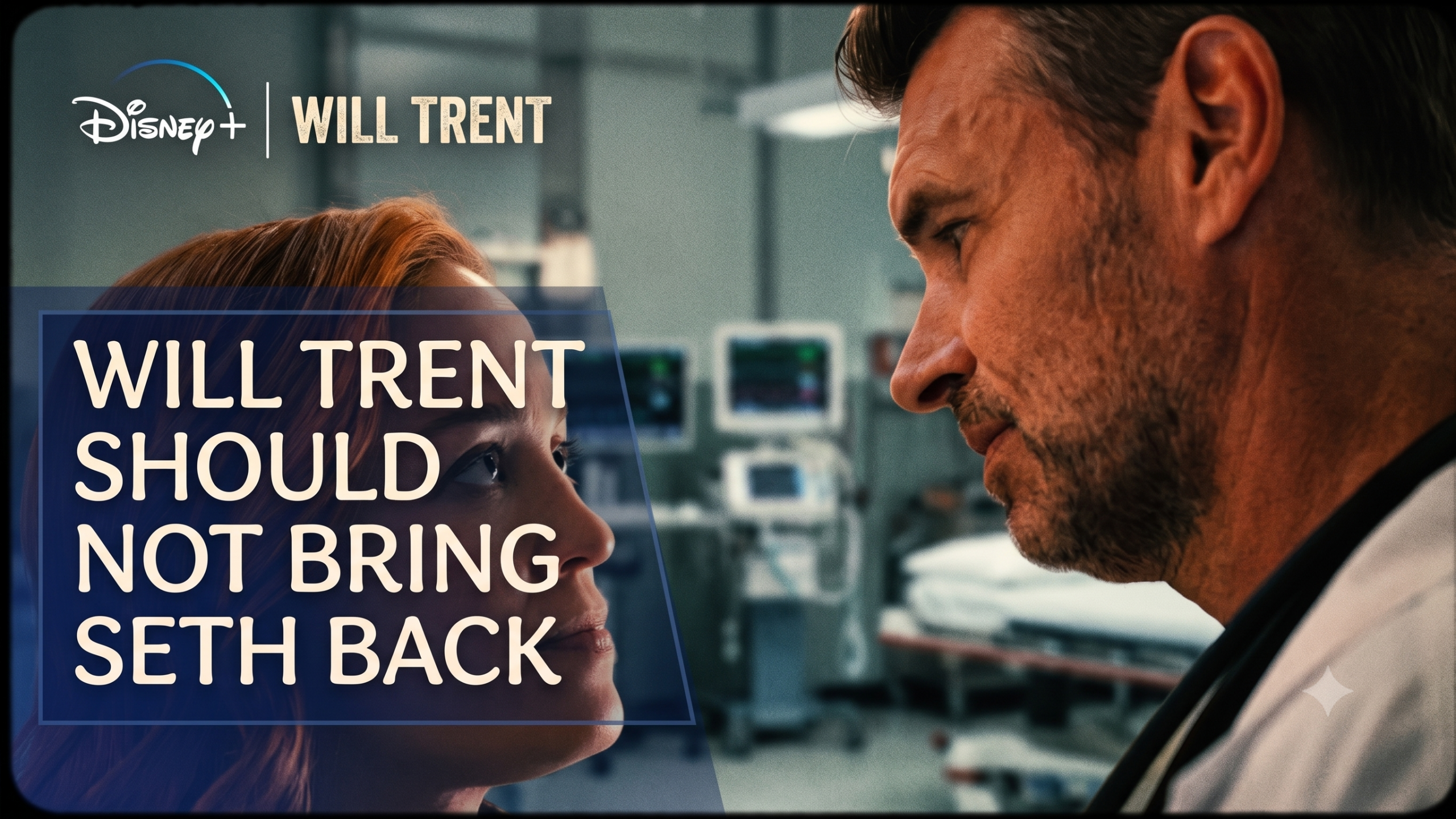
I understand why Will Trent viewers want Scott Foley back.
Seth was not simply a temporary romantic obstacle standing between Will and Angie. By the end of Season 4, he had become one of the few people in the series who represented emotional stability without becoming boring.
He loved Angie without trying to repair her.
He understood that she carried addiction, childhood trauma and a lifelong emotional attachment to Will. He did not pretend those complications disappeared because they got married. He accepted that loving Angie meant living beside parts of her history that he could never fully possess.
That made him unusually mature for a character trapped inside a network drama’s central romantic triangle.
Then the finale killed him.
Seth and a pregnant Angie were driving to the hospital when another vehicle struck them. He initially appeared functional, helped people at the scene and reached the hospital before internal injuries killed him. At nearly the same moment, Angie gave birth to their daughter, Edie. The episode then positioned Will as the person who would help Angie raise the child, introducing himself as “Uncle Will” and promising to remain present.
The emotional construction is obvious.
One family disappears so another can form.
Seth dies. Angie becomes available again—not romantically yet, but narratively. Will gains the family role he has always desired. The baby connects them permanently. Their old bond returns to the centre of the series without requiring Angie to choose Will over a loving husband.
That is precisely why Seth’s death felt manipulative to me.
The writers wanted the emotional possibilities created by removing Seth, but they did not want Angie to become morally responsible for that removal.
Had Angie consciously left a healthy marriage because she still loved Will, the show would have been forced to explore an ugly adult decision. She would have hurt a good man. Will would have needed to question whether their traumatic attachment was actually strong enough to justify destroying the stable life Angie had built.
Instead, fate made the decision for everyone.
A random collision killed Seth.
Angie remained loyal.
Will remained respectful.
Their future became possible without either character having to do anything unforgivable.
That is clean television writing, but it is not honest emotional writing.
The series spent years showing me that Will and Angie’s relationship is built from love, familiarity, shared survival and unresolved damage. Their connection is real, but reality does not automatically make a relationship healthy. Sometimes two people understand each other better than anyone else and still remain incapable of building a stable life together.
Seth complicated that mythology because he proved Angie could experience something different.
He offered patience without chaos.
He provided commitment without requiring her to relive the foster-care bond that permanently connected her to Will. Their relationship was not as dramatically intoxicating, but that was its value. Angie was learning that peace could feel quieter than the relationships her nervous system had previously interpreted as love.
Killing Seth risks converting that growth into a temporary diversion.
The message becomes uncomfortable: Angie can attempt stability, marry someone dependable and build a new family, but the story will eventually eliminate that person because Will remains her narrative destiny.
That does not make Will and Angie feel inevitable.
It makes every alternative relationship feel disposable.
This is why some viewers are not merely grieving Seth. They are questioning the machinery behind his death. Several reactions argued that the finale relied on an obvious procedural cliché and killed Seth shortly after another major character death, making the tragedy feel less like an organic development and more like a forced “reset” for Season 5.
The showrunners have described these losses as a way to change established dynamics. Amanda’s absence removes Will’s institutional protector, while Seth’s death creates a new family structure around Angie, Edie and Will. Season 5 is expected to introduce another GBI deputy director and continue exploring these altered relationships when the show returns in 2027.
I understand the structural reasoning.
Television shows need disruption. Characters cannot remain emotionally comfortable forever. Amanda and Seth both protected the leads in different ways: Amanda protected Will professionally and maternally, while Seth gave Angie emotional security. Removing both forces Will and Angie into unfamiliar responsibilities.
But disruption is not automatically depth.
Sometimes writers kill a stabilizing character because instability generates more episodes.
The current campaign to bring Scott Foley back exposes how little closure viewers received. Fans have suggested dreams, hallucinations and even a fake-death reveal. The fact that people are seriously entertaining those options says less about the plausibility of Seth’s survival than about the sense that his story was prematurely interrupted.
I still do not think the show should resurrect him.
A fake-death twist would be absurd. Seth died in a hospital after recognized internal injuries. Reversing that would reduce one of the finale’s most consequential scenes to a temporary trick.
Bringing him back through Angie’s hallucinations would be more credible, but it carries another risk. Seth could become a therapeutic device whose only purpose is to give Angie permission to move forward with Will.
I can already imagine the scene.
Angie feels guilty about developing feelings for Will. She sees Seth in a dream. He tells her that he wants her to be happy. She cries. He smiles. The show absolves her, blesses the central romance and removes Seth again.
That would exploit him twice.
First, he dies to make the relationship possible.
Then his memory returns to approve it.
Seth deserves better than becoming the dead husband who politely endorses his replacement.
The stronger choice is to leave him dead and make his absence difficult.
Angie should not move smoothly from widowhood into a reconstructed family with Will. She should be furious, disoriented and emotionally contradictory. She should resent Will’s help while depending upon it. She should love Edie while associating her birth with the worst day of her life.
Most importantly, Will should not treat Seth’s death as the moment that finally gives him access to the family he wanted.
Will’s instinct to care for Angie and Edie is sincere. His promise to be present is one of the finale’s gentlest moments. But underneath that tenderness is a dangerous possibility: Will could unconsciously step into Seth’s place before Angie has even understood what she lost.
That tension is far more interesting than a rapid romantic reunion.
Will must learn that serving Angie does not mean possessing a permanent role beside her. He can love Edie, support Angie and become part of their family without expecting the relationship to resolve into the life he once imagined.
Angie must also be allowed to grieve Seth as more than “the good man she married before returning to her real love.”
He was her real life.
He was her husband.
He was the father of her child.
Any future relationship with Will should carry the knowledge that it became possible through a loss neither of them would have chosen.
That does not make romance impossible. It makes romance morally complicated.
The worst outcome would be for Season 5 to treat Seth’s death as a tragic shortcut that delivers Will, Angie and Edie into a ready-made family unit. That would confirm the suspicion that Seth existed primarily to develop Angie, father her child and disappear when the central pairing needed to resume.
The better outcome is for his death to haunt the structure of the show.
Not literally.
The writers do not need Scott Foley appearing beside Angie’s hospital bed as a ghost. They need Seth’s influence to remain visible in how Angie raises Edie, how she responds to Will and how she understands the difference between emotional familiarity and genuine stability.
Seth showed Angie that love did not always need to arrive through crisis.
His death should not teach her the opposite lesson.
I want Scott Foley back because he was good in the role. I want Seth back because his relationship with Angie challenged the show’s assumptions about romantic destiny.
But bringing him back now would not repair the writing.
The series must live with what it did.
It killed the stable man to restore an unstable bond. Season 5 now has to prove that it understands the difference between tragedy and convenience.