Resident Evil Movie 2026 | Ending Explained
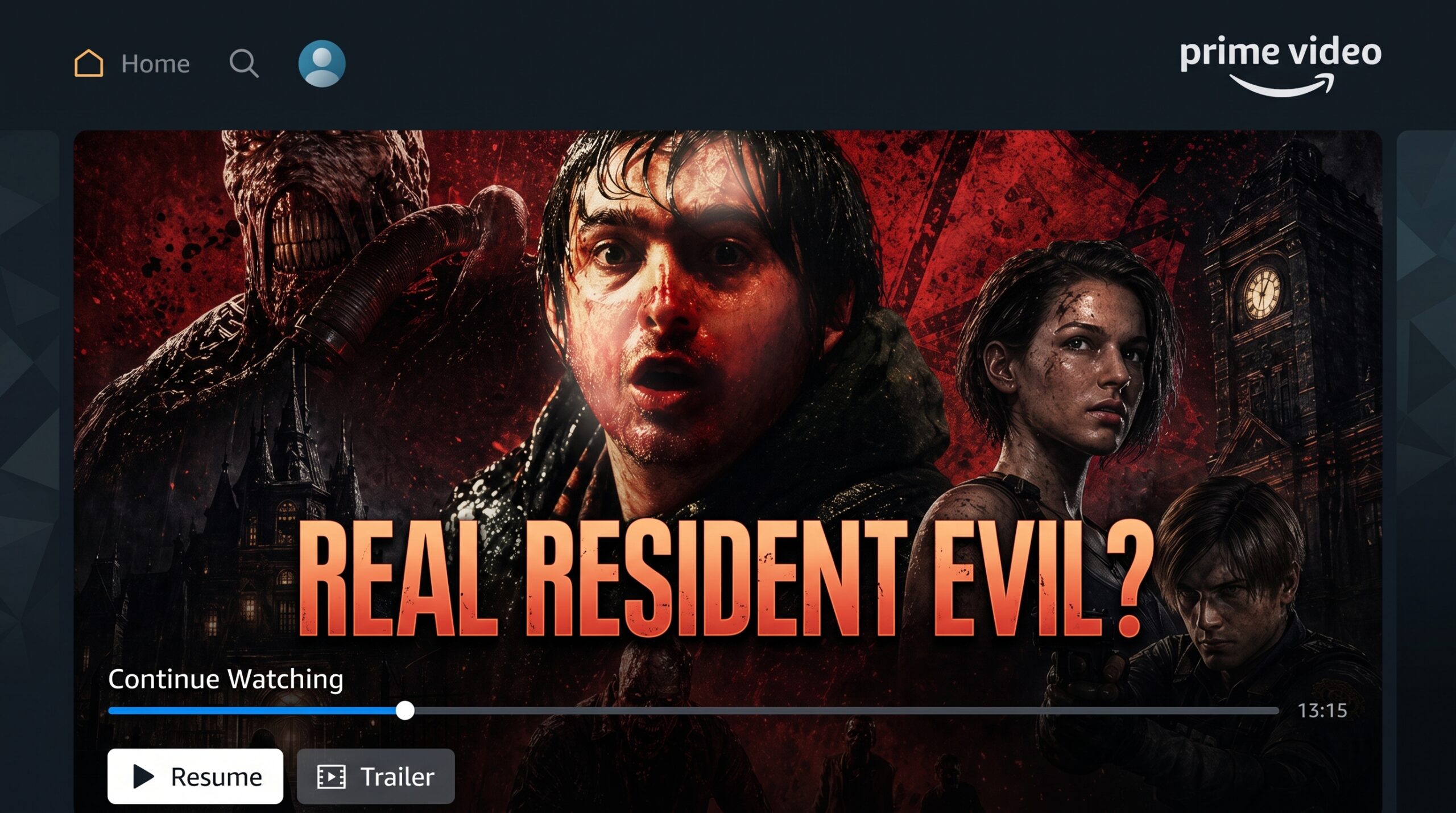
The hottest discussion around Resident Evil (2026) right now is not simply whether Zach Cregger made a good horror movie, but whether he actually understood Resident Evil better by refusing to make a direct adaptation of one of the games.
The film follows Austin Abrams’ Bryan, a medical courier trapped in Raccoon City during an outbreak, rather than using Leon, Claire, Jill or another established protagonist, and that decision has split the fanbase almost immediately after release. Some viewers are praising the movie for reproducing the actual rhythm of playing Resident Evil through environmental progression, escalating creature encounters, puzzle-like situations and a gradual shift from survival horror into full biological chaos, while others argue that the heavy comedy, unfamiliar characters and controversial ending push it too far away from the tone they associate with the games.
What fascinates me about Zach Cregger’s Resident Evil is that I think the biggest argument surrounding the movie completely exposes how difficult adapting this franchise actually is, because fans have spent years asking Hollywood to understand the games, yet Cregger has apparently tried to do exactly that without simply recreating Leon walking through the RPD or Claire searching for Sherry scene by scene.
Instead, Bryan’s night in Raccoon City is structured almost like somebody dropped a new playable character into an unseen campaign running alongside the games, where an ordinary delivery slowly turns into exploration, resource-driven survival, increasingly grotesque encounters and eventually the kind of biological insanity that Resident Evil almost always escalates toward, and I actually find that approach much more interesting than another checklist adaptation filled with recognizable costumes and locations.
Cregger has said that he was a fan of the games despite never watching the previous Resident Evil films, and you can see why people are responding to the movie as something built around the sensation of playing the series rather than merely reproducing its mythology.
What makes the conversation messy, however, is the comedy, because the franchise has always contained absurdity, camp and ridiculous characters, but there is a difference between Resident Evil naturally becoming ridiculous and a movie constantly reminding you that it knows the situation is ridiculous, and judging by the reaction online, that distinction is where Cregger is losing part of the audience.
Bryan spends most of the film believing he is carrying an urgent medical package into Raccoon City, but late in the story Umbrella personnel reveal that the contents are actually a critical component needed by scientists at the hospital to synthesize an antidote to the outbreak.
That reframes everything he has survived: the farmhouse, the infected streets, the hospital and the increasingly grotesque creatures were all obstacles between humanity and something that might actually contain the disaster.
The problem is that Bryan has already been infected. Earlier, he is bitten by the mutated girl, but instead of immediately turning like an ordinary infected person, his infection progresses unusually slowly and eventually becomes something far more extreme.
By the time he finally reaches the laboratory, the scientists are actually able to use what he delivered and produce the cure, meaning Bryan technically completes his mission. For a moment, the movie creates the possibility that everything he endured mattered.
Then Cregger deliberately destroys that possibility. Bryan begins violently mutating before the cure can effectively save him. He becomes a much larger biological weapon-like creature rather than a conventional zombie, kills the scientists around him, and in the chaos the finished antidote is lost, with the syringe ultimately falling from the high-rise laboratory.
The film therefore ends with a brutal irony: Bryan successfully carries the ingredient across Raccoon City, reaches the exact people who need it and enables them to create the cure, only for his own infection to destroy the people and the solution he spent the entire movie trying to deliver.
The final image makes this even bleaker. Bryan’s mutated form remains alive as National Guard helicopters arrive, effectively turning the protagonist we have followed for the entire film into the kind of boss creature that another Resident Evil protagonist would normally encounter.
There is no heroic sacrifice and no last-second reversal; Bryan essentially crosses the line from player character to monster. Several viewers have specifically picked up on that structure, describing the ending as if Bryan has become the final boss of somebody else’s campaign.
There is also an interesting possible explanation for why Bryan mutates so dramatically. The film never definitively states that he possesses some special genetic trait, but fans have noted that he is exposed throughout the night to an absurd amount of infected biological material: bites, blood, mutated creatures and other contaminants.
One current fan theory is that this cumulative exposure causes his infection to develop into a far more unstable mutation than the ordinary infected population. That remains interpretation rather than confirmed canon, but it fits the series’ long-running idea that different viral exposures can produce radically different B.O.W. mutations.
Thematically, though, Bryan’s fate is probably more important than the biological mechanics. At the beginning of the movie, he is already struggling with the idea that his girlfriend Michelle is pregnant and that his life is about to change.
Throughout the story he literally carries a container associated with preserving life, while repeatedly being confronted with mutated forms of birth, bodies and reproduction. One interpretation gaining traction among viewers is that the entire night externalizes Bryan’s fear of responsibility: he spends the movie desperately protecting something that could save other people while simultaneously becoming terrified of what is happening to his own body and future.
That makes his transformation especially cruel because Bryan never receives the conventional character payoff where survival turns him into a hero. He survives almost everything, completes his objective and still loses himself. Vulture’s reading of the ending similarly emphasizes that Cregger refuses to reward survival with heroism or redemption, making Bryan’s journey intentionally futile rather than constructing the usual sacrificial victory.
There is another detail I think makes the ending particularly effective: once Bryan fully mutates, the perspective we have been following essentially disappears with him.
Fans have pointed to the drastic musical change during his final transformation, with overlapping voices and sounds accompanying the amalgamation, interpreting it as the subjective experience of Bryan’s identity being absorbed into the creature. That interpretation is not officially confirmed, but it fits the movie’s decision to keep us psychologically attached to Bryan almost until the moment Bryan himself effectively stops existing.
So the ending is less “Bryan fails to deliver the cure” and more cruel than that: he succeeds, the cure exists, and then he personally becomes the reason that success collapses. It turns the entire film into what feels like the origin story of a Resident Evil boss rather than the survival story we thought we were watching.