Verity 2026 Ending Explained
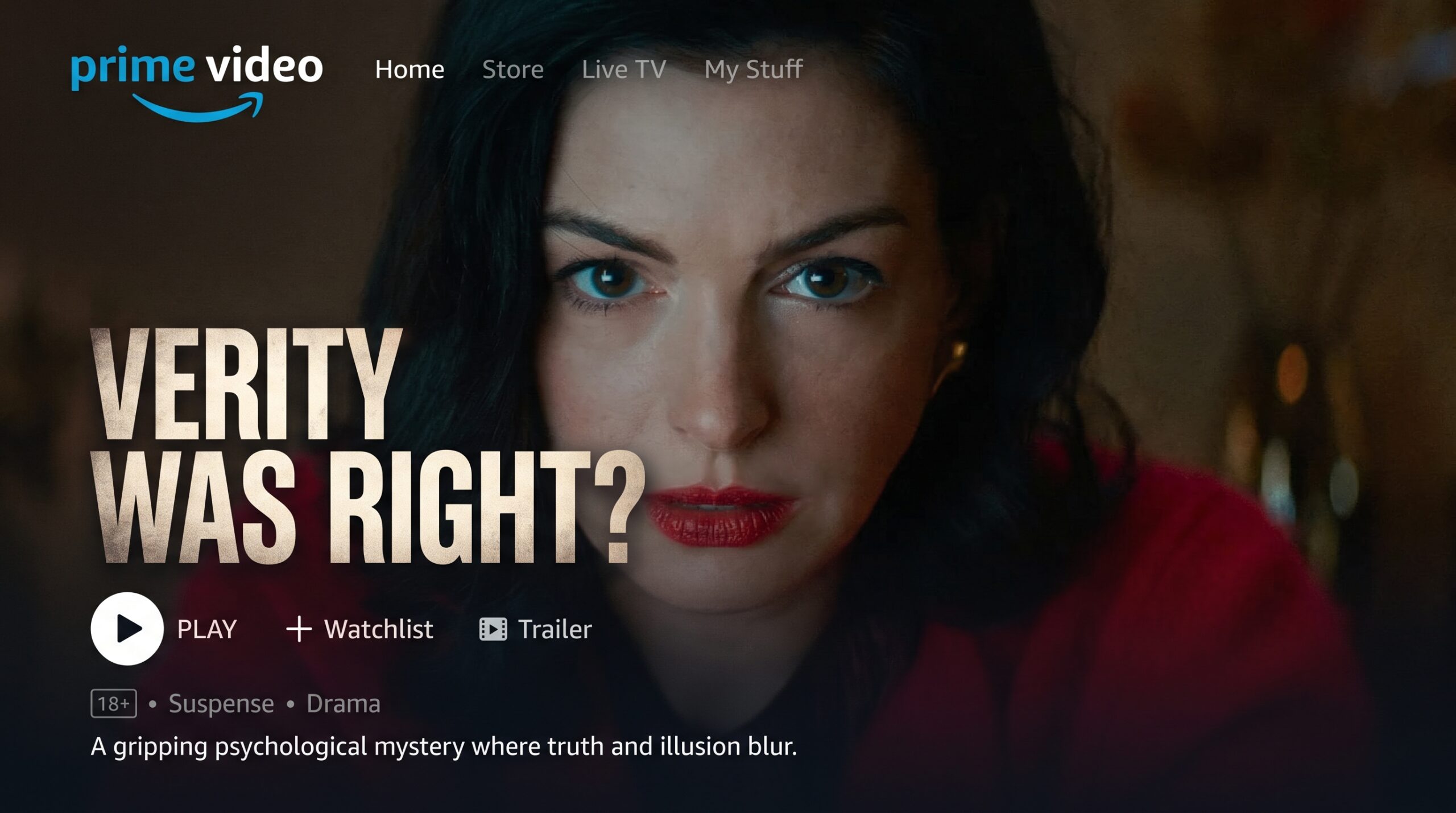
What I find fascinating about Verity is that the movie somehow managed to revive an argument Colleen Hoover readers have been having for years, because by the time Lowen discovers Verity’s letter, I genuinely think the entire story becomes much less about whether Verity was evil and much more about how easily we accepted Lowen’s interpretation of her in the first place.
For almost the entire movie we are conditioned to believe the manuscript because it is horrifyingly specific, Verity appears to be secretly moving around the house despite supposedly being incapacitated, and Lowen gradually convinces both herself and Jeremy that they are living with a woman who hated her children and deliberately caused Harper’s death, but then Verity’s hidden letter completely rewrites that narrative by claiming that the manuscript was merely an exercise in “antagonistic journaling,” that she actually loved her children, and, most disturbingly, that Jeremy had already discovered the manuscript, believed every word of it and deliberately crashed her car in an attempt to kill her.
That changes Jeremy for me more than it changes Verity, because regardless of which document is truthful, we eventually watch this man murder his wife before she can properly explain herself, while Lowen not only allows it to happen but actively helps him disguise the killing as an accident, which means the two characters we have been treating as our emotional anchors are suddenly capable of exactly the kind of darkness they believed existed only in Verity.
What makes the movie version particularly interesting is that it seems to push me slightly more toward Team Letter than the book ever did, because several details readers traditionally use as evidence for Team Manuscript were either simplified or removed during the adaptation, and even current fan discussions are pointing out that the film feels noticeably more sympathetic toward Verity as a result. Anne Hathaway herself has said she believes the letter, arguing that the manuscript feels deliberately performative, while Dakota Johnson similarly distrusts Lowen, and even Colleen Hoover has admitted that revisiting the story changed her own interpretation, which tells me that the ambiguity is not really a puzzle with one hidden canonical solution anymore.
I think the real trick of Verity is that both documents are written by an author who understands manipulation, while everything we experience outside those documents comes through Lowen, another author who is falling in love with Verity’s husband and gradually replacing her professionally, romantically and eventually even maternally, so there is almost nobody in this story whose version of reality deserves unconditional trust.
That is also why the final return to Verity’s Hot Ones interview works so well for me, because her warning about certainty suddenly becomes the entire point of the movie: Jeremy becomes certain the manuscript is true, Lowen becomes certain Verity is the monster, and that certainty ultimately gives them enough moral permission to kill her before either of them actually knows the truth.
The ending is built around one question: was Verity’s manuscript a confession, or was it fiction? The movie refuses to answer, and that uncertainty changes how you interpret almost every major character.
By the climax, Lowen has become convinced that Verity is faking her incapacitated condition. She has seen enough movement from her, Crew appears to have communicated with his mother, and the manuscript So Be It seemingly gives Lowen the explanation for why Verity is dangerous. In that manuscript, Verity describes resenting her children because they took Jeremy’s attention away from her, attempting to suffocate Harper as a baby, and later deliberately tipping the canoe and allowing Harper to drown. Lowen eventually gives the manuscript to Jeremy, who reads it and concludes that his wife murdered their daughter. EW.com
Jeremy confronts Verity, and this finally forces her to reveal that she has actually recovered and has been pretending to remain incapacitated. That fact initially seems to prove Lowen right: Verity has been deceiving everyone. Jeremy then attacks her, but the crucial moment is actually Lowen’s reaction. She does not merely stand by while Jeremy kills Verity; she tells him that if he is going to do it, he needs to make the death look accidental so Crew does not lose both parents. Jeremy therefore suffocates Verity without leaving obvious marks, and he and Lowen carry her body to the lake and stage her death as though she recovered, wandered outside and drowned in the same place where Harper died.
At that point, the movie deliberately makes Lowen morally darker than she initially appeared. She has spent most of the film believing she is uncovering a murderer, but now she herself has become an accomplice to murder and helps construct a false narrative for the police. Director Michael Showalter has said this is effectively the moment when the audience loses the stable moral viewpoint it thought it had through Lowen.
Then comes the real twist.
Seven months later, Lowen is pregnant with Jeremy’s child, she has completed Verity’s book, and she, Jeremy and Crew are preparing to start a new life together. While clearing out the house, Lowen discovers several pages hidden beneath a loose floorboard: a letter Verity wrote to Jeremy after her car crash.
According to the letter, So Be It was never autobiographical at all. Verity claims her editor had suggested a technique called “antagonistic journaling,” where she would take real events from her life but deliberately rewrite her internal thoughts from the perspective of an evil version of herself. The purpose was supposedly to help her understand the villains she wrote in her novels. Under that explanation, the terrible things Lowen read were not admissions of guilt; they were deliberately monstrous fictionalizations of Verity’s real experiences and grief.
That would mean Verity did not murder Harper.
More importantly, the letter claims Jeremy had already discovered the manuscript long before Lowen ever arrived. He believed it was real, drugged Verity, placed her behind the wheel of her car and deliberately sent the vehicle toward the trees so that her death would resemble the suicide she had written about at the end of the manuscript. Verity survived, realized Jeremy had tried to murder her and concluded that revealing her recovery would put her in danger again. That is why, according to the letter, she pretended to remain neurologically incapacitated while secretly planning to escape with Crew.
This completely reverses the story. If Verity’s letter is truthful, Jeremy did not suddenly snap after Lowen gave him the manuscript. He had already tried to kill Verity once. His horrified reaction when Lowen later shows him the manuscript would therefore partly be an act because he already knew it existed. Verity’s strange behavior around the house would also stop looking like evidence that she was a dangerous murderer and start looking like the behavior of someone terrified that her husband would discover she had recovered.
Lowen now has a horrifying problem because she is pregnant with Jeremy’s child and has just discovered evidence suggesting that the man she loves may have attempted to murder his wife twice. Instead of showing Jeremy the letter, however, she hides it. The three of them leave the house together. Lowen admits in her narration that she no longer knows what to believe: the manuscript, Verity’s letter or Jeremy.
That decision is extremely important. Lowen ultimately chooses the life she has gained over finding out the truth. By the end she has effectively inherited Verity’s world: Verity’s husband, Verity’s surviving child, Verity’s successful book series and even Verity’s position inside the family. The movie repeatedly foreshadows this transformation, including Lowen wearing Verity’s clothing and becoming increasingly entangled with Jeremy. Showalter explicitly described the movie as partly about Lowen gradually becoming Verity.
Then the film gives Verity the final word.
After Lowen, Jeremy and Crew drive away, the movie returns to an earlier Hot Ones interview with Verity. Sean Evans asks which moral idea she most enjoyed corrupting in her novels, and Verity answers truth. She explains that she liked making audiences completely certain about something before introducing information that made that certainty look foolish.
That scene is effectively Verity speaking directly to us about the movie we have just watched. For almost the entire runtime, we were encouraged to become certain that Verity was the villain. Then the letter appears and destroys that certainty.
There are therefore two valid readings.
If the manuscript is true, Verity really murdered Harper, manipulated everyone around her, faked her condition after the crash and wrote the letter as one final attempt to rewrite reality in case someone discovered it. Under this interpretation, Jeremy and Lowen killed a murderer, although they still committed murder themselves rather than allowing the legal system to determine her guilt. Anne Hathaway noted that the manuscript is so heightened and theatrical that she personally finds this interpretation less convincing. EW.com
If the letter is true, however, Verity was largely innocent. Harper’s death was accidental, the manuscript was a writing exercise, Jeremy misinterpreted fiction as confession, attempted to murder his wife in the car crash, and eventually succeeded with Lowen’s help. In that version, the person Lowen believed was the victim—Jeremy—was actually one of the most dangerous people in the story.
The movie intentionally provides no objective flashback proving either version. Director Michael Showalter has said they considered several endings but deliberately chose one that preserved the uncertainty. Even Colleen Hoover has said that seeing the movie changed how she thinks about Verity and made her question interpretations she previously held.
The ending therefore is not really asking “Did Verity kill Harper?” Its deeper question is why did Lowen and Jeremy become willing to kill Verity before they could actually know?
That is why the final Hot Ones scene matters so much. Verity’s greatest trick may not have been convincing people that she was innocent or guilty; it was demonstrating how easily a compelling story can make people mistake certainty for truth.