Spider-Man: Brand New Day 2026 Movie Review
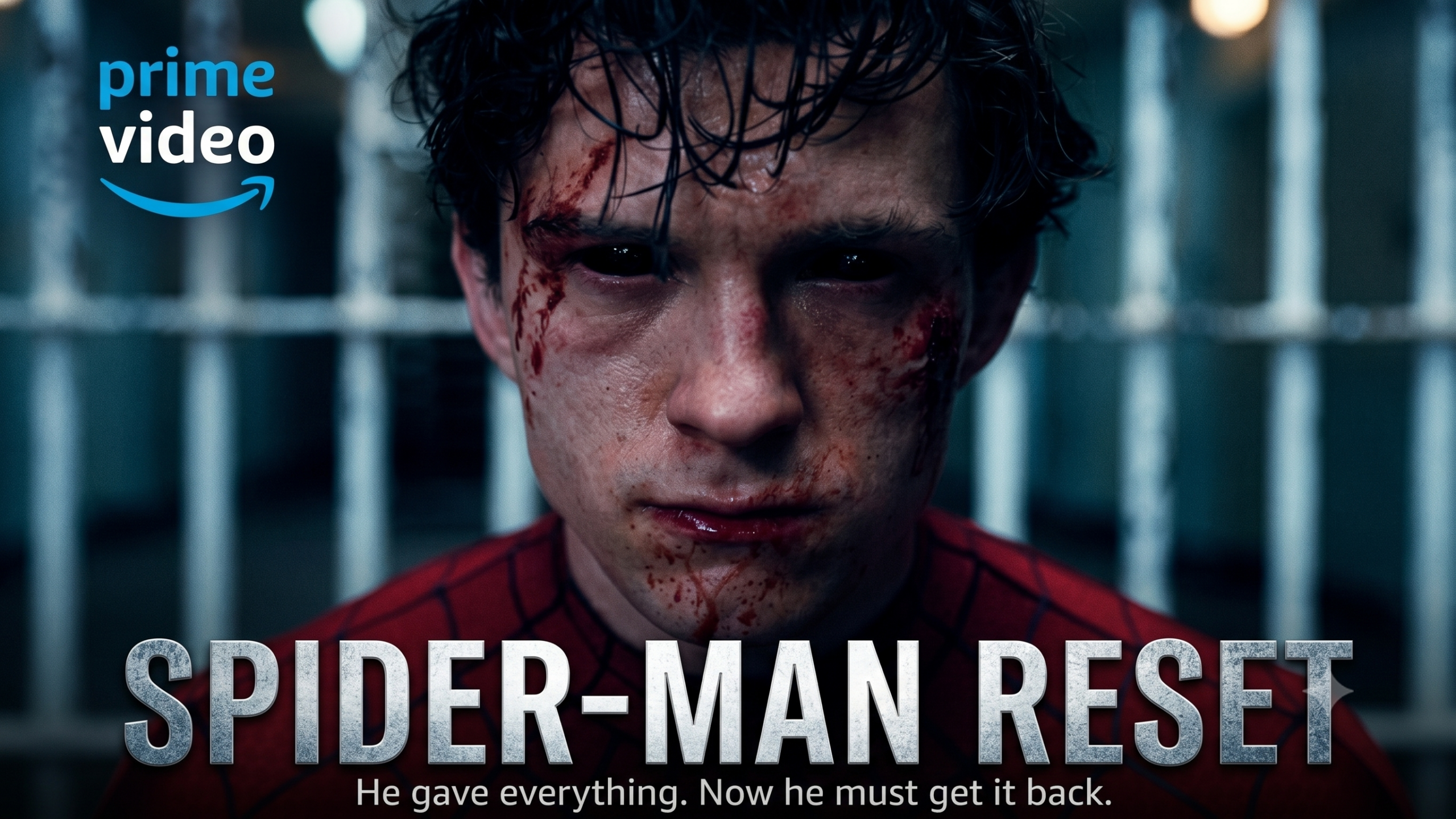
Spider-Man: Brand New Day Finally Freed Peter Parker Then Marvel Almost Took His Movie Away Again
There is something slightly frustrating about Spider-Man: Brand New Day.
Because for the first part of this movie, I thought Marvel had finally done it.
They had finally given Tom Holland the Spider-Man movie I had been waiting for.
No Tony Stark.
No Avengers mission.
No multiversal Spider-Men arriving to rescue him.
No billionaire technology solving half his problems.
Peter Parker is alone.
And I mean properly alone.
Nobody remembers him. MJ has moved forward. Ned has moved forward. Aunt May is dead. Peter has basically thrown everything that remains of himself into being Spider-Man.
That opening stretch feels like the natural destination of Holland’s entire character arc.
The first trilogy was almost his extended origin story. Peter spent those movies surrounded by people who could protect him, finance him or tell him what being a superhero was supposed to mean.
Now there is nobody left.
And suddenly I am watching Peter Parker become Spider-Man entirely on his own terms.
That is why I find it slightly ironic that Brand New Day eventually becomes one of the most aggressively interconnected MCU Spider-Man movies yet.
Because just when Peter escapes Tony Stark’s shadow…
Jean Grey walks into his movie.
Then Hulk becomes essential.
Punisher becomes essential.
Damage Control becomes the foundation of an emerging mutant conflict.
And by the time the movie reaches its final act, I am no longer simply thinking about Peter Parker’s future.
I am thinking about the X-Men.
That reaction is showing up repeatedly in fan discussions. Some viewers praised the movie as Holland’s strongest Spider-Man outing while simultaneously complaining that Marvel once again seemed incapable of allowing him to occupy a story without using his popularity to introduce or service another corner of the MCU.
And I understand the criticism.
But I also think Jean Grey works here much better than a conventional cameo would have.
Jean isn’t visiting Peter’s story. She mirrors it.
The clever thing about this version of Jean is that Marvel does not introduce her as Professor Xavier’s perfectly trained superhero.
She is damaged.
She fears her abilities.
Other people have exploited those abilities.
She does not entirely understand where her powers end and her own personality begins.
Sadie Sink described this version specifically as a hurt young woman whose powers have primarily brought pain into her life rather than heroism. Damage Control has experimented on her sister Sara and eventually captures Jean as well, turning her introduction into something closer to a mutant persecution story than a traditional superhero origin.
And then I realized:
Peter is going through almost exactly the same thing.
His body is changing.
His Spider-Sense is becoming overwhelming.
His organic webbing appears.
His aggression becomes harder to control.
For perhaps the first time, Peter does not simply have powers.
He is frightened by what those powers are turning him into.
That makes Jean the perfect person to put opposite him.
Both characters are asking essentially the same question:
If my powers start controlling me, am I still myself?
That is far more interesting than simply having Spider-Man fight another masked criminal.
The movie even makes that theme explicit when Peter develops the inhibitor technology.
Initially, the device is personal. Peter studies Bruce Banner’s own inhibitor technology because he wants control over his changing physiology. He then adapts the concept into something capable of suppressing Jean’s abilities. The broken technology remains behind at Damage Control, creating the disturbing possibility that Peter Parker has unintentionally created the technological basis for mutant restraints.
That might be the most important thing Peter does in the entire movie.
And he does not even realize it.
Peter creates something because he wants to control himself.
Someone else can eventually use it to control an entire population.
That is very Spider-Man.
His intelligence solves one immediate problem while accidentally creating another.
But this is also where Marvel starts testing my patience.
Because there is a difference between interconnected storytelling and franchise administration.
Spider-Man meeting Hulk makes sense.
Spider-Man crossing paths with Punisher makes sense.
Spider-Man encountering Jean Grey absolutely makes sense in a comic-book universe.
That is how Marvel comics work. Characters wander into each other’s stories constantly. One fan discussion actually praised Brand New Day for exactly this reason, describing the movie as feeling like a six-issue comic arc where major Marvel characters can simply collide without every appearance being treated like a sacred cameo event.
I like that.
What I do not want is every character becoming a trailer for another franchise.
And Jean comes dangerously close.
The moment her identity is revealed, I am no longer just watching Sadie Sink’s mysterious psychic antagonist.
I know exactly what Marvel is telling me.
This is your Jean Grey.
This is the beginning of the MCU X-Men.
And Marvel is not hiding that intention anymore. Sink has confirmed that she has already spoken with Jake Schreier about the upcoming X-Men film and has even participated in conversations around casting chemistry.
So now every Jean scene contains two different movies.
There is the movie I am currently watching:
Peter trying to save a traumatized young woman who has become dangerously consumed by grief.
Then there is the movie Marvel wants me to imagine:
Jean meeting Xavier.
Jean meeting Cyclops.
Jean joining the X-Men.
The mutant conflict expanding.
The eventual Phoenix question hanging somewhere far in the distance.
Marvel’s greatest strength has always been making those layers coexist.
Its greatest weakness is allowing the second layer to overwhelm the first.
And Brand New Day gets dangerously close.
The third act is where some viewers appear to lose patience.
Once Jean becomes the centre of the conflict, Peter’s intimate story becomes connected to mutant experimentation, Damage Control’s conspiracy and the future political treatment of mutants. Some reactions have argued that the film effectively becomes “a Jean Grey movie” near the end, while others questioned why a Spider-Man sequel needed to carry so much responsibility for establishing the MCU’s mutant era.
I sympathize with that.
Because No Way Home ended by giving Marvel one of the cleanest Spider-Man resets imaginable.
Peter Parker had nothing.
That was the opportunity.
Put him in a cheap apartment.
Make him worry about money.
Let him fight criminals.
Let him meet ordinary New Yorkers.
Let him gradually rebuild Peter Parker while Spider-Man consumes more and more of his life.
Basically, let Tom Holland finally live inside the kind of Spider-Man story his previous trilogy was preparing him to become.
And Brand New Day actually does much of that.
Which makes the giant MCU machinery surrounding the story feel even more noticeable.
Still, I think there is one crucial reason Jean Grey avoids becoming another Tony Stark problem.
Peter isn’t her sidekick.
This distinction matters.
Tony Stark defined Peter.
Peter wanted his approval.
Peter used his technology.
Peter inherited his enemies.
Peter constantly measured himself against the Avengers.
Jean does none of that.
If anything, the relationship runs in the opposite direction.
Peter becomes the experienced superhero.
Jean becomes the frightened young person whose abilities are consuming her.
That gives Holland’s Spider-Man a role we have rarely seen him occupy.
He becomes the mentor.
Not because he suddenly possesses all the answers, but because he understands what Jean is experiencing.
Peter knows what it feels like to hurt people accidentally.
He knows what grief can turn into.
He knows what happens when power becomes mixed with anger.
Most importantly, he understands the principle Jean has not learned yet:
Having the ability to hurt somebody does not give you the right to do it.
One of the reactions I found particularly interesting praised Peter for effectively becoming Jean’s version of the person who delivers the “great power” lesson to her, with Aunt May’s influence flowing through Peter into another future hero.
That is the version of MCU connectivity I actually want.
Not Peter appearing because Marvel needs to advertise X-Men.
Peter influencing Jean because years of Spider-Man stories have finally given him something to teach another superhero.
That represents growth.
The teenage Avenger desperately trying to impress Tony Stark is gone.
This Peter can now stand in front of someone more powerful than himself and explain what responsibility actually means.
And that is why I ultimately think Jean Grey belongs in this movie.
My problem isn’t Jean.
My problem is Marvel’s inability to resist telling me what Jean will become.
If I forget about the franchise roadmap, she fits Peter’s story remarkably well.
Peter is losing control of his powers.
Jean has never controlled hers.
Peter isolates himself because he believes protecting people requires distance.
Jean lashes out because isolation has convinced her nobody can understand her.
Peter created technology to suppress what frightened him.
Jean ultimately forces him to confront whether suppression is actually the same thing as control.
They are not random characters sharing screen time.
They are two versions of the same problem.
And there is something beautifully appropriate about Spider-Man being the first major MCU hero this Jean encounters.
Because the X-Men’s central question has always been what society does when people are born different.
Spider-Man’s central question has always been what an individual does when suddenly given extraordinary power.
Put those philosophies together and you get a much more interesting conflict than Spider-Man simply punching Jean until the final credits.
The danger comes afterward.
Marvel now has mutants.
It has Damage Control experimenting on them.
It potentially has technology capable of suppressing them.
It has Jean Grey moving toward whatever eventually becomes the X-Men.
And Brand New Day has transformed Peter Parker into someone standing directly at the beginning of that conflict.
That could produce excellent storytelling.
But Marvel needs to remember whose name is on the poster.
I waited three movies for Tom Holland’s Peter Parker to finally stop being somebody else’s apprentice.
I do not want his next trilogy to turn him into somebody else’s launch platform.
Jean Grey belongs in Peter Parker’s story because she challenges what Spider-Man believes about power.
The X-Men belong in their own story.
There is a very thin line between those two ideas.
Brand New Day swings across it surprisingly well.
I just hope Marvel realizes how close it came to falling.