Vikings vs Vikings Valhallah
Performance and Cast
A huge part of the conversation around Vikings: Valhalla always comes back to one thing: it lives under the shadow of Vikings.
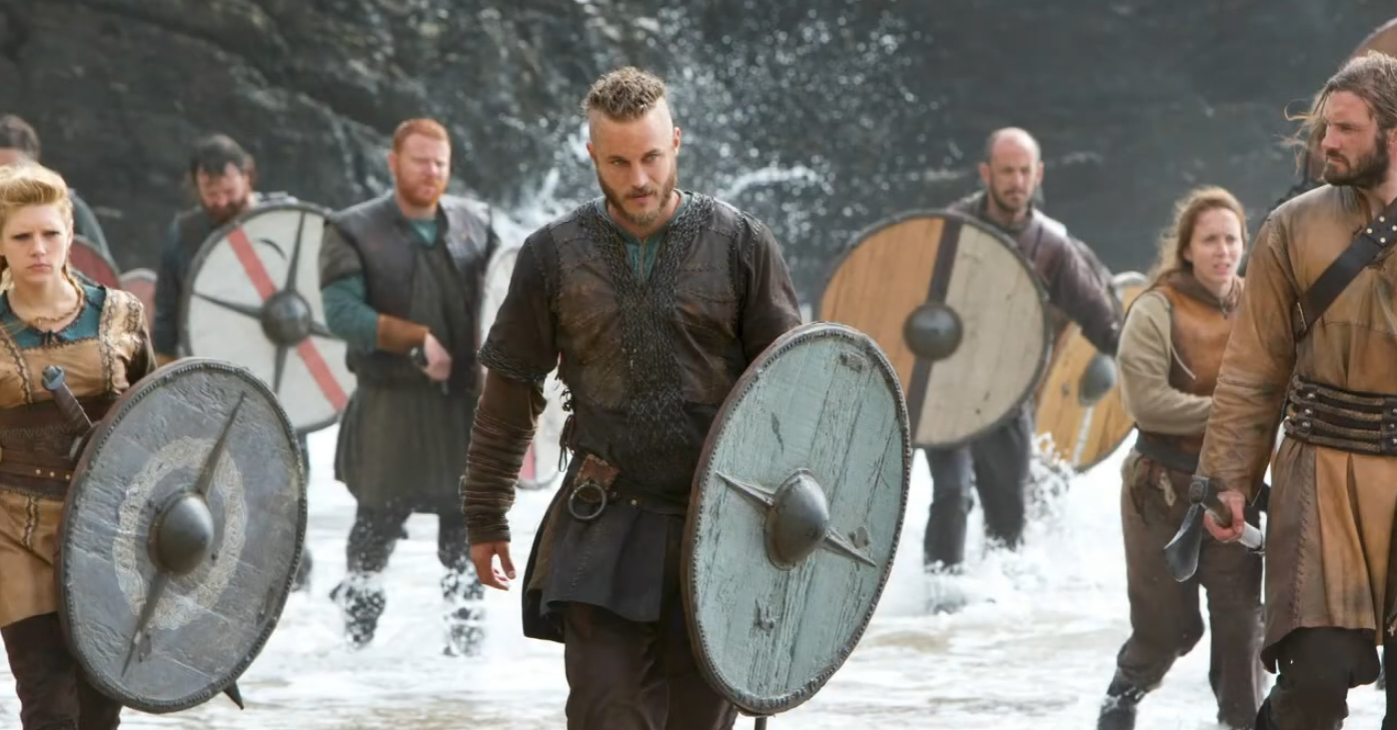
A lot of fans feel the original Vikings had something very hard to replicate ; Ragnar Lothbrok. Travis Fimmel’s performance basically carried an unpredictable energy that made every scene feel dangerous, philosophical, or emotionally strange. People still talk about Ragnar’s expressions, speeches, spiritual curiosity, and slow psychological collapse years later.
With Valhalla, viewers generally agree the production quality is bigger, cleaner, and more cinematic. The battles look larger, the world feels more polished, and the pacing is faster. But many fans say it lost some of the “raw soul” the original series had.
Another major difference is atmosphere.The original Vikings felt mystical and personal:
- visions from the gods,
- Viking exploration,
- family betrayals,
- identity crises,
- brutal survival.
Valhalla feels more political and historical:
- kingdoms,
- succession wars,
- religious conflict,
- diplomacy,
- large-scale power struggles.
Fans also mention that the original cast felt legendary. Characters like Ragnar, Lagertha, Bjorn, Ivar, Ecbert, and Floki all had extremely distinct personalities. In Valhalla, Harald Hardrada and Leif Erikson are respected by viewers, but many discussions revolve around the idea that the newer cast never fully reached the same iconic status.
One thing fans consistently praise about Valhalla, though, is that it captures the feeling of the Viking age ending. The original show was about Vikings rising into legend. Valhalla feels like watching that world slowly disappear under Christianity, centralized kingdoms, and changing civilizations.
Historical Accuracy
When it comes to historical accuracy, fans usually view Vikings: Valhalla as historically inspired rather than historically accurate.
One of the biggest discussions is timeline compression. The series combines real historical figures who, in reality, often lived decades apart and forces them into the same events and relationships for dramatic storytelling. For example, Leif Erikson, Harald Hardrada, and Canute the Great were all real people, but the show heavily restructures their timelines and interactions.
Fans also debate the portrayal of Viking society itself. Historians and viewers often point out:
- armor is cleaner and more fantasy-styled than authentic,
- hairstyles and aesthetics are modernized,
- battle tactics are simplified,
- some clothing looks designed more for visual identity than realism.
Another major controversy involved religion and social politics. The show strongly emphasizes the clash between Christianity and Norse paganism, which was historically real, but many viewers argue the series exaggerates or modernizes certain ideological conflicts to resonate with contemporary audiences.
At the same time, many fans defend the show by arguing historical dramas are not documentaries. They point out that even the original Vikings took enormous liberties with history. The purpose of Valhalla is more about capturing the spirit of a transforming era than perfectly reconstructing historical events.
Ironically, one area where many viewers think Valhalla succeeds historically is its atmosphere surrounding the decline of Viking power. The show repeatedly emphasizes something historians broadly agree on: by that period, the Viking world was changing rapidly through Christianity, state formation, diplomacy, and integration into European politics. That “end of an age” feeling is one of the aspects fans often consider historically believable even when specific details are fictionalized.
Who Wins?
Vikings clearly “wins” over Vikings: Valhalla in terms of cultural impact, iconic characters, emotional depth, and memorability.
Ragnar Lothbrok fundamentally elevated the original series into something unusually compelling. Fans often describe the original show as feeling raw, unpredictable, spiritual, and emotionally immersive in a way Valhalla rarely matched consistently.
Where Valhalla usually receives praise:
- cleaner production,
- larger-scale battles,
- stronger pacing,
- more polished visuals,
- more consistent structure.
Where the original Vikings dominates:
- character writing,
- atmosphere,
- emotional attachment,
- philosophical themes,
- iconic moments,
- psychological complexity.
Vikings felt legendary. Valhalla felt professionally produced. Many viewers still enjoyed Vikings: Valhalla, but the original Vikings left a much deeper long-term impression on audiences.