Cersei Lannister’s Fashion Evolution in Game of Thrones: How One Character’s Wardrobe Told the Whole Story
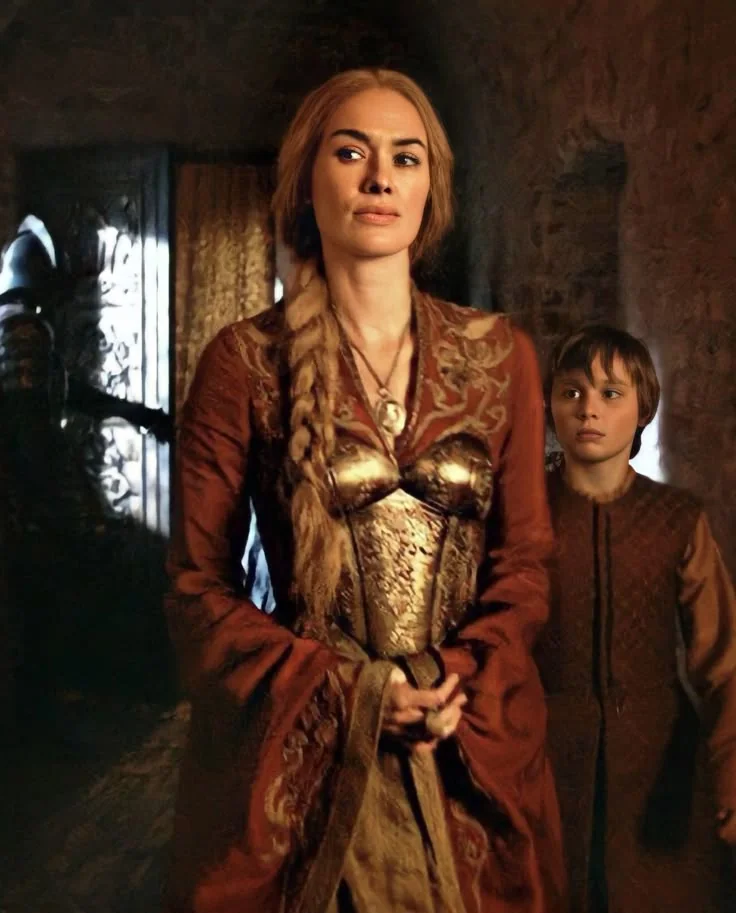
Cersei Lannister may have committed every political sin in the book, but she never — not once — committed a fashion crime.
Costume Design as Character Development
What makes Cersei’s wardrobe so remarkable isn’t just that it looked stunning on screen. It’s that costume designer Michele Clapton used every thread, every color, and every silhouette as a storytelling instrument — one that tracked Cersei’s psychological and political transformation across eight seasons more faithfully than some of the actual writing did.
The early seasons established a clear visual language. Before Robert Baratheon’s death, Cersei’s reds were deliberately muted — faded, almost suppressed. She wore blue on occasion, including notably during her time in Winterfell and in the aftermath of Bran’s fall from the tower. The gold was present but restrained. She was a queen in name, constrained in practice, and the wardrobe told you that before a single line of dialogue confirmed it.
After Robert’s death, everything changed. The reds deepened. The gold intensified. The House Lannister colors — lion gold and Lannister crimson — stopped being accessories to her identity and became declarations of it. As fans in the thread noted, “You could literally feel her power growing just by looking at what she was wearing.”
The Blue Gown Moment
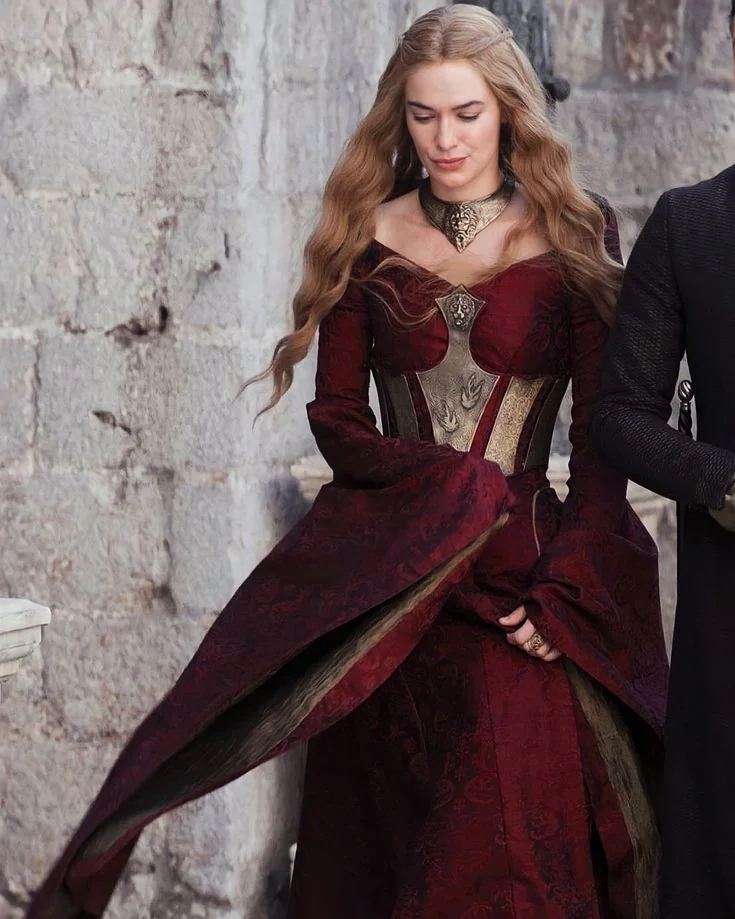
Cersei in a striking blue gown, a departure from her signature palette that fans found unforgettable precisely because of its rarity.
Cersei almost always wore the red and gold of her maiden house, so seeing her in this blue gown was memorable. The deviation from her color code made the outfit land harder than any of her more characteristically Lannister looks — a reminder that the most powerful fashion statement is sometimes the unexpected one.
The Darth Vader Era
We all saw the “Darth Vader era” — the severe black and gold metal-worked ensembles of seasons six through eight, arriving in the immediate aftermath of her walk of shame and her destruction of the Sept of Baelor.
The short hair that the Sparrows gave her as punishment became something else entirely when she walked back into the Red Keep owning it. “Wearing her hair short after defeating the Sparrows was an act of triumph,” , “owning what was given to her as a punishment.” The severe military silhouettes and dark palette that followed weren’t mourning wear — they were armor. She had stopped performing the role of queen and started performing the role of conqueror.
Some fans lamented that this era made her wardrobe “one note” by the end — “basically a Disney villain,” but the counterargument is equally compelling: Cersei had simplified herself to pure, concentrated power, and the wardrobe reflected that reduction.
The Embroidery That Deserves Its Own Award
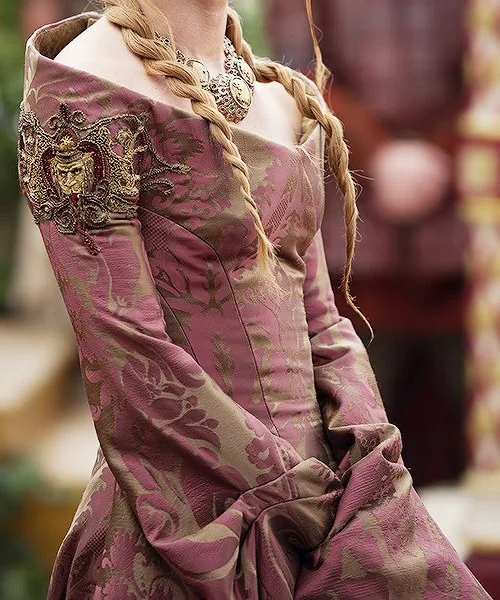
There was this extraordinary embroidery work present throughout Cersei’s costumes, and across the series more broadly. The craftsperson behind much of this work is Michelle Carragher, which we can call “a master of embroidery” — and the description is not an overstatement. The intricate needlework on Cersei’s gowns, often featuring lion motifs and vine patterns, represented hundreds of hours of handcraft per garment, much of it barely visible on screen at standard viewing distance but contributing enormously to the textural richness of every scene.
Fashion as Political Power
Underneath all the appreciation for the aesthetics, is something the show itself was doing deliberately: using fashion as a political language in a world where women had limited access to other forms of power.
All the intelligence of Tywin but no real power as a woman and unable to protect her children and her wardrobe was, in many ways, the one domain where that power gap didn’t exist. No one could stop her from wearing exactly what she chose. No one could prevent her from showing up to every throne room encounter draped in the full visual authority of House Lannister. In a world that denied her the ability to rule, she ruled every room she entered through sheer aesthetic dominance.
That’s not a trivial accomplishment. And the GoT costume department — led by Clapton, executed by Carragher and a team of extraordinary craftspeople — understood it completely.
Cersei Lannister did a lot of things we will never forgive her for. But the wardrobe? The wardrobe was flawless. And in a show remembered as much for its visual grandeur as its storytelling, that legacy is going to last considerably longer than the controversial final seasons will.