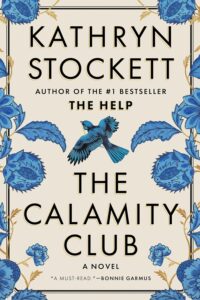
The Calamity Club Book Summary and Review
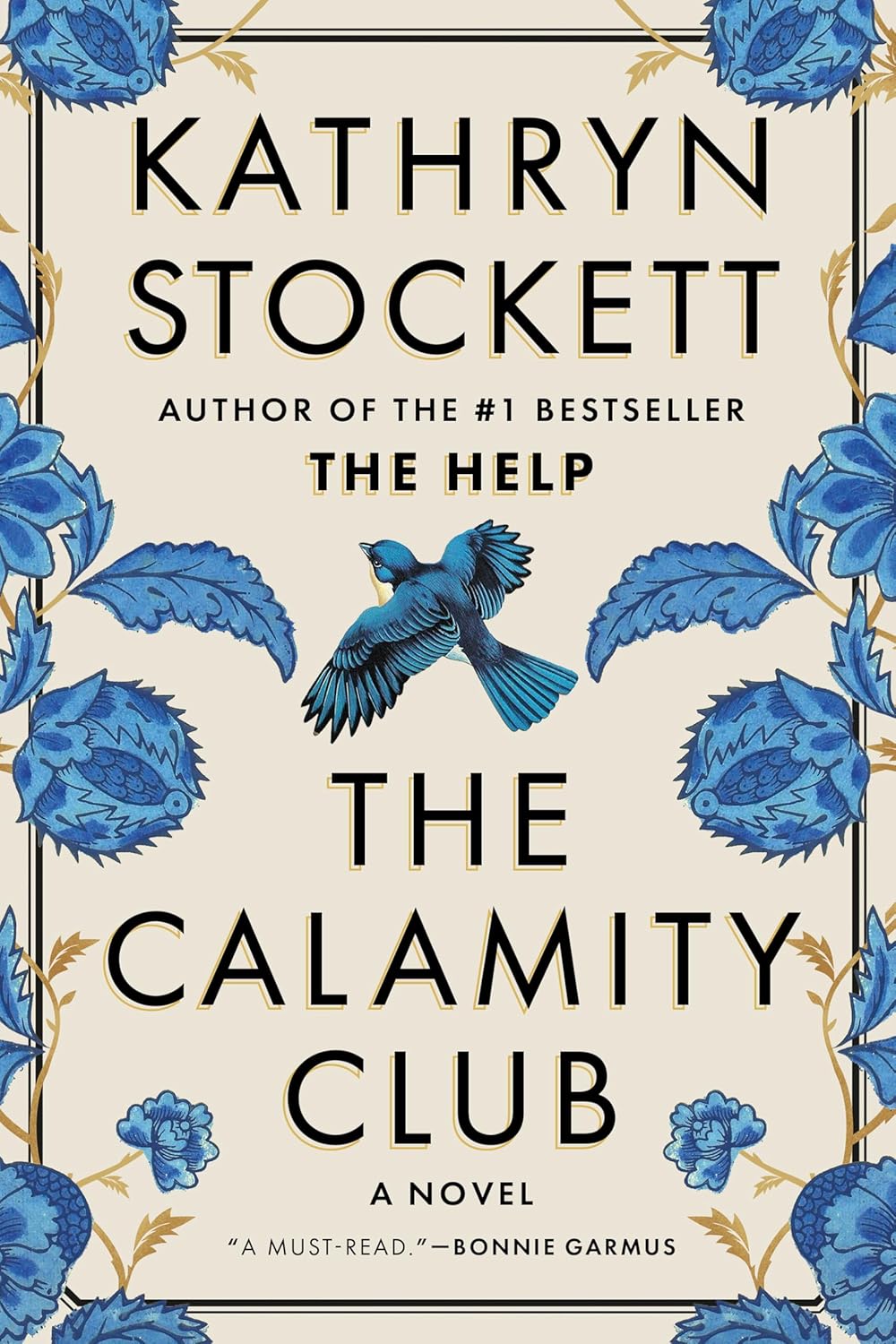
The Long Wait Is Over
Seventeen years is an eternity in publishing. Authors disappear after massive debut successes all the time , swallowed whole by the very fame they created. So when Kathryn Stockett, the woman who gave us The Help and its fifteen-million-copy cultural avalanche, finally returned with a second novel in 2026, the literary world didn’t just take notice. It held its breath.
Named one of the most anticipated books of 2026 by The New York Times, Oprah Daily, Goodreads, and a slew of other outlets, the novel arrives carrying enough literary hype to crush lesser books. The relief, then, is genuine: The Calamity Club doesn’t just survive the weight of expectation. It earns it
What’s the Book Actually About?
Set in Oxford, Mississippi in 1933, the novel follows the intersecting lives of an exasperated older sister, a precocious orphan, and an enterprising woman navigating the grinding teeth of the Great Depression.
Three women. Three very different kinds of broken. One collision course.
Meg Lefleur is eleven years old and already battle-hardened. Abandoned by her mother one Christmas Eve, she is now one of the unadoptable “big girls” at the Lafayette County Orphan Asylum, where she fights each day to keep her spirit unbowed. She refuses to believe her mother simply chose to leave and that stubborn refusal becomes the engine of her entire arc.
Birdie Calhoun arrives in Oxford with a simpler mission: shake loose some money from her socialite sister Frances, who married into wealth and seems to have forgotten where she came from. As the Depression tightens its grip, Birdie begins to suspect her sister’s charmed life may be founded on a tapestry of lies. She’s the kind of character you want to grab coffee with opinionated, exhausted, occasionally wrong, and stubbornly decent. Her dynamic with Frances is one of the novel’s most quietly devastating threads, exploring how shared blood doesn’t guarantee shared values.
Charlie is the third piece of the puzzle ; mysterious, world-weary, a woman running low on luck with little left to lose. Stockett parcels out her backstory with careful restraint, making each revelation feel earned. She is not always easy to like, but she is impossible to stop thinking about.
When these three women find each other, something unexpected ignites. Not just friendship — a scheme. And schemes in Depression-era Mississippi tend to go sideways in spectacular fashion.
The Plot: A Tightrope Act
Stockett spins a compulsively readable yarn with enough plot for a half-dozen novels. And that’s not hyperbole ; this is a 650-page saga that keeps stacking dramatic developments like a poker player who doesn’t know when to stop raising. Birdie and Meg become friends. Meg gets adopted despite her tormentor’s best efforts. Meg’s mother turns up at the Orphan demanding to know where her child is and that’s less than a quarter of the way through.
The central institution looming over everything is the Lafayette County Orphan Asylum, presided over by Chairlady Garnett ; a villain so persuasively rendered you may want to throw the book against a wall. She is the novel’s great antagonist: petty, sanctimonious, and wielding the particular cruelty that only small-town authority can produce. She makes it her personal mission to mark the older girls as unadoptable, branding them as offspring of “feebleminded” mothers ; a label with real, devastating legal consequences in 1933.
And beneath all of this surface drama, the novel isn’t shy about the darkness underneath. Funnier than you would expect from a book that touches forced sterilization, baby trafficking, and the casual cruelty of good Christian women. The kind of book that bites a strip out of the very church ladies it impersonates so well.
The Writing: A Southern Voice at Full Power
There is a particular kind of Southern literary voice ; warm but sharp, funny but capable of sudden devastation, rooted in place and dialect without being condescending about it that Stockett possesses naturally. In The Calamity Club, that voice is at its most fully realized. Critics have compared the novel’s feel to William Faulkner crossed with Fannie Flagg.
That comparison earns its keep. The weight of the South’s literary tradition is present, but so is an irresistible readability ; the kind that keeps you up at midnight promising yourself just one more chapter.
The New York Times Book Review praised how the narrative moves forward with relentless energy, the dialogue and internal monologues so natural they seem to have simply appeared rather than been crafted. Stockett’s dialogue in particular is a masterclass ; each character speaks in a distinct rhythm, conversations carry subtext without ever feeling staged.
Stockett’s sentences here are saltier and more relaxed than in The Help, less concerned with being pretty, more interested in catching the rhythm of how women actually talk when men are not in the room. She trusts her reader. She lets a punchline sit.
The period detail is precise without being showy. The drugstore scene that opens the book, with its sleigh bells and the small silver tin of Merry Widows, sets the bar early. You can hear the screen door slam.
The Supporting Cast
One of Stockett’s greatest gifts has always been her peripheral characters ; the people who live in the margins of the main story but feel entirely real. The Calamity Club is no different.
Mrs. Tartt, the widow whose money is gone but whose manners refuse to leave. Picador and Polly, the Black women who have worked the house for twenty-six years and miss nothing. Esmeralda, whose backstory deserves an entire novel of its own.
The novel does a great job capturing the plight of women and the many ways they had to adapt, endure, and fight for their space in a societal model designed to limit them. There’s also thoughtful attention to racial divisions and social hierarchies, and how those systems shaped everyday life.
Review
No review worth reading skips the reservations, so here they are.
The pacing sags in the middle.
This 650+ page book could have used some editing. One story thread at about the halfway point and beyond was just too drawn out. The novel’s ambition is real, but ambition doesn’t automatically excuse sprawl. Readers who prefer tightly plotted, efficiently constructed fiction will feel the seams.
The villain is a bit one-note.
Garnett is effective as a source of menace, but she’s a villain so one-note she’d twirl a mustache if she had one. In a novel with such nuanced protagonists, the flatness of the antagonist stands out.
The race question lingers.
Stockett was criticized sharply for The Help‘s portrayal of Black characters, and she’s clearly done some reckoning here. Picador, Polly, and Esmeralda are written with more interiority than the maids of her debut, but the book still keeps them mostly in supporting frames. Esmeralda’s storyline in particular is so charged and original that some readers will wish it were the actual center.
The ending is a little too tidy. A late-stage emotional resolution that some will call earned and others will call a touch too neat. Reasonable readers can disagree. After 640 pages of chaos and complication, the finale perhaps wraps things up a little too gracefully.
So At the end
The Calamity Club is messy, funny, heartbreaking, occasionally overlong, and completely alive. It’s a testament to underestimated women who know that calamity can be the spark of new beginnings.
It was a true testament to the power of resilience, found family, and what love really is. And Publishers Weekly called it “by turns hilarious and heartbreaking, offering a memorable view into the impossible choices faced by women in the Great Depression.”
Stockett hasn’t just returned. She’s arrived ; bolder, saltier, and more confident than ever. If you loved The Help, this will feel like coming home to a house that’s been slightly renovated in all the right places. If you’ve never read her, this is a perfectly good place to start.
At a Glance
- Author: Kathryn Stockett
- Published: May 5, 2026 — Spiegel & Grau
- Pages: ~640–650
- Best for: Fans of character-driven historical fiction, Southern literary fiction, The Help, Lessons in Chemistry, Go as a River
- Rating: ★★★★☆ : A flawed, magnificent return.