Man on Fire (2026) : Complete Series Recap, Review & Ending Explained
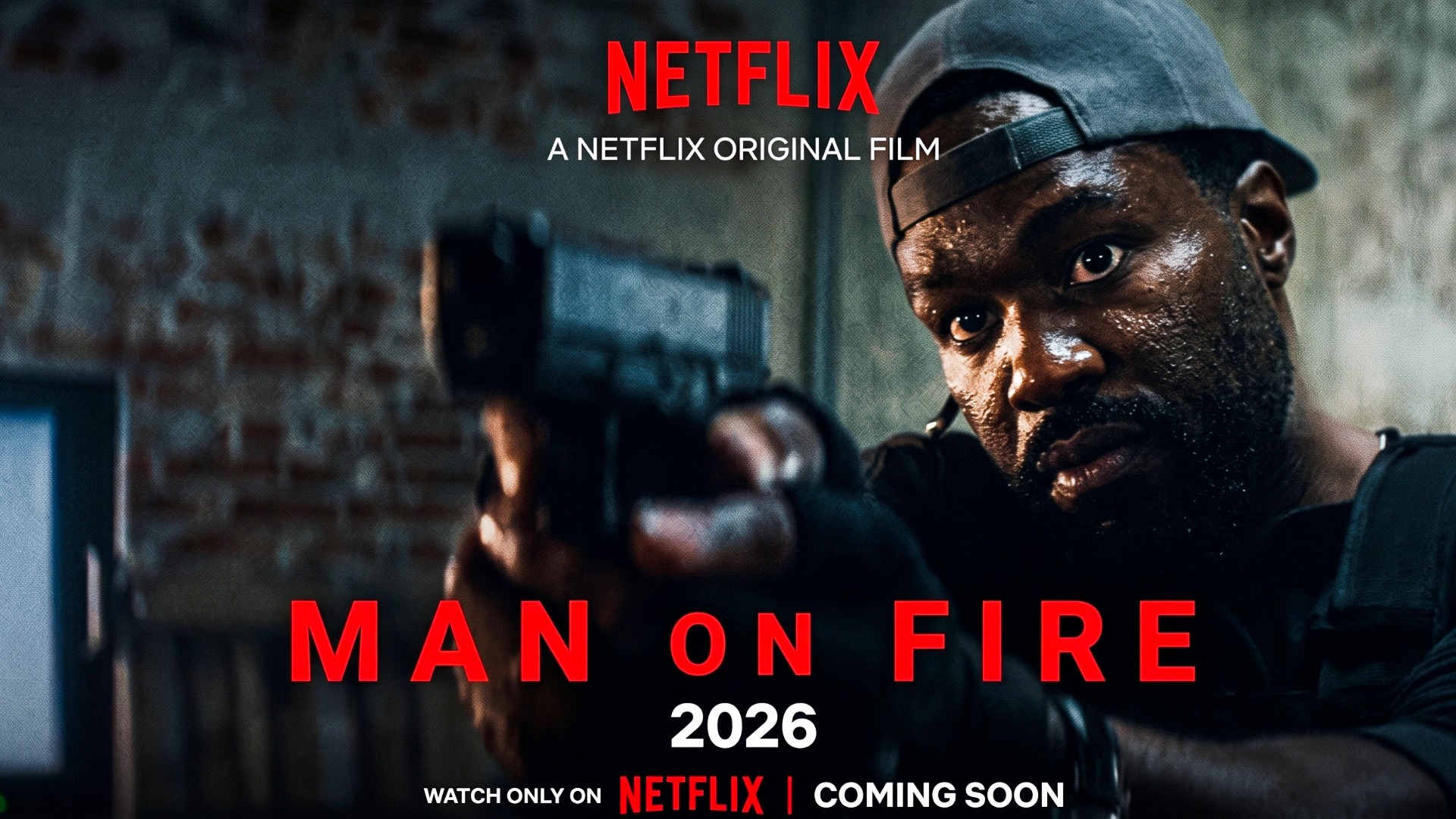
Man on Fire is one of those properties that has already done this before , twice, in fact and each time it has become something different. A.J. Quinnell’s 1980 novel created John Creasy: a broken man who finds temporary purpose in protecting a child, then finds that the child’s loss ignites something in him that nothing else could.
The 1987 film with Scott Glenn was a grimier European affair. Tony Scott’s 2004 adaptation with Denzel Washington became a cultural touchstone ; propulsive, operatic, saturated with that distinctive Tony Scott visual language of bleached colors and lens flares and rage turned into aesthetic. Denzel didn’t just play a man on fire. He was fire. Every scene was conducted at the temperature of a forge.
Netflix’s 2026 series uses all seven episodes to ask what happens after when Creasy still has fire left, but no clean way to put it out. That is a genuinely interesting question, and one that the series format, more than any film could, has the space to answer.
The core shift is structural: instead of compressing Creasy’s trauma, bodyguard assignment, revenge mission, and political conspiracy into two hours, showrunner Kyle Killen stretches that arc across seven chapters, spending real time with the broken man before the fire catches.
The series draws from Quinnell’s novels, which first introduced the character of John Creasy. Part of the pitch of this particular take on Man on Fire is that it also partially adapts the sequel novel, The Perfect Kill. So this is not just a retread. It is an expansion ; Creasy’s story given room to breathe, and then room to bleed.
The result is a series that is, by critical consensus, 62% on Rotten Tomatoes, with a Metacritic score of 60 out of 100 indicating mixed or average reviews neither the knockout that the cast and pedigree promises nor the failure the franchise history might have predicted.
What it is, consistently, is watchable: a propulsive seven-episode thriller anchored by a lead performance that earns the weight of the role and two supporting performances that, when the three characters are in the same room, produce something significantly better than the sum of the show’s individual parts.
Mexico City and the Four Years That Followed
John Creasy is a former U.S. Army Special Forces Captain who, after leaving the military, did contract work for the CIA. On his last assignment in Mexico City, his entire team was ambushed and killed.
The first episode wastes no time kicking the plot into gear, showing Creasy as a cocky operative who brags to his superior, Tappen, about his perfectly planned mission. Sadly, everyone on his team is captured and killed, with Creasy suffering a devastating injury.
The Mexico City ambush is the series’ foundational wound ; the event that precedes everything, that explains everything, that Creasy has spent four years trying and failing to move past. Men dressed in black entered the building and killed his team with the kind of systematic precision that suggests inside information. Creasy survived, which is its own punishment.
Four years later, Creasy is suffering from PTSD, drinks heavily, and works in a warehouse. After a failed suicide attempt, his friend Rayburn recruits him to a security assignment in Brazil.
Haunted by his past, he’s now covered in scars, dons a disheveled beard, and has taken to drinking copious amounts of alcohol to cope with his frequent nightmares.
Yahya Abdul-Mateen II, whose range extends from Aquaman‘s villain to Watchmen‘s Doctor Manhattan to Matrix Resurrections‘ Morpheus, inhabits Creasy’s wreckage with the specificity of an actor who has done the work. This is not generic damaged soldier.
It is a particular man with a particular failure carved into him ; someone who believed he was the best at the thing he did, who built his entire identity around that belief, and who watched that belief get demolished in real time.
The failed suicide attempt lands with the gravity it deserves. Creasy is not trying to die because he has given up on life in the abstract. He is trying to die because he has lost the only thing that made the life feel purposeful, and nothing has replaced it.
And then Paul Rayburn walks into his hospital room.
Paul Rayburn
Bobby Cannavale only appears in the first episode, but his absence hangs over the series. “You needed somebody with Bobby’s outsized presence,” showrunner Kyle Killen says. “He is the kind of person that can make an impression in one episode that you’re still thinking about all these other episodes later. You can understand the size of the hole that he leaves, both for Poe and for Creasy.”
This is exactly right, and it is a significant creative gamble that the series pulls off because of the specific choice of actor. Cannavale brings to Paul Rayburn the particular warmth of a man who is both entirely capable of manipulation and entirely sincere in his love for the person he’s manipulating. He needs Creasy. He also genuinely wants Creasy to be okay. These things coexist in him without contradiction.
Rayburn’s line to Creasy before his death becomes the series’ organizing metaphor: “Some guys, you have to light a fire under them to get him going. My job is to stack wood in your general vicinity because I know sooner or later you’re going to light your own fire.”
The wood-stacking image ; the idea that Rayburn’s role in Creasy’s life is not to ignite him but to provide the material for his own ignition is the most elegant piece of writing in the series and the thematic frame for everything that follows. Creasy doesn’t need someone to motivate him. He needs something to care about. Rayburn understood this. The mission he brings to Creasy in Brazil is, in some sense, a gift not the security work, but the framework for rediscovery that the security work creates.
Rayburn, a CIA operative living in Brazil with his family, gives Creasy a path back into the world before the bombing changes everything. He has recruited Creasy for a security assignment attached to Brazil’s President Carmo ; a job that will require Creasy to be functional, present, and responsible for other people’s safety. It is the precise thing Creasy needs. And then the bomb goes off.
Episode 1: The Bombing of the High-Rise and the Weight of 600 Dead
The apparent fresh start collapses after a luxury high-rise bombing kills Rayburn, his family, and more than 600 Brazilian citizens.
The scale of the bombing is important, and the series is careful to maintain it. This is not a targeted assassination that happens to kill a few bystanders. This is a mass casualty event — a building reduced to rubble, hundreds of lives ended, an entire city in trauma. The political dimensions of that scale will become clearer as the series progresses; for now, what matters is that Paul Rayburn is dead, his wife is dead, their younger children are dead, and the only survivor is his eldest daughter, Poe.
Creasy didn’t plan on being the only stable force left in Poe’s life, but it grants him the purpose he was missing. “He needed something to care about other than himself,” Abdul-Mateen says. “Once he found something outside of him to care about, then that gave him motivation and drive, and a reason to live.”
Poe Rayburn, played by Billie Boullet with the particular prickliness of a teenager who has learned that emotional armor is a survival tool, is not a passive victim. She has been raised by a military man in constant motion; her family relocated repeatedly as her father’s work demanded and has developed, as a consequence, a very low tolerance for vulnerability and a very high tolerance for chaos. She’s trying to do the opposite of Creasy: go back to a place that no longer exists. Forced to move all over the world with her ex-military father, she’s desperate to return to her old home, and constantly clashing with parents she views as overbearing.
The dynamic between Creasy and Poe is the series’ most important relationship, and it is handled with more patience than the genre usually permits. They do not bond immediately. They are, in the early episodes, two people who have been forced into proximity by catastrophe both damaged, both resistant, both deeply suspicious of intimacy because they have both recently had the people they loved taken from them in one violent moment.
The Conspiracy Assembles: Who Built the Bomb and Why
Over the middle episodes, as Creasy and Poe go into hiding, the architecture of the conspiracy that killed Rayburn and 600 others comes into focus.
Prado Soares (Thomás Aquino) and President Carmo (Billy Blanco Jr.) are proven to be at the top of the conspiracy, with the pair using the bombing as a way to grab emergency power in Brazil. Tappen is revealed to be corrupt, using blackmail over the Brazilian president to pull the strings.
The political structure of the plot ; a president engineering a false flag bombing to consolidate emergency authority lands differently in 2026 than it would have in, say, 2010. The idea of elected officials manufacturing crises to justify the expansion of executive power is no longer the territory of paranoid thriller fiction; it is the territory of recent history. The series doesn’t belabor this, but it doesn’t have to. The architecture is familiar enough to feel grounded.
Audiences learn that Rayburn’s high-rise wasn’t the original target, but Creasy’s involvement changed the plan ; the protagonist was meant to perish in the explosion. This detail recontextualizes the entire first episode retroactively: Rayburn didn’t just happen to be killed alongside his family.
The bombing was modified because Creasy arrived. Paul Rayburn’s death is, in a devastating irony, caused by the presence of the man he was trying to save. The wood-stacker became the kindling.
Creasy’s first move after faking photographs of his and Poe’s dead bodies is an original one: allowing them to operate in secret. Meanwhile, back in the United States, his old CIA ally Tappen has turned heel for mysterious reasons. He wants Creasy dead.
Scoot McNairy as Tappen is the series’ most controlled piece of villain work. McNairy has spent a career playing men under institutional pressure ; Halt and Catch Fire, Narcos: Mexico and he brings to Tappen the specific energy of someone who has made a series of reasonable-seeming compromises that have, collectively, led him somewhere irredeemable. Tappen isn’t a monster. He is a pragmatist who has been pragmatic one too many times, and the corruption is now structural.
The Favelas: Valeria, Livro, and the People Who Already Know How to Survive
Creasy agrees to help Valeria Melo get safe passage out of Brazil in return for her assistance hiding them in the favelas.
Alice Braga, who has spent two decades playing women navigating danger with the specific intelligence of someone who has had to develop that intelligence to survive — I Am Legend, Predators, Elysium, Queen of the South — brings to Valeria a warmth and a practical competence that the series desperately needs in its middle sections. When Creasy and Poe are at their most isolated, Valeria provides the human texture that keeps the show from becoming a pure procedural.
The walls Creasy has been forced to put up are softened at times not just by Poe, but also by Valeria. Each of their respective traumas has forced these characters to isolate themselves in a prison that is, at times, of their own making, and as their lives become more at risk, they’re forced to protect each other and eventually lean on each other. The three characters mesh well and are far more compelling when they’re on screen together than when the plot splits them up, which it unfortunately often does.
This is the series’ primary structural weakness, and it is worth naming: the conspiracy plot and the character work operate in different registers, and the show has to keep separating its trio to service the procedural demands of the narrative. Every time the plot requires Creasy to go interrogate someone while Poe and Valeria wait somewhere, the viewer feels the loss of the dynamic that makes the show worth watching.
In the favelas, Poe befriends Livro (Jefferson Baptista), a young man from the community who becomes part of the extended protective circle around her.
Livro and Vico are not just pieces around Creasy. They are the reason Creasy survives the story emotionally as much as physically. The favela sequences give the series its most authentic-feeling texture ; a world that operates according to its own codes, its own loyalties, its own understanding of danger, that is both separate from and entangled with the political conspiracy running above it.
The Middle Episodes: Tiago, Osmar, and the Conspiracy’s Architecture
Creasy interrogates his captive terrorist, Tiago (Elzio Vieira). Tiago points him in the direction of Gabriel Estevas, a.k.a. Osmar, a terrorist leader, but dies in a shootout after leading Creasy into a trap.
The Osmar thread is the series’ most operationally complex section — a chain of sources, double-crosses, and escalating violence that establishes the conspiracy’s full scope. Much of this information comes to light through Osmar, the man who made the bombs, and Emanuel Ferraz, the leader of the FRP crime syndicate, still calling the shots from prison.
Through Ferraz’s intel, Creasy is also able to have Poe identify Tappen as the man she saw on the motorcycle the night of the bombing.
Poe as witness is the series’ most important narrative engine. She saw something the night of the bombing ; a face, a presence and that makes her a liability to the people at the top of the conspiracy. Her value to Creasy is protective; her value to the audience is testimonial. She is the only person who can connect the abstract political corruption to the specific physical event, and the series is careful to build toward the moment when that testimony can be used.
Osmar is killed in what is made to look like a suicide by Soares and Tappen after Creasy leaks his tortured confessions to the CIA and the prisoner exchange with Poe. The quick sequence of events reveals that Osmar’s fate befell the other bomb makers in the white vans, with some being arrested to cover for President Carmo. Soares also kills Ferraz while Tappen is violently interrogating him, leaving Creasy to clean up the trio at the top of the conspiracy.
Each source that Creasy develops is killed before it can become official testimony. The conspiracy is not just powerful; it is aggressively self-cleaning. Every time Creasy gets close enough to expose someone, the machinery above closes down on them. It is a structure designed to prevent exactly what Creasy is trying to do and the series is honest about how much of what Creasy does is improvisation in the face of an opponent with far more institutional resources.
The Prison Heist and the Dead Man’s Switch
Episode 6 sees Creasy stage a daring prison heist to secure an important target. The heist sequence is the series’ highest-budget action set piece and one of the few moments where Man on Fire fully delivers on its action-thriller promise ; a sequence of genuine physical propulsion directed with the kinetic energy that Steven Caple Jr. (who helmed the first two episodes and Creed II) established as the show’s visual template.
As a new adversary arrives on his trail, Creasy hatches a plan to get Poe and the others out of the country. The favela goes on high alert when enemies arrive with an agenda. Creasy races against time to extract information in a high-stakes hostage situation.
The plan to extract Poe from Brazil requires clearing enough of the conspiracy’s upper structure to make movement safe. And the upper structure’s most effective remaining protection is Tappen’s kill switch.
The Finale: Tappen’s Kill Switch, the Hospital, and the Poison Tape
The finale episode begins with Creasy, Melo, and Ivan meeting inside an empty warehouse as they plan their next move against Carmo, Soares, and Tappen.
Creasy believes that Tappen has protected himself by setting up a dead man’s switch. He thinks Tappen has secretly recorded his conversations with Carmo and Soares about their crimes, and that these recordings will be released if anything happens to him. Because of this, Creasy decides that the only way to bring the truth out is by killing Tappen and triggering that switch.
This is a beautiful inversion of the genre’s usual logic: Creasy’s goal is not to prevent the kill switch from activating ; it is to cause it to activate. He wants the recordings released. The only way to force the transparency that will expose Carmo is to kill the man using those recordings as leverage. The kill switch is both Tappen’s protection and, in Creasy’s hands, the instrument of his own destruction.
To make this happen, they prepare a tape and hide it inside a safe deposit box. The tape is set up with a poison that is not meant to kill anyone but is strong enough to create panic and force a reaction. After that, they stage a fake robbery at Ivan’s father’s condo to draw attention.
The staged robbery draws Tappen and Soares into the open specifically, into a hospital, where Creasy has engineered the conditions for the final confrontation. The hospital setting is deliberate: it is a place where violence is simultaneously the most shocking and the most consequential.
Creasy kills Tappen in a hand-to-hand fight, leaving the villain to bleed out. The death is not spectacular. It does not have the operatic excess of Tony Scott’s version of Creasy’s revenge.
It is brutal, exhausting, and deeply physical ; two men at the limits of their endurance, one of whom has more to lose than the other and fights accordingly. McNairy’s final scenes as Tappen are his best: a man confronted with the specific accountability of his choices, finding that the reasoning that made those choices feel tolerable no longer holds.
Soares then has nothing left to lose. He threatens Poe. But Creasy has taught Poe what to do in exactly this situation. As the situation becomes tense, Creasy quietly signals Poe to fight back using what he taught her. She reacts quickly, and in the struggle, Soares ends up shooting Creasy. Even then, Creasy fights back and kills Soares.
The moment where Poe activates the defense technique Creasy taught her is the series’ most satisfying narrative payoff not because it is surprising, but because it is earned. The entire arc of their relationship has been moving toward the moment when Poe stops being someone Creasy protects and becomes someone who participates in her own protection. The shot lands. Creasy kills Soares. The conspiracy’s ground-level operatives are eliminated.
And then the kill switch fires.
Tappen’s kill switch exposed his corruption, leading to the arrest of Carmo and his administration.
The Ending Explained: Los Angeles, the Eulogy, and a New Mission
Later on, news reports confirm that Carmo has been arrested, and Creasy’s name has been cleared.
The aftermath is distributed across a series of brief, precise coda sequences that the show handles with admirable restraint. It doesn’t linger on the political resolution; it is more interested in the personal one.
Melo decides to stay in Brazil with her daughter. This is the series’ most emotionally complex supporting character beat. The deal Valeria made with Creasy was safe passage out of Brazil in exchange for hiding them. She earned it. She chooses not to take it.
The place she was trying to escape has, through the events of the series, become something different to her; a place where she participated in something that mattered, where she built connections she didn’t have before. Leaving now would feel like abandonment.
Vico and Livro are now working with Ivan. The young men from the favelas, who entered the story as peripheral figures in Poe’s protective ecosystem, exit it with agency and employment ; a small but real acknowledgment that the people who helped Creasy survive are not simply dropped back into the circumstances they came from.
Creasy is revealed to be alive and in Los Angeles with Poe, who is now living with her grandmother. The pair have been cleared of any wrongdoing in the bombing. Poe gives her family a proper eulogy, acting as a cathartic moment for her to get closer to the traumatic events she’s endured.
The eulogy is the series’ emotional climax, and it is deliberately quiet; a teenage girl, in front of her family’s memorial, saying the things she never got to say to them before the building came down. Billie Boullet carries this scene with a maturity that has been building since the first episode, and the restraint of the moment — no swelling score, no camera pulling back for grand visual statement — is the right choice for a show that has occasionally struggled to trust its quieter instincts.
Creasy is shown to have opened up a bit, being less cold toward those around him, especially Poe, as the two are now bonded as family. While he’s not perfect, Creasy and Poe are putting their bleak pasts behind them, and he is well on his way to being the soldier he once was.
This is the series’ essential statement, delivered in behavior rather than dialogue: Creasy didn’t just complete a mission. He was changed by it.
The man who recoiled from Rayburn’s kids wanting to hug him in the first episode is now, seven episodes later, someone who has let a teenager into the part of himself that had been sealed off since Mexico City. He is not healed. He is not whole. But he is, for the first time in four years, someone with a reason to keep going that isn’t just institutional assignment.
And then the CIA comes knocking.
Creasy gets an invite from his old CIA boss as a way of recompense for Tappen’s actions: specifically, a chance to get revenge on the operatives in Mexico City who killed Creasy’s team at the beginning of the series. After the conflict is resolved, Creasy is given a new mission by the CIA that connects back to his past in Mexico City. He agrees to take a look at it, setting up a new direction for the story and hinting at a possible Season 2. PRIMETIMER
The Mexico City thread ; introduced in the pilot as the foundational wound and then deliberately set aside while the Brazil conspiracy consumed the narrative is now the dangling thread that a potential second season would pull. The series also partially adapts the sequel novel The Perfect Kill, and there is more source material to work from, including the 1993 novel The Blue Ring, set in the Mediterranean, where Creasy takes on another criminal cartel.
Creasy accepts. Of course he does. The fire is lit now.
What Man on Fire Is Really About: The Stack of Wood Theory
The series’ most interesting thematic argument is embedded in Rayburn’s wood-stacking metaphor, and it is worth unpacking fully because it is not just a characterization of Creasy. It is the show’s theory of what it means to help someone.
Paul Rayburn didn’t try to fix Creasy. He didn’t lecture him about his PTSD or his drinking or his self-destruction. He showed up at his hospital bed and offered him a job ; a specific, purposeful task in the general vicinity of the thing that used to make Creasy feel like himself. He stacked the wood. He didn’t strike the match. He trusted Creasy to do that himself.
Valeria reflects on the show’s central thesis at its halfway point: “Sometimes you meet someone…it’s like you see a piece of yourself in them.”
Valeria sees herself in Creasy another person who has been surviving rather than living, who has organized their existence around keeping a child safe because there is no broader framework available to organize it around. Her friendship with Creasy is not romantic; it is the recognition of parallel damage. And the show is right to treat that recognition as the foundation of something genuinely useful.
Poe, meanwhile, is not just the charge that Creasy protects. She is the thing that makes the wood catch. A teenage girl who has lost everything, who is prickly and angry and determined not to be defined by her loss, who gradually, reluctantly, lets the broken man who killed the people who killed her family into the place behind the armor ; she is the match. Not because she tries to be. Because she is, simply, the specific person that Creasy couldn’t remain closed against.
The Legacy Question: Does It Justify Its Existence?
The ghost in every frame of Man on Fire (2026) is Denzel Washington ; specifically Denzel Washington in the Tony Scott adaptation, giving one of the defining action performances of the 2000s, a performance so specifically his that the character essentially became him. Every creative decision Kyle Killen made had to contend with that legacy.
For viewers attached to Washington’s 2004 film, the new version does not replace it. Instead, it uses television to ask what happens after when Creasy still has fire left but no clean way to put it out.
That reframing is the right one, and it is where the series justifies itself most clearly. The 2004 film asked: what does a man do when the thing he was protecting is taken from him? Man on Fire 2026 asks: what does a man do when the thing that was supposed to destroy him ; the loss, the mission, the fire turns out to be the thing that saves him?
The answer the series gives is that protection, even reluctant protection, even protection born of obligation rather than desire, has the capacity to remake the person doing it.
Creasy didn’t save Poe. They saved each other. And the wood that Rayburn stacked ; the last gift of a man who died in the wreckage of the plan he thought would rescue his friend is what made the fire possible.
Finally
Man on Fire (2026) is a good thriller with occasional flashes of something better. The three core characters mesh well and are far more compelling when they’re on screen together than when the plot splits them up, which it unfortunately often does.
The conspiracy machinery occasionally overwhelms the character work that makes the show worth watching. The favela sequences are the most visually alive portions of the series; the middle-episode procedural grind is the most expendable.
But Yahya Abdul-Mateen II carries the weight of this role with genuine commitment and enough specificity to make Creasy his own rather than a copy of the Denzel version. Bobby Cannavale makes more of one episode than most actors make of seven. Alice Braga brings a quiet authority that the series is not always smart enough to fully deploy.
And Billie Boullet ; the youngest principal, with the heaviest emotional arc delivers a performance that the series earns and that earns the series.
Rayburn was right. Some guys, you just stack wood around. The fire comes eventually.
Man on Fire took seven episodes to find its heat. The question Netflix will answer soon enough is whether there is more wood on the pile.