Project Argonaut Explained: Crystal Lake (2026)
Jason Voorhees Was Never Supposed to Be a Monster
For decades, I’ve always considered Jason Voorhees one of the most mysterious figures in horror, primarily because the Friday the 13th movies never provided a completely satisfying explanation for how a supposedly drowned child could eventually become an unstoppable killing machine capable of surviving injuries that would instantly kill an ordinary human being.
Depending on which installment we’re discussing, Jason has been portrayed as everything from an unusually resilient man to a supernatural creature who can return from the dead, and while those inconsistencies have become part of the franchise’s identity, I’ve always wondered whether there was something more sinister behind his extraordinary abilities.
That’s precisely what makes Crystal Lake’s introduction of Project Argonaut so fascinating, because the series doesn’t simply explain why Jason is nearly impossible to kill, but introduces an entire corporate conspiracy that fundamentally changes how we understand the Voorhees family. What initially appears to be another tragic story about a mother who loses her son gradually transforms into something closer to a Cold War science-fiction nightmare, where the real horror originates not from a masked murderer hiding in the woods, but from the scientists and executives responsible for creating him.
What Was Project Argonaut, and Why Did Bellflower Create It?
The biggest revelation arrives in Episode 7, when we discover that Project Argonaut was a classified experimental research program operated by Bellflower Chemical, a multinational corporation whose seemingly ordinary commercial operations concealed a disturbing interest in human experimentation.
Set against the escalating tensions of the Cold War, the project was built around the belief that nuclear conflict between the United States and the Soviet Union was becoming increasingly inevitable, prompting Bellflower to explore whether human biology could be modified to survive conditions that would ordinarily be fatal. What I find particularly interesting is that the company’s objective wasn’t originally to create supernatural killers or genetically enhanced soldiers, at least not according to the explanation provided in the series, but to develop human beings capable of surviving the catastrophic environmental consequences of nuclear warfare.
During his presentation, Elias Wittering, Jason’s father and a senior figure within Bellflower, reveals that the company’s researchers had been studying biological mechanisms associated with the extraordinary resilience of cockroaches, hoping to reproduce comparable properties in human cells. This approach is inspired by biomimicry, the concept of studying biological systems found in nature and attempting to reproduce their useful characteristics through scientific innovation, although the extraordinary results depicted in Crystal Lake remain fictional.
For me, the most disturbing element isn’t necessarily the scientific ambition itself, but the willingness of Bellflower’s leadership to transform vulnerable people, including pregnant women and children, into experimental resources in pursuit of a potentially lucrative breakthrough.
Elias Wittering: The Father Who Turned His Own Son Into an Experiment
I think Elias Wittering might actually be one of the most important additions to Friday the 13th mythology, because Crystal Lake transforms Jason’s previously obscure father into someone directly responsible for the horrific circumstances that ultimately shape his son’s existence.
The story takes us back to 1959, when Pamela Scott is pursuing a singing career in New York City and discovers that her pregnancy is in serious danger, with doctors offering little hope that her unborn child will survive. Elias, who works for Bellflower, persuades Pamela to undergo experimental medical treatment at the corporation’s facility in Houston, presenting the opportunity as a potentially lifesaving intervention rather than revealing the full nature of the research being conducted.
Pamela accepts because she desperately wants to save her child, but what initially looks like an act of paternal concern gradually reveals itself as a calculated manipulation that allows Elias and his colleagues to exploit both mother and son. The fact that Elias continues advancing professionally within Bellflower while Jason endures increasingly invasive procedures makes his behavior particularly reprehensible, because he doesn’t merely tolerate his child’s suffering but actively participates in presenting that suffering as scientific progress.
What makes his character frightening to me is that he doesn’t resemble a traditional horror villain driven by uncontrollable rage, but an ambitious corporate executive who has become so committed to his organization’s objectives that he can rationalize using his own family as experimental material.
Subject J: How Jason Voorhees Became Nearly Indestructible
The most important piece of Project Argonaut’s mythology revolves around Jason himself, because the series reveals that he is the project’s exceptional success after numerous previous experiments produced devastating consequences for other subjects.
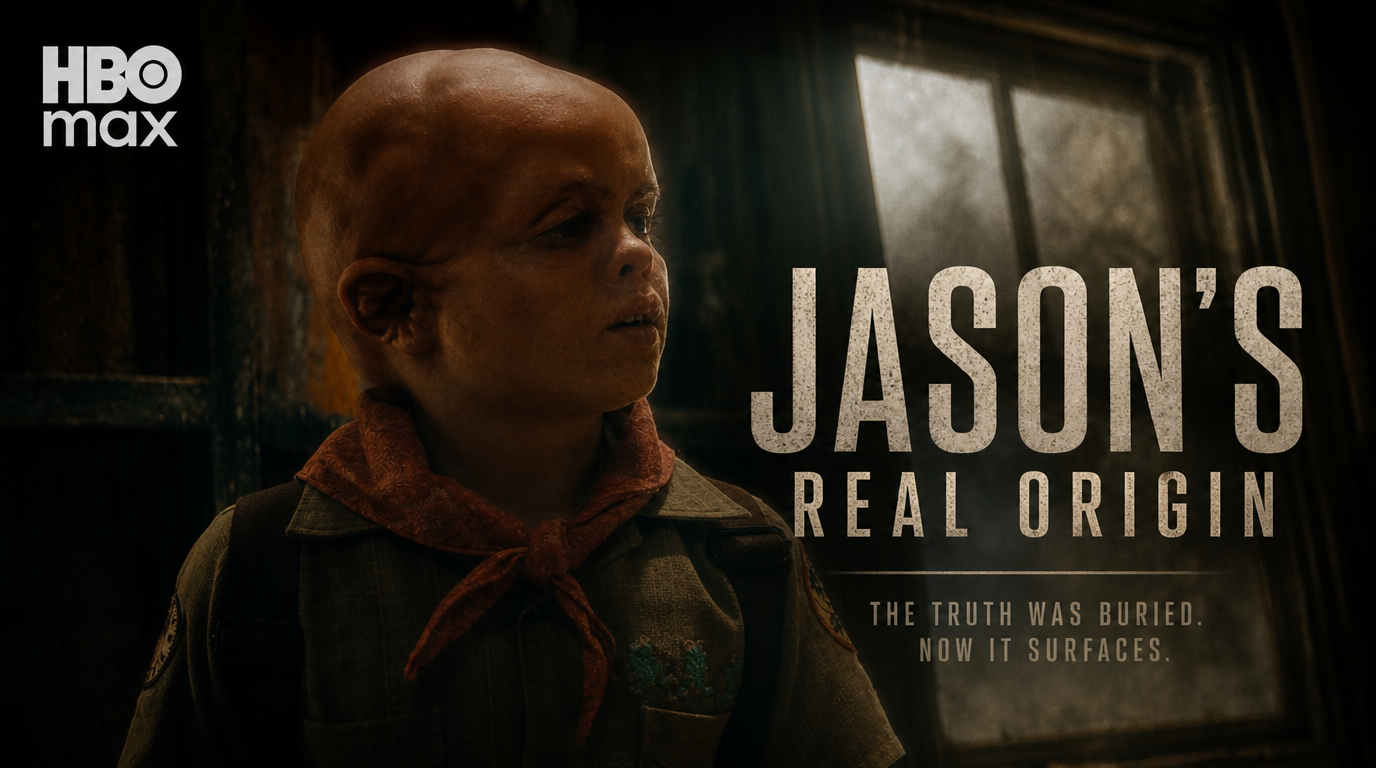
From the moment of his birth, Jason exhibits unusual physical characteristics and medical complications, while his early childhood is marked by repeated treatments that leave him physically and psychologically traumatized.
One particularly revealing moment occurs when Pamela falls asleep while bathing her infant son, only to discover that Jason has survived an experience that could easily have resulted in drowning, offering an early indication that his body possesses extraordinary survival capabilities. As the experiments continue, Bellflower discovers that Jason can withstand extreme radiation exposure and recover from serious physical trauma in ways that ordinary human biology cannot explain.
Elias eventually presents him as evidence that Project Argonaut has achieved its intended objective, effectively demonstrating that a human subject can develop resistance to conditions associated with nuclear catastrophe.
I find this revelation disturbing because Jason’s abilities, which have traditionally been treated as the defining characteristics of a supernatural slasher villain, are now portrayed as the consequences of repeated scientific interventions performed on a child who never had the opportunity to consent. Importantly, showrunner Brad Caleb Kane has clarified that the research attempts to replicate useful biological processes associated with cockroaches rather than literally combining Jason’s DNA with insect DNA, meaning the popular interpretation that Jason has somehow become part cockroach misrepresents what the series establishes.
The Darkest Secret of Project Argonaut Wasn’t Jason
While Jason represents Bellflower’s most successful experiment, I would argue that the other victims are essential to understanding the true scale of the conspiracy, because their suffering exposes how much human life the company was prepared to sacrifice in pursuit of its objective.
Throughout Pamela’s treatment, we discover that other pregnant women are receiving experimental interventions under similarly questionable circumstances, and the devastating experience of another patient, Trish, demonstrates that these procedures carry consequences far beyond ordinary medical complications. When Pamela eventually uncovers the hidden research facility, the horrifying condition of the experimental subjects reveals that Bellflower has been conducting a program of systematic biological exploitation rather than providing the advanced medical care it promised.
The disturbing imagery of malformed fetuses and severely affected children reinforces the idea that Jason’s apparent success was built on an extensive history of failed experiments, which the corporation appears prepared to disregard as long as its ultimate objective remains achievable. What I find particularly effective is the contrast between Elias’s confident presentation of a revolutionary scientific breakthrough and the suffering concealed within the same facility, because it captures the moral bankruptcy of an organization that measures progress through biological results rather than the consequences for its victims.
The series doesn’t establish that every person involved with Bellflower knew the full truth, and Dr. Landau’s guilt suggests that individual employees responded differently to the project’s cruelty, but the larger corporate structure clearly enabled the experimentation to continue.
Pamela’s Escape Explains Why the Voorhees Family Was Hiding
Another detail that completely changes how I interpret the series is the revelation that Pamela and Jason were not simply an unfortunate mother and son living near a summer camp, but fugitives who had escaped from an extremely dangerous organization determined to regain control over its most valuable experimental subject.
After learning what Bellflower has been doing to Jason, Pamela infiltrates the research facility, violently confronts Dr. Valentine, and manages to rescue her son before escaping with assistance from Nora, Elias’s secretary. The fact that Pamela eventually adopts the Voorhees surname adds another interesting dimension to the family’s mythology, since their familiar identity now functions as a way of distancing themselves from the Wittering name and the corporate conspiracy associated with it. What initially looks like Pamela’s excessive protectiveness becomes considerably more understandable once we realize that she has spent years trying to prevent powerful individuals from reclaiming her child, although the series also makes it clear that her traumatic experiences and experimental treatments have influenced her increasingly violent behavior.
I think this is one of the show’s most effective narrative decisions, because it establishes a genuine reason for Pamela’s paranoia without pretending that every murder she commits afterward is morally justified. Bellflower’s continued pursuit of the family also reveals that the company’s interest in Jason extends far beyond the original experiments, suggesting that his existence represents something valuable enough for the corporation to pursue across multiple years and locations.
Why Jason Survived Drowning and Returned Even Stronger
This is where Project Argonaut provides its most consequential explanation for the original Friday the 13th mythology, because the series establishes that Jason’s extraordinary durability makes his apparent death at Camp Crystal Lake fundamentally different from an ordinary drowning. Rather than simply disappearing beneath the water and remaining dead, Jason possesses a regenerative biology that allows him to survive seemingly fatal trauma, eventually returning as a dramatically larger and physically stronger individual.
The finale reinforces this interpretation when we encounter a transformed Jason whose size, strength, and violent behavior suggest that the experience has accelerated his physical development while severely compromising whatever remained of his childhood identity. When he confronts Elias, the power created through Project Argonaut becomes the instrument of his father’s destruction, with Jason using his extraordinary strength to kill the man responsible for much of his suffering.
I find this confrontation particularly satisfying from a narrative perspective, although the subsequent moment when Jason nearly strangles Pamela is arguably even more important, because it demonstrates that his transformation hasn’t simply created a powerful survivor who can recognize enemies and allies in a conventional sense.
He eventually recognizes his mother and releases her, but his behavior suggests that the regenerative process has left him increasingly disconnected from ordinary human instincts and relationships. The implication is that surviving death comes at a terrible psychological cost, although the series doesn’t establish a precise biological mechanism explaining every aspect of his altered behavior.
Does Project Argonaut Rewrite the Entire Friday the 13th Timeline?
One of the reasons I think this revelation has become so controversial is that Friday the 13th traditionally benefits from leaving Jason’s nature ambiguous, allowing viewers to interpret his impossible survival through supernatural explanations, horror-movie logic, or the simple understanding that an iconic slasher villain is never truly gone.
Crystal Lake takes a noticeably different approach by introducing a specific scientific explanation for his extraordinary endurance, effectively reframing his repeated returns from apparent death as the consequences of experimental biological modification. This creates an intriguing connection to Jason’s changing physical condition across the original films, particularly the increasingly monstrous appearances that follow his repeated injuries and resurrections, even though the prequel doesn’t establish a comprehensive scientific rulebook that automatically resolves every continuity issue throughout the franchise.
I also think there is an interesting thematic connection to Jason X, where Jason’s extraordinary regenerative biology becomes an object of scientific interest, although that resemblance should not be mistaken for confirmation that Bellflower is connected to the research facility depicted in that film. Personally, I can understand why longtime fans might prefer Jason to remain an inexplicable force of nature, because providing a scientific origin inevitably removes some of the mystery that originally made him frightening.
At the same time, I appreciate that Crystal Lake has chosen to take a creative risk rather than merely repeat familiar franchise mythology, especially when the new explanation creates an opportunity to examine the people and institutions that contributed to Jason’s transformation.
Could Bellflower Have Created More Monsters?
What interests me most about the long-term implications of Project Argonaut is the possibility that Jason might not be the only surviving consequence of Bellflower’s experimental program, although the first season doesn’t confirm that the company successfully created another subject with abilities comparable to his. We already know that the organization conducted numerous experiments before identifying Jason as its exceptional success, and the existence of an established research infrastructure raises questions about how much scientific information the company retained, whether other facilities existed, and what happened to the individuals who participated in the program.
Elias’s death certainly removes a central figure from the conspiracy, but it doesn’t automatically establish that Bellflower’s research, financial interests, or institutional influence have disappeared along with him. I think these unresolved elements could become particularly important if the series continues expanding its mythology, because they provide a way to introduce future threats connected to Jason’s origin without necessarily turning the franchise into an entirely different kind of science-fiction story.
The possibility of other experimental subjects remains speculation rather than established lore, but the series has deliberately constructed a world in which Jason’s existence is part of a much larger system of corporate experimentation, and that makes the unanswered questions surrounding Bellflower potentially as interesting as the mystery of Jason himself.
My Final Thoughts: The Real Monster Behind Jason Voorhees
After examining everything Crystal Lake reveals about Project Argonaut, I think the most disturbing conclusion is that Jason Voorhees was never destined to become the monster audiences recognize from the original films, because his transformation resulted from decisions made by people who considered scientific progress and corporate ambition more important than the life of a vulnerable child.
His extraordinary regenerative abilities may explain why he can survive drowning, severe injuries, and seemingly impossible circumstances, but the psychological damage inflicted during his childhood offers a separate explanation for why his relationship with the world has become defined by fear, confusion, and violence.
I find the contrast between Elias and Pamela particularly compelling, because both parents contribute to the tragedy in different ways, with Elias treating his child as an experimental asset while Pamela’s increasingly destructive attempts to protect him ultimately contribute to the cycle of violence surrounding Crystal Lake.
The series doesn’t suggest that Jason’s future murders are somehow justified by his suffering, but it does force us to reconsider where the story’s horror actually began, and whether the man behind the mask should be understood exclusively as a monster or also as the surviving victim of something much larger. For me, that’s the most interesting achievement of Project Argonaut, because it transforms Jason’s apparent immortality from an unexplained horror convention into evidence of a deeply disturbing corporate experiment, leaving us with the uncomfortable realization that the monster lurking beneath Crystal Lake’s waters was created long before Jason ever set foot inside the camp.