Baskin Movie Explained | Review & Recap
Where to Watch Siccin
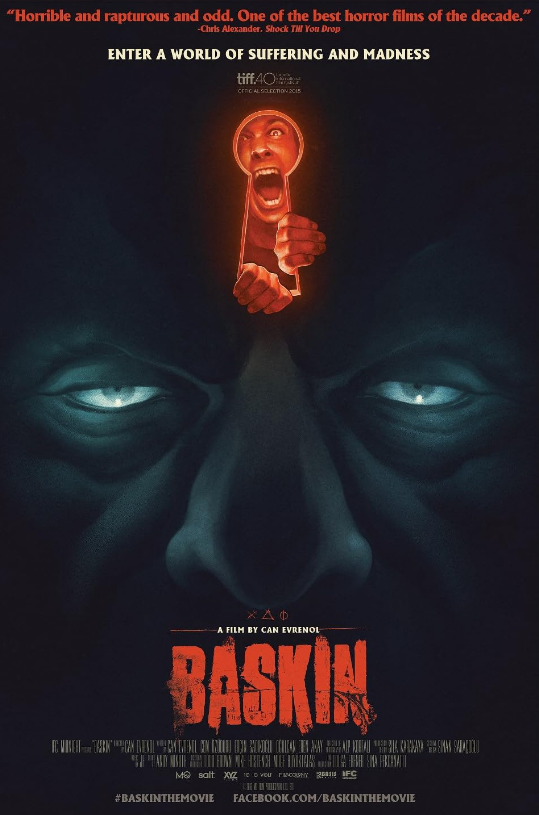
In the landscape of 21st-century horror, few films have managed to feel as genuinely cursed as Can Evrenol’s Baskin. Released in 2015, this Turkish surrealist nightmare is not merely a slasher or a creature feature; it is a descent into a psychosexual hellscape that owes as much to Caravaggio as it does to Hellraiser.
Baskin (Turkish for “Police Raid”) begins as a grimy police procedural and ends as a hallucinogenic fever dream. It is a film that demands to be dissected, not just watched. Below is our studio-level breakdown of the narrative architecture, the symbolism of the “Father,” and the time-loop paradox that seals the characters’ fate.
Toxic Masculinity Meets Cosmic Horror
The genius of Baskin lies in its bait-and-switch structure. It lures the audience in with the familiarity of a Tarantino-esque dialogue scene, five cops sitting in a diner, trading vulgar stories and asserting their dominance. This is deliberate.
The film posits a simple, terrifying thesis: Hell is not a place you go to; it is a place you carry with you. The brutality the officers face in the second half is a mirror reflection of the brutality they exude in the first.
Where to Watch Baskin Movie
Shudder & AMC+ (USA)
For American horror fans, the most reliable home for Baskin remains the dedicated genre platforms.
Platforms: Shudder, AMC+, Sundance Now.
Status: Available.
Why Watch Here? Shudder is the curator of “extreme” cinema. Watching it here guarantees you are seeing the uncut version with proper subtitle timing. You can subscribe directly or access these via “Channels” on Amazon Prime Video or Apple TV.
Tubi (USA & Canada)
If you want to watch the madness without paying a subscription fee, the “Godfather of Free Streaming” has your back.
Platform: Tubi
Status: Available (with Ads).
The Catch: Baskin is a film that relies heavily on atmospheric tension. Having a diaper commercial interrupt the “Black Mass” scene can kill the mood. However, the price (free) is unbeatable.
3. The Netflix Status (2026 Update)
Is Baskin on Netflix? No. As of early 2026, Baskin is not available on Netflix in the US, UK, or Canada. Netflix generally avoids hosting unrated/extreme content of this nature. Do not waste time searching for it there.
4. Where to Watch in the UK
For viewers in the United Kingdom, streaming options are more limited for this specific title.
Digital Rent/Buy: Your best option is Apple TV (iTunes) or Amazon Prime Video Store. It is cheap to rent (usually around £1.99-£3.49).
Physical Media (Best Quality): If you are a collector, the UK boutique label Arrow Video previously released a stunning Blu-ray of the film. While the physical disc might be out of print in some stores, looking for the “Arrow Video Cut” on digital storefronts ensures high quality.
Severin Films 4K
If you have a home theater setup and want to experience the vibrant, sickly color palette of the film as intended, streaming might not be enough.
The Release: Severin Films released a 4K UHD version of Baskin that includes the original short film (2013) that inspired the movie.
Why bother? The sound design in Baskin (the wet squelches, the chanting) is half the horror. Streaming compression often muddies this. The 4K disc is the definitive way to watch it.
Viewer’s Guide: Warning
Before you hit play, a final “Studio” warning: Baskin is not a “popcorn horror” movie like The Conjuring.
The Gore: It features extreme body horror, sexual violence, and gore.
The Pacing: The first 40 minutes are a slow-burn police drama. The last 40 minutes are a fever dream. Do not turn it off during the slow start; it is necessary for the payoff.
Recap
Since Baskin operates on dream logic, a standard plot summary is insufficient. We break down the film into its four distinct “Movements.”
We meet the squad: Remzi (the veteran/mentor), Arda (the rookie/protagonist), Yavuz (the hothead), Apo, and Seyfi. They are eating late at night, discussing sex and bestiality in crude terms.
Key Detail: The atmosphere is already “off.” The meat looks visceral. A waiter with a bucket of raw flesh foreshadows the gore to come.
The Bathroom Incident: Seyfi goes to the bathroom and sees a frog (a recurring motif of transformation/plague) and hallucinates a shadowy figure. The boundaries of reality are already thinning.
The squad receives a distress call from Inceagac, a remote area steeped in local rumor. While driving and singing along to pop music (a moment of humanization), they hit a figure standing in the road.
The van swerves and plunges into a river. This is the Point of No Return.
When they emerge from the water, the lighting has changed. The fog is unnatural. They are no longer in the “real” world; they have entered a liminal space, or Purgatory.
They find the source of the distress call: an abandoned Ottoman-era police station. It is a labyrinth of decay.
The squad splits up (classic horror mistake). They encounter surreal imagery: a room full of naked people standing in silence, walls dripping with fluids.
The officers are captured one by one. The violence here shifts from “police procedural tension” to “grand guignol horror.” They are not fighting criminals; they are being processed like meat.
The survivors (Arda, Remzi, Yavuz, Apo) are brought to the dungeon, a sanctuary of torture.
The Father (Baba): We meet the antagonist, played by Mehmet Cerrahoglu. He is a small, terrifying figure who speaks in philosophical riddles. He is not just a cult leader; he is an entity of pure chaos.
The film engages in extreme body horror. Eyes are gouged; intestines are removed. It is a test of the soul. The Father forces them to confront their own flesh and mortality.
The Ending Explained
The ending of Baskin is notoriously confusing. Here is the definitive explanation of the final sequence.
As Remzi lies dying, he whispers to Arda. Remzi has been a father figure to Arda throughout his life (and the film). He tells Arda to use the “key.” Arda reaches into Remzi’s open throat and pulls out a physical key. This is symbolic: the mentor must die for the hero to ascend. Arda uses the key to stab the Father in the head, killing him.
Arda flees the dungeon. He runs through the corridors, desperate for freedom. He bursts out of the building and onto the road, covered in blood, laughing in hysteria. He has survived.
As Arda stands in the road, headlights approach. It is the police van from the beginning of the movie.
The Twist: The figure the police van hit in Movement 2 was Arda himself, escaping from the future.
The Loop: The van hits Arda. The van crashes into the river. The cycle restarts.
What does it mean? The characters are trapped in a Hell loop. The events of the night are a punishment that repeats eternally. Arda’s attempt to escape is the very thing that causes the crash that brings them there. They are the architects of their own damnation.
Critical Analysis
The cult leader is called “The Father,” and Remzi is Arda’s surrogate father. The film is a war between two patriarchs. Remzi represents the “State” (Order, Law, Repression), while The Father represents the “Id” (Chaos, Desire, Flesh). Arda is trapped between these two versions of authority.
The officers are punished specifically for their bravado. In the diner, they brag about sexual dominance. In the dungeon, they are stripped, bound, and penetrated (violently). The cult turns their masculinity against them, reducing them to helpless slabs of meat.
Frogs appear constantly. In mythology, frogs represent metamorphosis. The officers are undergoing a transformation from human to “something else”—perhaps residents of this hellscape.
Review
Visual Language: Director Can Evrenol uses a lighting palette of deep cyans and sickly magentas that recalls the Italian Giallo films of the 70s. The cinematography is claustrophobic, often using extreme close-ups to force the viewer into the discomfort of the characters.
Performance: Special mention must be made of Mehmet Cerrahoglu (The Father). A non-actor with a rare skin condition, his performance is captivating. He brings a calm, gentle cadence to his dialogue that makes his violent actions infinitely more disturbing.
The Flaw: The film struggles in its second act pacing. Once the officers enter the building, the narrative momentum stalls slightly as it moves from one surreal image to another before the plot kicks back in for the finale.
Final Score: 8.5/10
Baskin is a masterpiece of sensory horror. It is not for the faint of heart, but for those willing to endure its brutality, it offers a profound look at the cyclical nature of violence. It is a film that doesn’t just show you a nightmare; it dares you to realize you might already be in one.













Post Comment