The Sopranos S6 Explained: Episode By Episode Breakdown
Intro
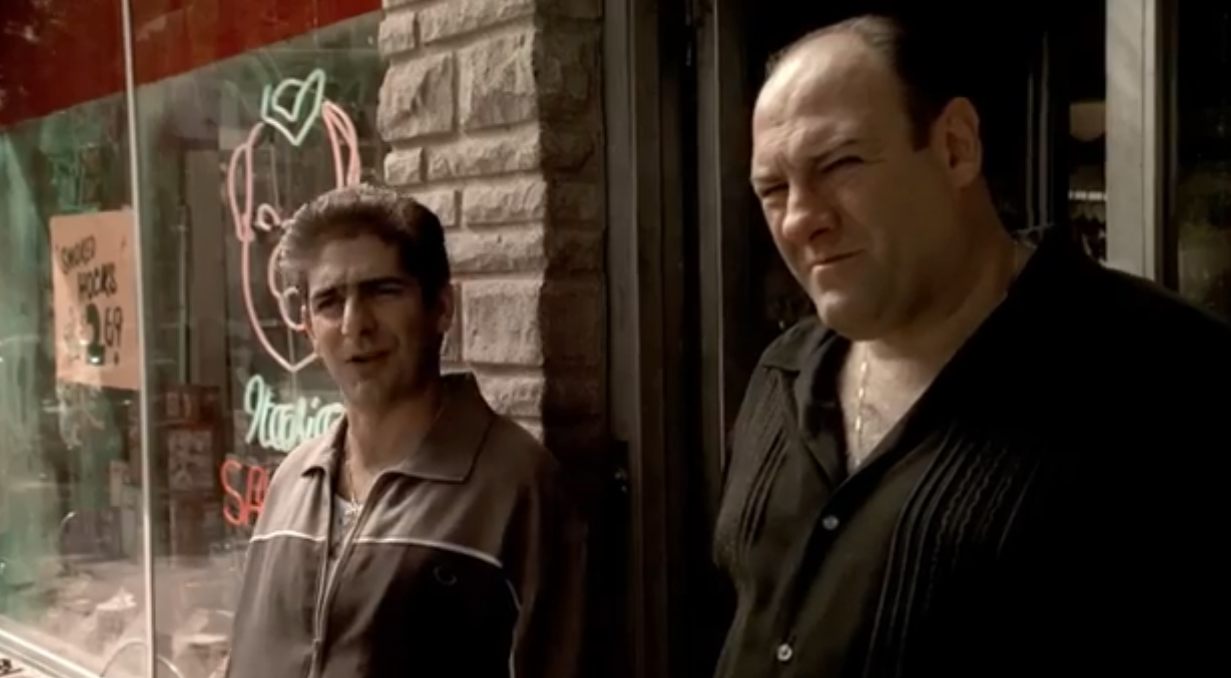
If Season 5 was a tragedy, Season 6 is an obituary. Spanning 21 episodes (split into Part I and Part II), the final chapter of The Sopranos is a sprawling, existential masterpiece about entropy. Things fall apart.
The color palette is colder; the wind blows louder. The opening montage of Season 6 doesn’t feature the confident drive from New York to Jersey. Instead, it features the Seven Souls of Man, EKG machines, and a sense of impending doom. As a writer, I see Season 6 as David Chase’s rejection of the redemption arc. There is no saving Tony Soprano. This season is a slow, methodical dismantling of a human soul, ending not with a bang, but with a silence so profound it broke television.
📂Don’t just watch the show, analyze it. Grab Dr. Melfi’s confidential ‘Psychological Dossier’ on Tony (and the truth about the ending) here
Character Analysis
Tony Soprano: The Golem
In Season 6, Tony survives a gunshot wound (courtesy of Uncle Junior), traverses purgatory (as Kevin Finnerty), and returns to the living world but he doesn’t come back better. He comes back worse. He becomes a black hole, consuming everything around him. His gambling addiction, his murder of Christopher, and his treatment of Hesh show a man who has lost the ability to love. He is purely id, purely survival.
Christopher Moltisanti: The Failed Son
Chris tries. He really does. He makes his movie, Cleaver, which is a subconscious cry for help, revealing that he knows Tony wants to kill him. But Chris is too weak to leave and too damaged to stay. His relapse and subsequent death are the season’s turning point. He dies choking on his own blood, suffocated by the man he worshipped.
Carmela Soprano: The Enabler in Chief
Carmela finally gets her spec house, but the foundation is shaky. She spends the season looking the other way. Her trip to Paris is a highlight—she sees the beauty of history and culture, only to return to the ugliness of New Jersey strip malls. By the end, she is fully complicit, worrying more about the bleak financial future than the moral vacuum of her life.
AJ Soprano: The Canary in the Coal Mine
AJ is the only character who seems to feel the weight of the world, even if he expresses it through whining and depression. His suicide attempt is the season’s emotional nadir. He is the result of Tony’s toxicity: a sensitive boy crushed by a world requiring him to be a soldier.
Phil Leotardo: The Old Testament God
Phil is the perfect final antagonist. He doesn’t want money or negotiation; he wants Old Testament justice. No more scraps in my scrapbook. He represents the inevitable consequences of the mob life. You can’t talk your way out of Phil.
Episode-by-Episode Breakdown (Storytelling Style)
Part I (The Purgatory Arc)
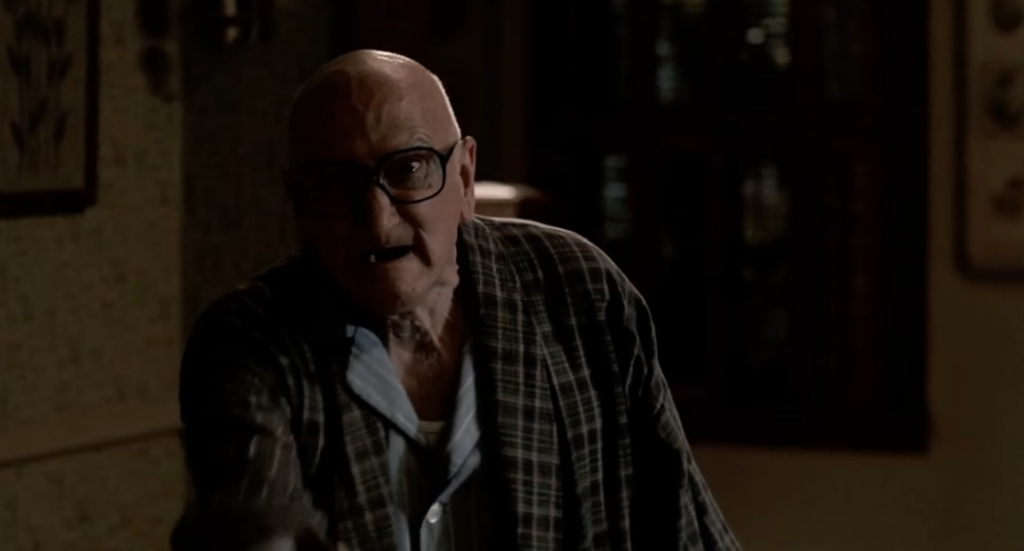
1. “Members Only” The beginning of the end. Eugene Pontecorvo, trapped by the FBI and the mob, hangs himself: a grim foreshadowing that there is no exit. Uncle Junior, lost in dementia, shoots Tony. The King falls.
2. “Join the Club” Tony is in a coma, living as “Kevin Finnerty,” a solar panel salesman who lost his ID. It is a surreal, Lynchian nightmare about identity. Who is Tony without the mob? Just a lost man in a hotel room.
3. “Mayham” The coma continues. The “innocents” (Meadow and Paulie) pull Tony back to life, while the darkness beckons him toward a mysterious house. He chooses life, but the “Kevin Finnerty” ghost haunts him.
4. “The Fleshy Part of the Thigh” Tony recovers in the hospital, surrounded by evangelical pastors and rappers. It’s a cynical look at how everyone tries to commodify suffering. Paulie discovers his “Ma” is actually his aunt, shattering his world.
5. “Mr. & Mrs. John Sacrimoni Request…” Johnny Sack gets a temporary release for his daughter’s wedding. The sight of the once-mighty boss crying as he is dragged away by marshals destroys the myth of the “glamorous gangster” for the crew.
6. “Live Free or Die” Vito Spatafore is outed as gay. The mob’s homophobia takes center stage. Tony tries to figure out a way to keep Vito (a top earner) earning, but Phil Leotardo demands blood.
7. “Luxury Lounge” Chris and Little Carmine go to Hollywood to pitch Cleaver. It’s a satire of the entertainment industry, juxtaposed with Artie Bucco melting down at Vesuvio.
8. “Johnny Cakes” Vito finds a slice of paradise in New Hampshire with a cook named Jim. It’s a heartbreaking “what if” scenario. Vito could have been happy, but he is addicted to the chaos of the life. He leaves peace behind to return to Jersey and his death.
9. “The Ride” The Feast of St. Elzear. Chris relapses on heroin in a scene of terrifying beauty. Paulie sees the Virgin Mary (or a hallucination). The rides are broken, just like the family.
10. “Moe n’ Joe” Vito returns and tries to buy his way back in. It doesn’t work. Meanwhile, Janice tries to mold Bobby into a ruthless mobster, proving she is truly Livia’s daughter.
11. “Cold Stones” Vito is brutally executed by Phil. Carmela goes to Paris and finds it haunting. AJ gets fired from Blockbuster. The walls are closing in.
12. “Kaisha” The Part I finale. Tony manages to spin everything to his advantage. He starts sleeping with Julianna Skiff, Chris’s AA friend. A Christmas episode that feels incredibly bleak.
Part II (The Death Arc)
13. “Soprano Home Movies” One of the series’ best. A bottle episode at a lake house. Tony and Bobby fight. Tony forces Bobby to commit his first murder, staining the one relatively innocent soul left in the crew. The resentment Tony feels for Bobby is palpable.
14. “Stage 5” Cleaver premieres. Tony realizes the movie is a revenge fantasy against him. Johnny Sack dies of cancer in prison: a pathetic, lonely end.
15. “Remember When” Tony and Paulie go on the lam to Miami. Tony contemplates killing Paulie just because he talks too much. It shows how intolerant and paranoid Tony has become.
16. “Chasing It” Tony hits a losing streak in gambling. He alienates Hesh, his oldest friend, over money. When Hesh’s girlfriend dies, Tony only cares about the vigorish. He is soulless.
17. “Walk Like a Man” Christopher is pushed too far by Paulie and Tony. He gets drunk and kills his friend J.T. Dolan simply because J.T. wouldn’t listen to his problems. Chris is too far gone.
18. “Kennedy and Heidi” The pivot. Chris crashes the car. He is injured but alive. He admits he won’t pass a drug test. Tony, seeing an opportunity to be rid of his “burden,” pinches Chris’s nose shut and suffocates him. Tony feels no guilt: only relief. He goes to Vegas and screams “I GET IT!” at the sunrise. He thinks he’s free, but he’s just empty.
19. “The Second Coming” AJ attempts suicide in the pool. Tony saves him, showing a rare flash of fatherly instinct, but then immediately makes it about himself. In New York, Coco harasses Meadow, and Tony curb-stomps him. War is inevitable.
20. “The Blue Comet” The War. Bobby is gunned down in a hobby shop (trapped in his childhood). Silvio is shot and put in a coma. Tony goes to the mattresses. The crew is decimated.
21. “Made in America” (The Finale) The aftermath. Phil is killed (crushed by an SUV, devoid of dignity). Tony meets his family at Holsten’s diner. Don’t Stop Believin’ plays. Meadow struggles to park. The door bell rings. Tony looks up.
Ending Explained: The Cut to Black
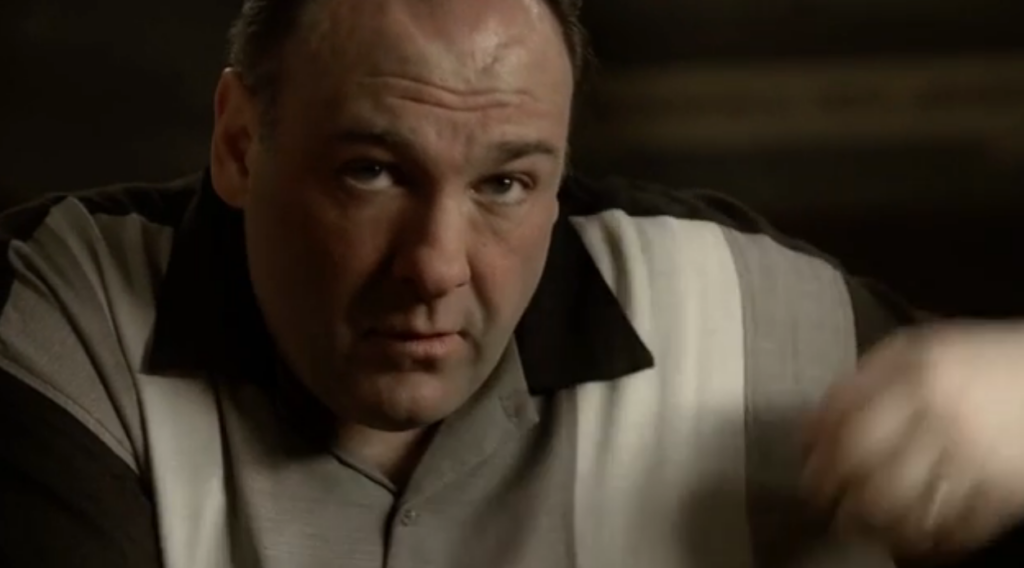
For 20 years, people have debated: Did Tony die?
Yes. As a writer, the structure of the scene tells you everything. Chase establishes a POV pattern:
- The bell rings.
- Cut to Tony’s face looking up.
- Cut to Tony’s POV (who is walking in).
This happens three times. The fourth time:
- The bell rings (Meadow enters).
- Cut to Tony’s face looking up.
- Cut to Black.
The “Black” is Tony’s POV. He is dead. The Man in the Members Only jacket shot him from the 3 o’clock position (a callback to Season 2). As Bobby Bacala said in “Soprano Home Movies”: “You probably don’t even hear it when it happens.”
The silence is the point. There is no cinematic glory, no slow-motion death, no final words. Just the cessation of existence.
Review: The Great American Novel on TV
Season 6 is difficult to watch. It is stripped of the “fun” of the earlier seasons. There is no camaraderie, no loyalty. It is a brutal, honest look at the decay of American institutions (family, religion, enterprise) through the lens of a crime syndicate.
Rating: 10/10. It risks everything by making the protagonist unlikeable. By “Kennedy and Heidi,” you want Tony to die. The show challenges the audience: You rooted for this guy for six years; look at what you cheered for. It is the perfect conclusion to the greatest show of all time.









Post Comment