The Last of Us TV Series: Complete Recap and Ending Explained
The World That Broke Before the Story Began
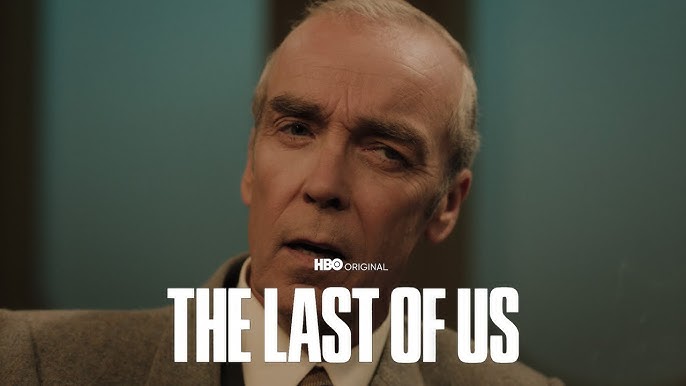
Before we meet our protagonists, the last of us does something quietly devastating: it opens in 1968, on a talk show set, where a soft-spoken epidemiologist warns the audience that the greatest threat to humanity won’t be a virus or a bacterium , it will be a fungus. Specifically, a mutated strain of Cordyceps, a real-world organism that already hijacks the nervous systems of insects. His warning goes unheeded. It always does.
Jump to 2003. The world collapses in roughly 48 hours. We watch it happen through the eyes of Joel Miller , a working-class Texan, a father, a decent man , as he clutches his daughter Sarah and runs through streets that have become a biblical nightmare. Sarah is shot by a soldier following orders to contain the outbreak. Joel screams into the dirt holding her body. The show doesn’t flinch. And in that moment, you understand exactly what kind of man Joel will become over the next twenty years: someone who survived something unsurvivable, and paid for survival with his soul.
The World Twenty Years Later
It is now 2023. The Cordyceps pandemic has reshaped civilization into a patchwork of authoritarian Quarantine Zones (QZs) run by FEDRA, the militarized remnant of the U.S. government, and rebel territories controlled by the Fireflies , a revolutionary group that believes a cure can still be found. Most of America is ruins. Most people are either controlled, dead, or infected.
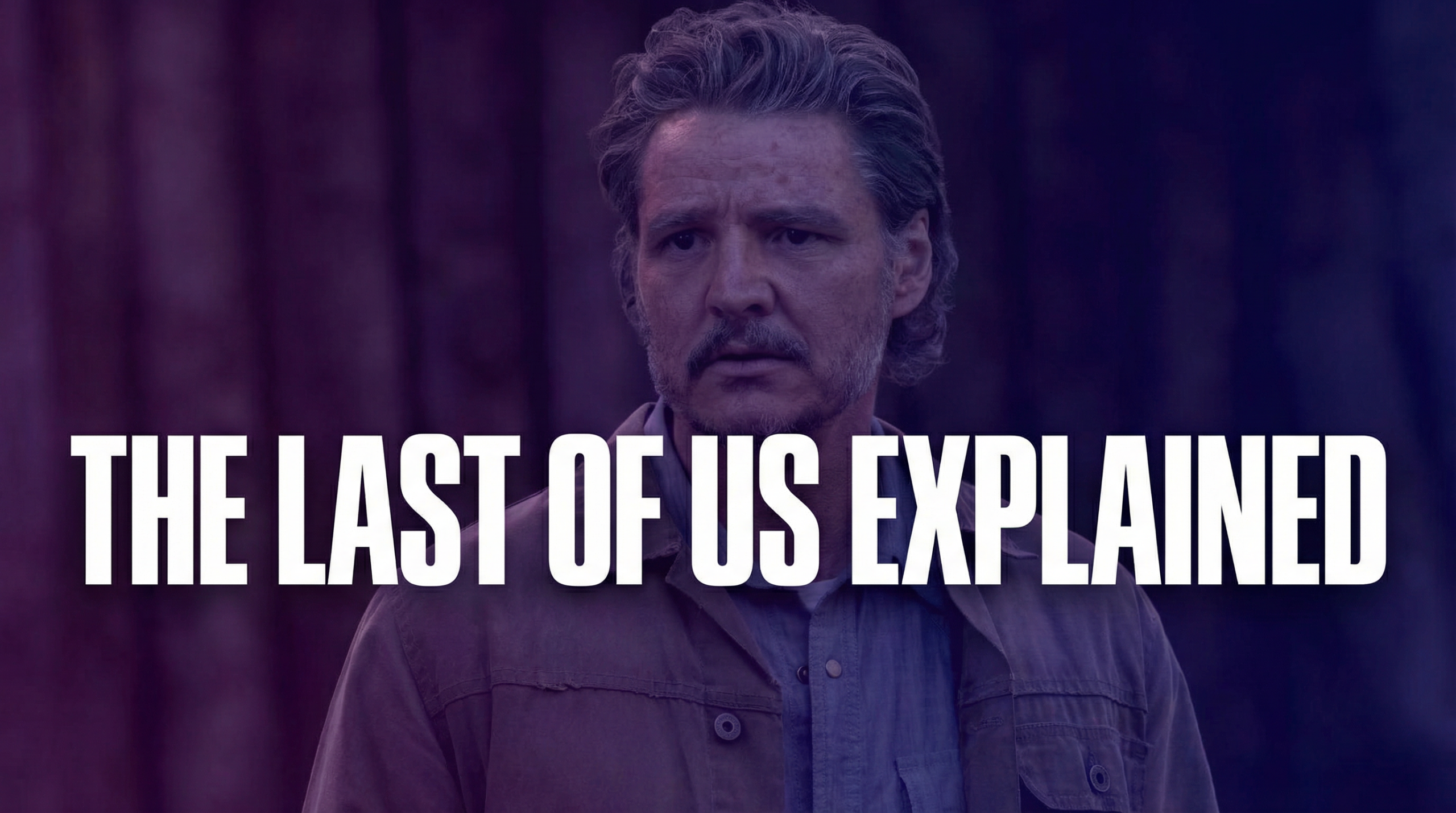
Joel lives in the Boston QZ, running black market deals with his partner Tess. He’s in his fifties now, gray-bearded, hollow-eyed, operating on pure transactional logic. He doesn’t attach. He doesn’t hope. He survives.
Through a smuggling deal gone sideways, Joel and Tess end up in the custody of Marlene, the leader of the Boston Fireflies. She makes them an offer: smuggle a teenage girl named Ellie out of Boston and across the country to a Firefly base in Salt Lake City, and she’ll give them what they want , a truck, supplies, and safe passage west, where Joel’s brother Tommy reportedly lives.
The catch? Ellie has been bitten. She should be turning. She isn’t.
Ellie Williams is immune.
Episode by Episode Breakdown
Episodes 1–2: Boston
Joel and Tess agree to the job reluctantly. When they attempt to take Ellie through the tunnels beneath Boston, Tess is bitten. In a moment of enormous self-sacrifice and perhaps relief , she stays behind to buy Joel and Ellie time, detonating a stockpile of explosives and taking a building full of infected with her. It’s the show’s first great goodbye, and it establishes the emotional grammar of the series: love expressed through sacrifice, almost never through words.
Episode 3: Bill and Frank
This is the episode that made the cultural conversation stop and stare. Detouring from the main story entirely, the show tells the complete life of Bill , a survivalist and misanthrope who built a fortified town in Massachusetts and Frank, the stranger who fell into his garden one day and never really left. It is a 60-minute love story spanning nearly two decades, told with extraordinary tenderness. Bill, who trusted no one, loved Frank completely. Frank, who was dying of a degenerative disease, chose to end his life on his own terms. Bill chose to go with him. They left Joel a note and the keys to everything they owned.
The episode is a thesis statement for the entire series: What are we fighting to survive for? Bill had an answer. Frank was the answer.
Episodes 4–5: Kansas City
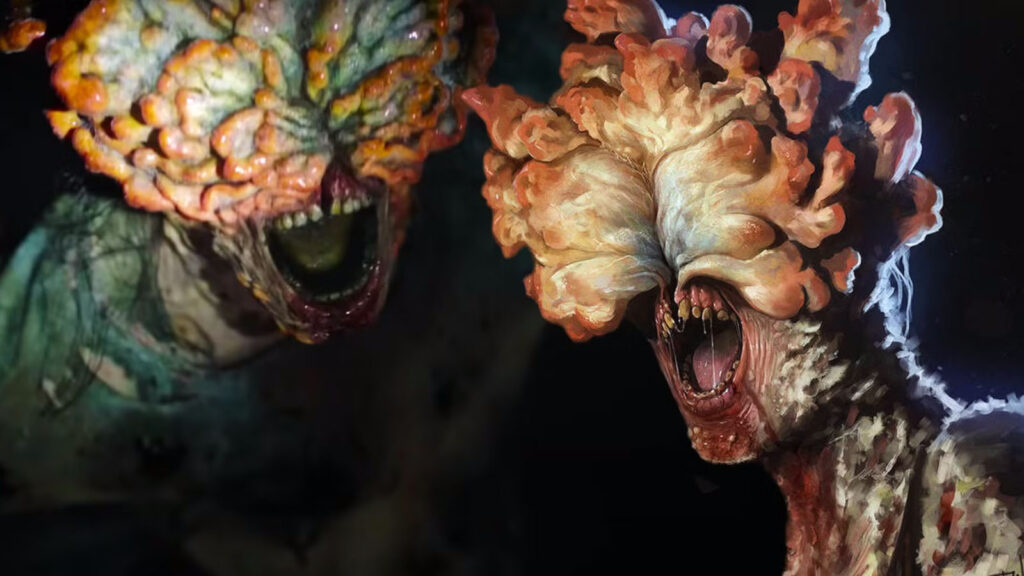
Joel and Ellie pass through Kansas City, which has had its own revolution , the residents overthrew FEDRA and installed Kathleen as their leader. She is intelligent, charismatic, and utterly consumed by vengeance for her brother’s death. The city is also sitting on a massive underground nest of infected, which erupts in a terrifying sequence that includes a colossal Bloater tearing through the chaos. Kathleen dies, swallowed by the swarm. The show’s point is stark: rage, no matter how justified, is not a survival strategy.
Episode 6: Tommy
Joel and Ellie find Tommy in Wyoming, where he has built something genuinely beautiful , a small community, a pregnant wife, the ghost of a normal life. Joel, increasingly aware that his body and nerve are failing him, asks Tommy to take Ellie the rest of the way. Ellie overhears. She confronts Joel alone, and in the most emotionally raw scene of the season, she tells him she is terrified of being abandoned by yet another person who mattered to her. Joel relents. He will take her himself.
Episode 7: Riley
Told in flashback, this episode shows us who Ellie was before Joel , a scrappy, lonely girl in a Boston military boarding school who loved bad puns and Halloween. Her best friend, Riley, had run away to join the Fireflies. Riley returns for one last night together, sneaking Ellie into an abandoned mall. They ride a carousel. They play arcade games. They fall into each other with the hesitant electricity of first love. And then they are both bitten. Riley turns. Ellie doesn’t. The episode is a gut punch because it shows us the precise moment Ellie learned what her immunity costs , watching the person she loved most become something else.
Episodes 8–9: The University and Beyond
Joel and Ellie find the University of Eastern Colorado another Firefly dead end. During an escape, Joel is impaled on rebar and nearly dies. Ellie nurses him through the winter in agonizing, improvised conditions, keeping him alive through sheer will. This is the quiet pivot of the series: Ellie stops being the cargo and starts being the caregiver.
Episode 9 : The Finale: “Look for the Light”
The final episode is where the show crystallizes everything it has been building and delivers one of the most morally complex endings in recent television.
Joel and Ellie arrive in Salt Lake City. They are taken by the Fireflies. Joel wakes up alone to find Marlene waiting. She explains the situation with clinical calm:
Ellie’s immunity is neurological. The mutated Cordyceps in her brain has grown in a way that suppresses the fungal network’s ability to commandeer her nervous system. To extract and replicate this — to create a vaccine , the Firefly surgeons must remove the infected tissue from her brain.
The surgery will kill Ellie. She is already under. She never consented. She never got to say goodbye.
Joel listens. And then Joel acts.
He kills the armed escort. He descends through the hospital, floor by floor, dismantling every Firefly between him and the operating room. He kills the surgeon mid-procedure. He carries Ellie — unconscious, breathing , out of that building and down to a parking garage where Marlene has been waiting.
Marlene makes her case one final time. She is not wrong, exactly. One girl’s life against the possibility of saving millions. The math is clear. But Joel shoots her before she can finish. He shoots her again when she falls. He cannot afford to let her live and come after Ellie.
He puts Ellie in a car. She wakes up. She is wearing a hospital gown and has no memory of the last few hours. He tells her the Fireflies found many others like her, that they had tried to make a cure and couldn’t, that they’d given up. He tells her they are going home to Tommy’s settlement in Wyoming.
Ellie listens. The show lets us watch her face.
She has a gift for reading people , we’ve seen it all season. She asks Joel to swear that everything he told her is true. That the story about the Fireflies is real.
Joel says: “I swear.”
Ellie looks at him for a long moment.
“Okay,” she says.
The screen cuts to black.
The Ending Explained
The finale operates on several simultaneous levels, and its genius is that it refuses to tell you how to feel about any of them.
Joel’s choice is not heroic. It is also not entirely wrong.
The show deliberately refuses to position Joel as a savior. He didn’t storm the hospital to save humanity. He stormed it because he could not lose another daughter. The entire season has been a slow, aching reconstruction of the parent-child bond he lost when Sarah died and Ellie filled that hole so completely that no utilitarian calculus could override it. This is not noble. It is deeply, recognizably human.
The Fireflies were also not entirely right.
Marlene’s plan had real problems. There was no guarantee the surgery worked. No certainty the vaccine could be manufactured or distributed in a collapsed society. And crucially , Ellie never consented. A movement that claims to fight for humanity’s future chose to sacrifice one person’s life and autonomy without asking her. The show threads this carefully: both sides have blood on their hands. Neither side is clean.
Ellie’s “Okay” is not forgiveness. It is a choice.
When Ellie asks Joel to swear, she knows. Not necessarily the full truth, but enough. She is perceptive, she has seen what people look like when they’re lying, and she has heard enough to sense the seams in the story. Her “okay” is not naive acceptance. It is a deliberate choice to extend trust to the only person she has left to step into the future he is offering her, even if she suspects the foundation of it is ash.
It’s the saddest “okay” in television history, because it costs her something to say it. Innocence, perhaps. Or the right to the truth about her own life.
The show asks what survival is actually for.
Bill and Frank answered it with strawberries and wine and a slow dance in the kitchen. Kathleen couldn’t answer it, and it swallowed her. Joel’s answer is Ellie. Ellie’s answer, forming slowly across the season, might be Joel which is exactly why the lie he tells is so enormous. If she is his reason to live, and he is hers, then their entire foundation is built on something she didn’t choose and he won’t admit.
Season 2 will inherit that weight. The lie isn’t a resolution. It’s a fuse.
Season 2
Season 1 ended with a lie. Season 2 begins with its consequences.
The show picks up five years after Joel carried an unconscious Ellie out of Saint Mary’s Hospital, after he murdered his way through a building full of Fireflies and drove away with the weight of possibly dooming humanity in the trunk. Jackson, Wyoming has grown into something that looks almost like civilization , warm lights, community dinners, a guitar on the porch, Tommy and Maria running a settlement that hums with fragile, defiant normalcy.
And in the middle of it all, Joel and Ellie are… not okay. They have the shape of a relationship without the substance. The lie is between them like a wall neither of them has ever quite touched but both know is there.
Season 2 is about what happens when the wall finally comes down.
The New World and Its New Players
Before we return to Joel and Ellie, the show pulls the same structural trick it deployed with Bill and Frank in Season 1 , it tears your eyes away from your protagonists and forces you to look at someone else. And it will cost you.
Season 2 is set twenty-five years into the pandemic, five years after the events of Season 1. The premiere, Future Days, re-establishes Jackson as a thriving but precarious settlement, while also threading a discovery that will become a ticking time bomb: Cordyceps tendrils are growing through the pipes beneath the town’s walls, an underground network invisibly mapping the community from the inside.
But the most important introduction is Abby , played with coiled, devastating intensity by Kaitlyn Dever. We meet her and a small group of former Fireflies camped in a ski lodge overlooking Jackson. They’ve traveled far. They’ve been planning longer.
Abby opens the episode inside a dream: the Salt Lake City Firefly hospital, the hallway, the operating room. A version of herself walks toward it while another warns her not to go in, because “he’s dead” and “his brains are on the floor.” The nightmare wakes her. The mission has not changed.
Ellie and Joel are established with spare, aching precision. There’s a birthday dinner. A new guitar. A gift given across a distance neither of them can quite close.
They’re in the same room but living in separate silences. Joel wants to forgive and be forgiven. Ellie doesn’t yet know exactly what she’s being asked to forgive.
Episode 2: “Through the Valley” , The Death of Joel Miller
Nothing in contemporary television prepared audiences for what Episode 2 delivered. Not intellectually, not emotionally, not structurally. Showrunners Craig Mazin and Neil Druckmann chose to kill Joel early in the season, sticking to the source material’s timeline rather than stretching his presence across more episodes. It is a decision of extraordinary courage and , ultimately , artistic wisdom, even if it takes the entire season to understand why.
The episode operates on two simultaneous tracks. In Jackson, the Cordyceps network in the pipes sends a signal, drawing an army of infected out of the snow and toward the town’s walls. Tommy presides over the counterattack , dousing the horde with flammable liquid, coordinating the defense until a Bloater breaks through the wall and the battle becomes something biblical.
It’s the show’s largest action sequence, impressively mounted, but it functions as terrible misdirection.
Out on patrol, Joel and Dina are caught in a blizzard. They encounter a young woman being chased by infected , a young woman named Abby. Joel saves Abby’s life from a horde of infected, a moment of instinctive heroism that is immediately and grotesquely weaponized against him. She leads them to the lodge where her friends are waiting.
What follows is one of the most brutal sequences in recent prestige television. Abby, fulfilling a promise to kill Joel slowly, shoots him in the leg, then tortures him with a golf club, striking him repeatedly before using her fists. Ellie arrives at the lodge, only to be restrained and forced to watch as Abby delivers the killing blow , a broken golf club shaft through the back of the neck.
Joel’s final words to Abby are: “Just shut the fuck up and do it already.” He meets death with the same hard-jawed defiance with which he survived everything else. It’s all the more devastating that by the time Ellie arrives and is forced to watch, he can no longer speak.
Abby reveals that her father was the Firefly surgeon Joel killed without hesitation in Salt Lake City. She tells him he killed 18 soldiers and one doctor , her father.
The math of Season 1’s heroic ending finally settles its full account.
The episode concludes with Jesse bringing Ellie, Dina, and Joel’s body back to a Jackson in ruins, as Ashley Johnson , who voiced Ellie in the original games and played her mother Anna in Season 1 — performs a haunting cover of “Through the Valley.”
The image of Joel’s wrapped body being dragged across the snow behind three horses is one of the most quietly devastating images the show has ever produced.
Episodes 3–5
The remaining episodes before the finale function as a pressure cooker of loss, rage, and moral disintegration. Ellie, Dina, and Jesse travel to Seattle , following the WLF wolf patch Dina spotted on Abby’s crew to find and kill the people who took Joel. It is framed as a mission. It is really a descent.
Seattle is a city at war with itself. The Washington Liberation Front (WLF) , a secular militant organization operating out of a converted stadium is locked in an ongoing, savage conflict with the Seraphites, a religious cult marked by scars and governed by brutal dogma. The city is a battlefield where ideology and survival have become indistinguishable.
It is not a backdrop. It is an argument. The show is using the WLF-Seraphite war as a mirror for what Ellie is doing showing her, and us, what cycles of revenge look like from the outside when they’ve had decades to fully metastasize.
Ellie is reckless in ways that feel true rather than frustrating , grief does not make people strategic. She’s driven by love and fury in roughly equal measure, neither of which are navigational tools.
Dina, who reveals early on that she is pregnant, becomes the season’s conscience: steady, perceptive, aware of costs that Ellie can’t afford to count right now. Jesse serves a similar function , practical, loyal, gently trying to pull Ellie back from the edge she keeps leaning over.
In one of the season’s most disturbing sequences, Ellie tracks down Nora, one of Abby’s surviving crew. The confrontation takes place in the spore-filled basement of a hospital. It is not clean. It is not heroic. Ellie extracts information through methods that the show doesn’t look away from, and it matters that she doesn’t feel entirely good about it afterward. She is becoming something, and she can feel it happening.
Nora reveals two things before she turns from the airborne spores: Abby’s likely location (an aquarium with a Ferris wheel and a whale mural, somewhere on the Seattle waterfront), and the fact that Abby’s father was the unarmed surgeon Joel killed in Salt Lake City.
This is the information that changes everything for Dina.
Episode 6: The Porch , Everything Joel Never Said
The season’s sixth episode steps outside the present entirely, and does for Joel and Ellie what Season 1’s “Bill and Frank” did for those characters: it traces the full arc of their relationship across five years in Jackson, using Ellie’s birthdays as waypoints. It is the most painful episode of television the show has produced, because it is the episode in which you watch two people almost save each other.
We see them rebuild. Slowly. Imperfectly. Joel tells Ellie the truth on the porch , the whole truth about Salt Lake City, about the lie, about what he chose and why he chose it.
It is the scene the entire first season built toward, and it destroys both of them, and then something even more extraordinary happens: they find a way toward each other anyway. Not easily. Not fully. But enough.
By the time the finale opens, we understand everything that Ellie lost when she watched Joel die not just the man, but the hard-won version of the relationship that had nearly closed the gap the lie had opened.
She was angry with Joel when Abby killed him. And she will carry that unfinished business for as long as she lives.
Episode 7: Convergence , The Finale
The season finale picks up immediately after Episode 5, threading through the aquarium confrontation and hurtling toward a finale that refuses to give anyone what they want including the audience.
Back at the Pinnacle Theater (the group’s base), Jesse tends to Dina’s leg wound while Ellie returns from her encounter with Nora, visibly shaken. Dina is quietly declining alcohol m Jesse notices. The pregnancy, quietly confirmed, hangs over everything.
When Ellie tells Dina the full truth about Salt Lake City, about Joel killing Abby’s father m Dina’s perspective shifts. She had understood Abby’s act as monstrous. Now she sees it as something more complicated. She recognizes the cycle of violence for what it is, and she wants to go home. Ellie cannot.
Out in the city, Jesse and Ellie intercept WLF radio chatter about a sniper —almost certainly Tommy, who has come to Seattle to help. They move to find him, but the moral fault lines between Jesse and Ellie widen with every block. He voted against sending a posse to Seattle. He understands what this is becoming. She does not want to hear it.
Then Ellie spots the aquarium.
Despite Jesse’s protests, Ellie steals a boat and heads toward the waterfront. She is capsized and captured by Seraphites, and is seconds from execution when an alarm diverts her captors saved by coincidence, by the larger war consuming the city around her. She makes it to the aquarium.
Inside, she finds Owen and Mel , two of Abby’s closest friends. She holds them at gunpoint, demanding Abby’s location. She winds up shooting Owen in what she frames as self-defense, and hitting Mel in the neck in the process. Only then does she discover that Mel is heavily pregnant. A dying Mel tries desperately to find a way to save her baby through an emergency C-section, and Ellie who cannot bring herself to act watches her fail.
It is the scene in which Ellie fully, irreversibly breaks bad. She came to Seattle to deliver justice. She has just killed a pregnant woman. The show does not comfort her, and it does not comfort us.
When she returns to the theater, she finds Dina. For a moment, there is the possibility of retreat of going home, of choosing the living over the dead. But the possibility closes almost as soon as it opens.
Abby arrives.
In the final minutes of the finale, Abby confronts Ellie reminding her that she had spared Ellie’s life once before, at the lodge, on the day she killed Joel. Three of Abby’s friends are now dead as a direct result of that mercy: Owen, Mel, and Nora. The equation, Abby’s expression makes clear, no longer balances.
In quick succession, Abby shoots Jesse in the head, holds Tommy at gunpoint, and seemingly shoots Ellie. The screen cuts to black mid-gunshot, and the audience is left in silence.
Then one final scene. A flashback: Abby waking up in Seattle, heading to meet WLF leader Isaac, the stadium headquarters spreading out around her. Text flashes on screen: “Seattle Day One.”
Season 3 will be Abby’s story.
The Ending Explained
Ellie does not die at the end of Season 2. She is a central figure in the second half of the source material that Season 3 will adapt, and her survival is confirmed by the narrative logic of what’s coming. The ambiguity is less about whether she lives and more about what living costs her from here.
Jesse’s death hits precisely because it is sudden and because it comes after a season in which he was the most morally coherent person in the room. He argued against coming to Seattle.
He tried to hold Ellie back. He watched over Dina with quiet, undemonstrative love. The show kills him with the casual cruelty of a city at war, where good people die for no narrative reason except proximity to someone else’s revenge. It is the purest expression of what the season has been arguing all along.
In the source game, after completing Ellie’s perspective of the Seattle story, the narrative wrenches into Abby’s timeline forcing players to reexperience events from the perspective of a character they’ve been encouraged to despise. The show is signaling it will do something structurally similar in Season 3.
We will watch Seattle again, but from inside Abby’s eyes, and we will be asked to feel things we thought we weren’t capable of feeling about her.
This is audacious television architecture. It is also a profound artistic risk, because audiences are attached to Ellie in ways that don’t yield easily. Whether Season 3 can perform the same empathy transplant the game achieved remains one of the most fascinating open questions in prestige TV.
Dina represents everything Ellie is gambling. A future.
A family. A reason that isn’t rooted in the past. Every time Ellie chooses to push further toward Abby , past the point of reason, past the point of safety , she is implicitly choosing revenge over that future. By the finale, Dina has been shot at, dragged across a burning city, watched her best friend become someone she doesn’t entirely recognize, and is carrying a child in the middle of all of it. The show doesn’t resolve her story. It leaves her in the theater, surrounded by the consequences of Ellie’s grief.
Abby killed Joel because Joel killed her father. Ellie went to Seattle because Abby killed Joel. Ellie killed Nora, Owen, and Mel in the process. Abby came back because Ellie killed her friends. Jesse is dead. Tommy is wounded. Dina’s pregnancy is at risk. And Abby who once spared Ellie out of what might have been mercy, or guilt, or some remnant of her own humanity , no longer feels that whatever truce she offered is worth maintaining.
The show is asking a question it has no interest in answering neatly: At what point does the person seeking justice become indistinguishable from the person who wronged them?
Ellie killed a pregnant woman. Abby killed Joel , savagely, deliberately, in front of the person who loved him most. The show doesn’t ask you to weigh these acts. It asks you to recognize that both of these people believe, with absolute sincerity, that they are the one who deserved better.
What Season 2 Accomplished
Season 2 is a harder watch than Season 1 by design. Season 1 was built around love between Joel and Ellie, between Bill and Frank, between Ellie and Riley with violence as the world that threatened it. Season 2 inverts the architecture: it is built around violence, with love appearing only in the cracks, always in danger of being consumed.
Pedro Pascal delivered a performance of such quiet, weary grace across the season including in the flashback episode, where he played a man trying to learn to deserve the second chance he’d given himself , that his absence from the back half of the season registers as a genuine void. Bella Ramsey matched him at every turn, finding a Ellie who is simultaneously harder and more fragile than the teenager we met in Season 1.
And Kaitlyn Dever, largely in the background until the finale, established Abby as a presence of such psychological weight that Season 3’s promise to center her feels less like a risk and more like an inevitability the show has been quietly building toward all along.
Season 2 is not comfortable. It is not cathartic. It ends with a gunshot and a rewind button, and asks you to be patient with a story that will ask more of you than you think you have.
But the best argument that the show is doing something genuinely important is this: after watching Ellie kill a pregnant woman, after watching Jesse die for nothing, after watching Abby shoot people we’d come to care about , the last image isn’t chaos or horror. It’s a text card. A date. A promise that the other side of this story is waiting.
And somehow, you want to know what it says.
Season 3
Season 3 was officially renewed on April 9, 2025 just days before the Season 2 premiere aired.
HBO clearly had confidence in where the story was heading. HBO boss Casey Bloys confirmed a 2027 premiere window, calling it definitely planned for that year. Production is scheduled to commence in April 2026 in Vancouver, British Columbia.
Kaitlyn Dever teased in late January 2026 that she would be heading to Canada within a week to begin preparing for her role.
The defining feature of Season 3 will be its perspective. Season 3 adapts the second half of The Last of Us Part II, focusing entirely on Abby’s journey running concurrently with the events of Season 2, then extending beyond them. Kaitlyn Dever, who was a relatively minor presence in Season 2 (her name appearing in small type in the closing credits), will now carry the season as its central protagonist.
Based on the final shot of Season 2 , Abby inside a WLF stadium on “Seattle Day One” , Season 3 is expected to follow her perspective across the same three-day period Ellie and Dina spent in the city, before expanding into new territory. We already know she killed Joel and then disappeared. Season 3 will show us where she went, why, and what it cost her.
Key new characters expected to arrive are Yara and Lev two Seraphites whose story becomes the emotional engine of Abby’s arc in the game and whose relationship with her mirrors, in many ways, what Joel and Ellie were to each other. Casting calls have confirmed both characters will appear in Season 3.
A Major Creative Change Behind the Scenes
Perhaps the most significant development surrounding Season 3 is one that happened off-camera. Neil Druckmann, co-creator of both the games and the TV series, stepped back creatively from the show on July 2, 2025, returning to his day job running Naughty Dog to oversee production on a new franchise video game. Craig Mazin is now the sole showrunner and writer for Season 3.
This is not a small change. Druckmann’s presence was foundational , he designed the original story and was a primary voice in translating his own vision to television. Mazin is an enormously talented writer, and Season 2 demonstrated his ability to operate at this level independently, but Season 3 will be the first without Druckmann’s direct creative fingerprints.
Whether that creates freedom or loses something essential in translation is one of the season’s most interesting open questions.
Will This Be the Last Season?
Mazin said after Season 2 that completing the narrative in a third season was impossible, adding: “Hopefully, we’ll earn our keep enough to come back and finish it in a fourth.”
However, HBO boss Casey Bloys walked that back somewhat in July 2025, saying Mazin is now weighing whether to finish the story in two more seasons or one longer one. By February 2026, Bloys told Deadline it “certainly seems” like the third chapter will also be the final chapter.
So the most current picture is that Season 3 may well be the end of the road , an ambitious, single-season conclusion that wraps both Abby and Ellie’s stories and brings the full arc of The Last of Us Part II to a close.
The Returning Cast
Confirmed returning cast includes Bella Ramsey as Ellie, Kaitlyn Dever as Abby, Isabela Merced as Dina, Gabriel Luna as Tommy, and Jeffrey Wright as Isaac. The role of Manny has been recast: Jorge Lendeborg Jr. replaces Danny Ramirez, who had scheduling conflicts.
Clea DuVall has joined the cast as a Seraphite member. And while Pedro Pascal’s Joel died in Season 2, the showrunners have left open the possibility of flashback appearances.
What It Will Need to Do
Season 3 faces perhaps the most audacious narrative challenge in the show’s history: asking an audience that has spent two seasons inside Ellie’s grief and rage to climb into the skin of the woman who caused it. The game’s second half achieved this , it remains one of the most controversial and discussed acts of narrative empathy in gaming history , but television is a different medium with different rules of attachment.
If it works, it will be some of the most emotionally complex storytelling HBO has ever produced. If it doesn’t, the series risks losing the audience just as it reaches its conclusion.
Expected premiere: sometime in 2027. Until then, the gunshot is still echoing.













Post Comment