The Complete Guide to Dark Season 3 | Ending Explained
Intro
If Seasons 1 and 2 of Dark were a labyrinth, Season 3 is the moment the camera zooms out to reveal the maze is actually a Möbius strip floating in a void. Netflix’s German sci-fi masterpiece concluded its run not by simplifying its narrative, but by expanding it into a dimensional triptych.
Baran bo Odar and Jantje Friese’s final chapter moves beyond the question of when to the question of what world. Season 3 recontextualizes the entire saga, shifting from a story about time travel to a tragedy about the inescapable grief that binds realities together. It is dense, philosophically heavy, and undeniably brilliant.
The Triquetra and The Knot
The central thesis of Season 3 destroys the binary. For two seasons, we believed in a dual war: Adam (Jonas) wanting to destroy the world to end suffering, and Claudia trying to save it.
Season 3 introduces the third player: Eva (Martha).
World A (Adam’s World)
The world we know. Jonas is the protagonist.
World B (Eva’s World)
The mirror world introduced at the end of Season 2. Here, Jonas was never born. Martha is the protagonist, and she becomes Eva.

The Knot
The two worlds are inextricably linked in a feedback loop of cause and effect. Adam seeks to sever the knot (oblivion); Eva seeks to preserve it (eternal life for their child).

Episode-by-Episode Breakdown
Episode 1: Deja-vu
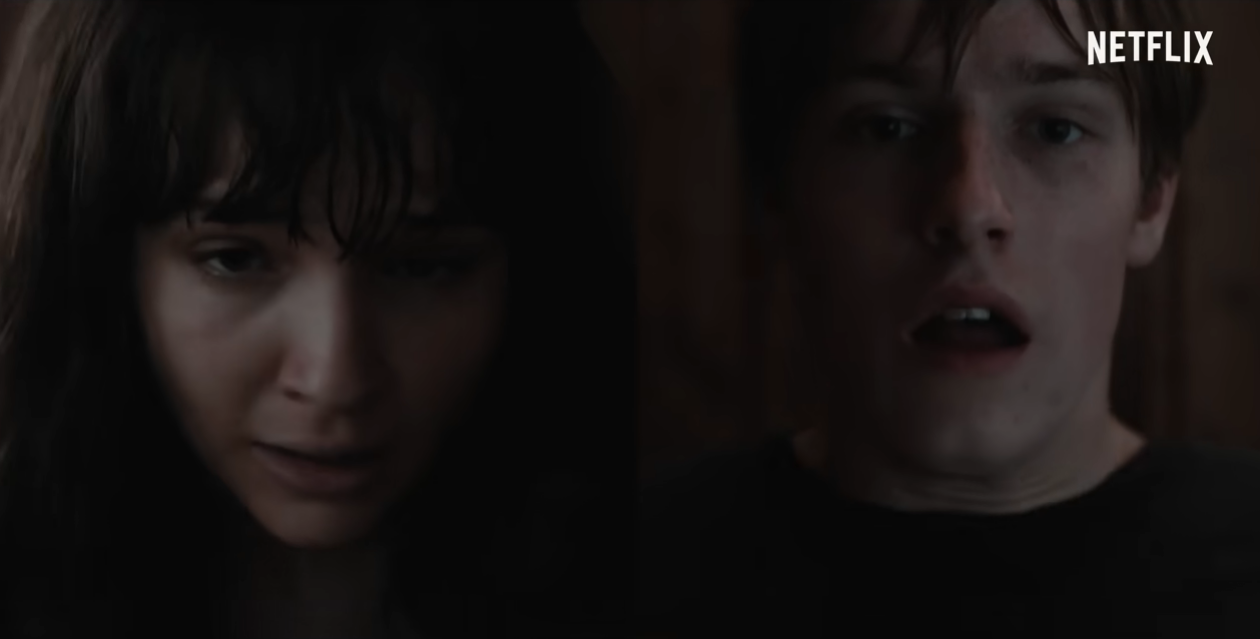
The season opens by dropping us into Eva’s world (World B). It is a distorted mirror of Winden: Ulrich is divorced, Hannah is married to Ulrich (and pregnant), and Franziska is deaf instead of Elisabeth.
The key takeaway is the absence of Jonas. Without him, the loop still exists, but the players have shifted positions. We meet “The Unknown”: a trio of men (child, adult, elder) with cleft lips who move through time ensuring the apocalypse happens.
Episode 2: “The Survivors”
We return to World A. The narrative splits between the 1888 timeline (where adult Jonas, Magnus, Franziska, and Bartosz are stuck) and the post-apocalyptic 2020.
The 1888 group is trying to build the particle machine, but trust is eroding. In 2020, we see the visceral horror of the apocalypse’s aftermath as Peter and Elisabeth struggle to survive. This episode cements the despair that turns Jonas into the cold, scarred Adam.
Episode 3: “Adam and Eva”
The show lays its cards on the table. We learn that the older Martha in World B is “Eva,” the leader of the secret society Erit Lux (counterpart to Sic Mundus).
She manipulates events to ensure her younger self follows the path to becoming her. We also learn the cleft-lip trio is the son of Jonas and Martha—the biological bridge between the two worlds.
Episode 4: “The Origin”
This episode explores the “Unknown” (the cleft-lip trio). We see them orchestrating key events across history (burning Sic Mundus headquarters, triggering the nuclear power plant accident). In World B, the apocalypse approaches.
The tragic romance of Jonas and Martha is replayed in reverse: Jonas (from World A) tries to teach Martha (World B) how to change things, only to realize they are puppets in a play they’ve enacted infinite times.
Episode 5: “Life and Death”
A heavy character study. In World A (post-apocalypse), Peter Doppler is brutally murdered protecting his daughter, a necessary trauma that hardens Elisabeth into the warrior we met in Season 2.
In 1987, Katharina attempts to rescue Mikkel from the mental asylum but is killed by her own mother, Helene Albers: a bootstrap paradox where the daughter names her mother after the woman she killed (Katharina).
Episode 6: “Light and Shadow”
The “quantum superposition” episode. We learn how Jonas can be dead in one reality and alive in another. During the apocalypse, time stands still for a nanosecond. Eva uses this fraction of a second to split reality: in one branch, alt-Martha saves Jonas; in the other, she doesn’t.
This explains how Adam exists while alt-Martha also saw Jonas die. It is the mechanics of the knot revealed.
Episode 7: “Between the Time”
The penultimate episode spans decades, filling in the final gaps. We see the looped life of the “Unknown,” the rise of H.G. Tannhaus, and the final moves of the chess game.
Adam launches his “final” plan: he captures the pregnant Martha and kills her with the energy of both apocalypses, believing this will destroy the Origin. It fails. The loop continues.
Episode 8: “The Paradise” (Series Finale)
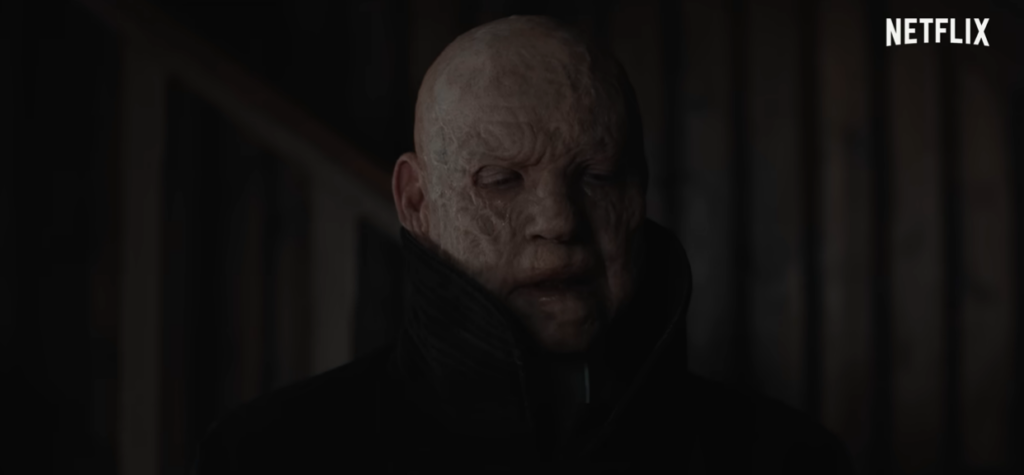
Adam is stunned that his plan failed. Claudia (the White Devil) arrives and reveals the truth: Adam and Eva are fighting a war that cannot be won because their worlds are mistakes.
- The Twist: There is a Third World (The Origin World).
- The Resolution: Jonas and Martha travel to the Origin World, specifically to the night H.G. Tannhaus’s family died in a car crash. They prevent the crash.
- The Consequence: By saving Tannhaus’s family, he never invents time travel. The knot is untied. Jonas, Martha, and their respective worlds dissolve into nothingness.
The Ending Explained
The ending of Dark is a masterclass in Anti-Existence.
H.G. Tannhaus, in the real world, built a machine to save his son, daughter-in-law, and granddaughter from a car accident. When he activated it, he accidentally split his reality, creating two unstable copies (World A and World B) where the trauma of loss was encoded into the DNA of the universe.
Claudia realized that to end the loop, they didn’t need to fix World A or B; they needed to prevent them from being created. Jonas and Martha are the glitch that can enter the Origin World.
The final scene takes place in the Origin World. The characters present are those not born of the time-travel paradox.
Survivors: Regina, Katharina, Hannah, Peter, Benni, Wöller.
Erased: Jonas, Martha, Ulrich, Mikkel, Charlotte, Elisabeth, Noah, Agnes. (They never existed because their lineage depended on time travel).
At the dinner table, Hannah is pregnant. She looks at a yellow raincoat and has a moment of recognition. She decides to name her child Jonas. It implies that while the worlds are gone, a resonance of their love remains.
Review
Narrative Architecture
Dark Season 3 is a feat of engineering. The writers managed to balance three timelines across three worlds while maintaining emotional continuity. The shift from “Man vs. Time” to “Man vs. Destiny” was handled with gravitas. While the middle episodes (4-6) can feel dense with exposition, the payoff in the finale is mathematically perfect.
Cinematography & Aesthetics
The visual distinction between the worlds: World A’s dreary, rain-soaked tones vs. World B’s fog-laden, amber hues, is subtle but effective. The imagery of the dust resolving into light as the characters fade away is hauntingly beautiful.
Performances:
- Louis Hofmann (Jonas) and Lisa Vicari (Martha) anchor the season with a tragic chemistry that transcends the confusing plot.
- Julika Jenkins (Claudia) is the MVP. Her transformation from a secondary antagonist to the omniscient savior is the season’s strongest arc.
The Flaws
The pacing in the first half is frenetic. The introduction of the “Unknown” trio, while thematically interesting, felt slightly less developed than the main cast. The mechanism of “quantum entanglement” (the switch point) is a bit of a “Get Out of Jail Free” card for the writers, though it fits the sci-fi logic.
Final Score: 9.5/10
Dark sticks the landing. It avoids the Lost trap of empty mysteries and the Game of Thrones trap of rushed character beats. It ends on a note of bittersweet melancholy that feels earned. It is, unequivocally, one of the greatest sci-fi series of the 21st century.









Post Comment