A Knight of the Seven Kingdoms 2026 Season 1 Review | Ending Explained
Recap
Operating as a beautiful, intimate counter-programming to the sprawling, apocalyptic stakes of Game of Thrones and House of the Dragon, A Knight of the Seven Kingdoms series shrinks the epic scale down to the dirt-level perspective of a single, towering man.
The season opens with Ser Duncan the Tall (Peter Claffey), a massive, somewhat naive, but inherently decent lowborn squire who recently buried his master, Ser Arlan of Pennytree.
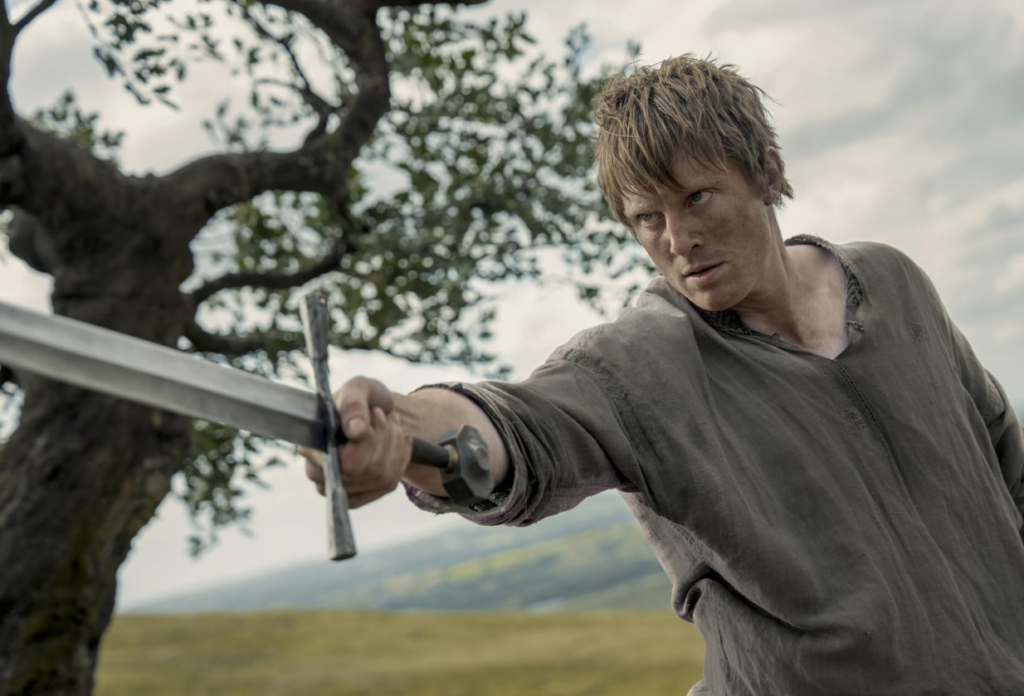
Taking up his master’s sword, armor, and horses, Dunk decides to masquerade as a hedge knight and forge his own destiny at the tourney at Ashford Meadow.
His journey takes an immediate pivot when he crosses paths with a bald, insolent, yet preternaturally intelligent boy named Egg (Dexter Sol Ansell), who aggressively insists on becoming his squire.
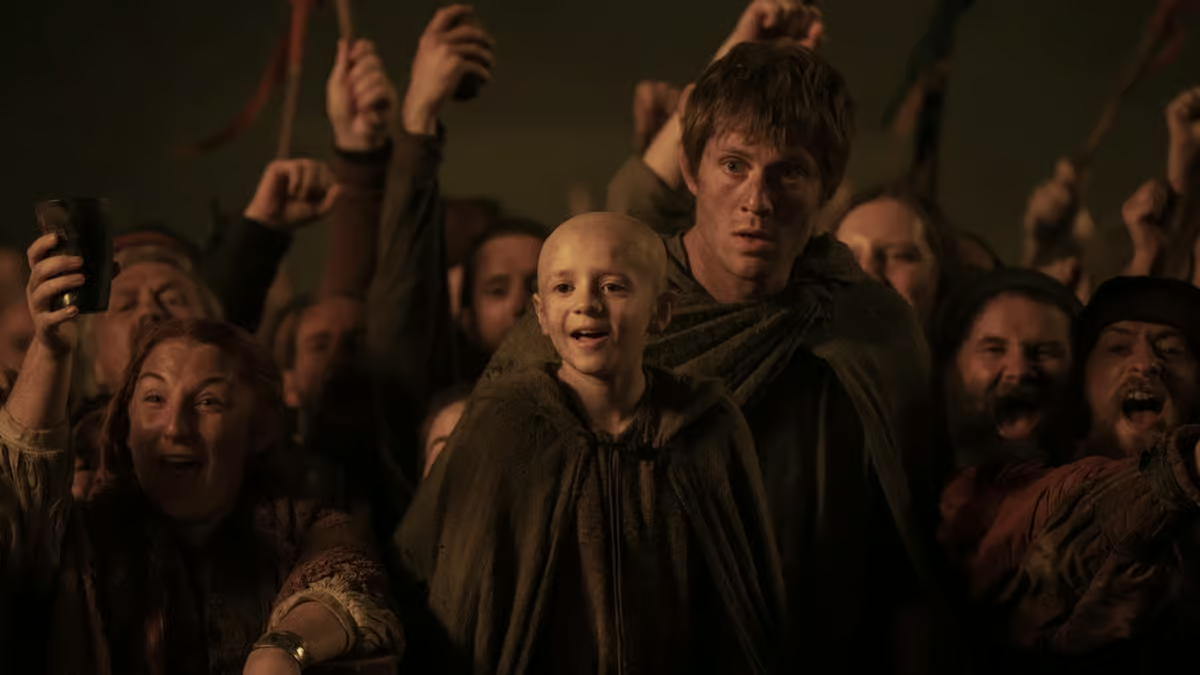
The dynamic between the golden-retriever-esque Dunk and the sharp-tongued Egg forms the emotional and thematic spine of the series.
Dunk is completely out of his depth among the pompous lords and seasoned warriors at Ashford, struggling to secure a sponsor just to compete.
He finds unexpected allies in the honorable Prince Baelor Targaryen (Bertie Carvel) and the boisterous Ser Lyonel Baratheon, but he also draws the eye of the royal family’s darkest elements.
The inciting incident of the series occurs when the cruel, sadistic Prince Aerion “Brightflame” Targaryen viciously attacks a Dornish puppeteer named Tanselle.
Dunk’s inherent sense of justice overrides his common sense, and he physically assaults the royal prince to stop the abuse, a crime strictly punishable by death or severe mutilation.
To save Dunk from immediate execution, Egg is forced to reveal his true identity: he is Prince Aegon Targaryen, Aerion’s younger brother.
This revelation forces a Trial of Seven, an ancient, brutal, and rarely invoked form of trial by combat where seven champions fight on each side.
Dunk is tasked with the seemingly impossible challenge of scouring the tourney grounds to find six knights willing to risk their lives and incur the wrath of the Crown to defend a lowly hedge knight.
The tension builds agonizingly as Dunk secures a ragtag team of outcasts and honorable men, only to be left one man short as dawn breaks.
In a moment that redefines Targaryen history, Prince Baelor, the Hand of the King and the heir apparent to the Iron Throne, steps forward to fight for Dunk, drawing his blade against his own family members because he recognizes the fundamental truth of Dunk’s innocence.
The Ending Explained
The climax of Episode 5 is where the series delivers its most devastating blow, blending visceral, muddy combat with a tragic twist of fate that alters the landscape of Westeros forever.
The Trial of Seven itself is chaotic and terrifying. Dunk is immediately unhorsed and severely beaten by Aerion.
The show makes a bold structural choice here, intercutting Dunk’s brutal beating with an extended, 20-minute flashback to his traumatic childhood in the slums of King’s Landing’s Flea Bottom. We witness the horrors of the First Blackfyre Rebellion’s aftermath and the murder of Dunk’s childhood friend, Rafe, which reveals the origin of Dunk’s morality and exactly how a drunken Ser Arlan originally saved him.
Bolstered by the memory of his past and the echoing sound of Egg screaming for him to stand up, Dunk sheds the restrictive, elegant combat style of highborn knights.
He resorts to brawling with Aerion using his sheer size and Flea Bottom street-fighting tactics. Dunk violently beats Aerion into submission, forcing the prince to publicly yield and withdraw his accusation, effectively winning the trial and securing his own freedom.
The euphoria of Dunk’s hard-fought survival is immediately shattered in the episode’s final moments. While the casualties on Dunk’s side were seemingly minimal during the actual melee, the true cost of the trial is revealed when the dust settles. Prince Baelor approaches Dunk to congratulate him.
During the fight, Baelor fought defensively against his Kingsguard and his brother, Prince Maekar, expecting their familial bond to temper the violence.
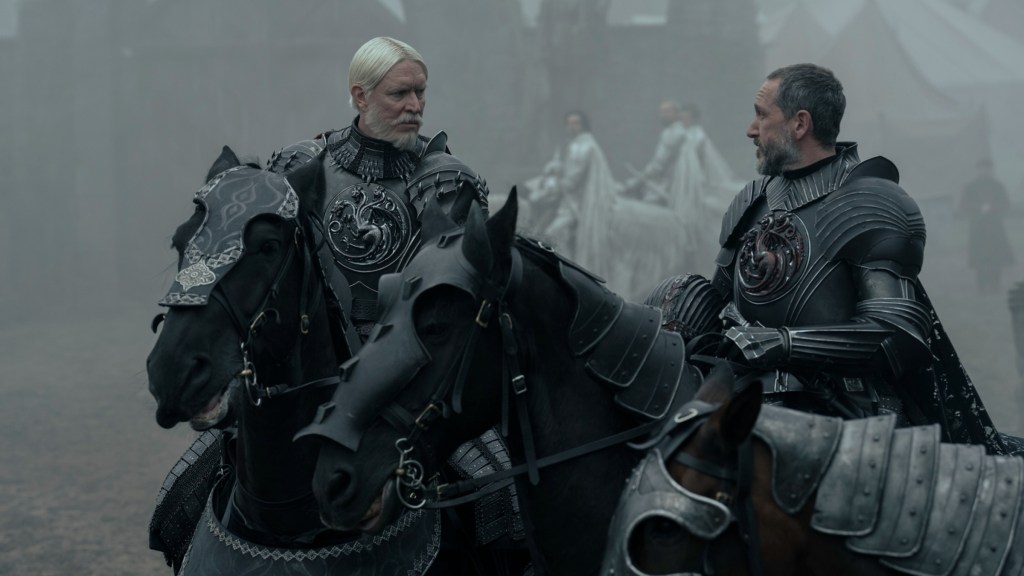
However, as Baelor asks for assistance in removing his battered helm, he reveals a catastrophic, fatal wound to the back of his head. He was struck accidentally by the mace of his own brother, Maekar, in the blind heat of the melee.
Baelor collapses and dies directly in Dunk’s arms.
Baelor Targaryen was widely considered the absolute best of his bloodline, a just, brilliant, and noble man who would have undeniably made a legendary king. His sudden death completely destabilizes the Targaryen line of succession.
By stepping into the mud to save a lowly hedge knight simply because it was the honorable thing to do, Baelor sacrificed himself and permanently altered the course of Westerosi history. The episode ends on this somber, world-shattering note, leaving Dunk victorious but carrying the immense, crushing guilt of the Crown Prince’s death.
Review
A masterclass in scaled-down storytelling that trades apocalyptic spectacle for character-driven charm, proving that the Game of Thrones universe can thrive without dragons.
With a Rotten Tomatoes critics’ score holding remarkably steady at 94-95%, A Knight of the Seven Kingdoms currently boasts the highest-rated debut season of any show in the Game of Thrones franchise. Critics have almost universally praised showrunner Ira Parker’s decision to shrink the scope of the world.
Instead of kingdom-shattering wars, the narrative operates as a medieval buddy-comedy infused with gritty realism.
Reviewers have highlighted the electric, heartwarming chemistry between Peter Claffey’s bumbling, golden-retriever-esque Ser Duncan the Tall and Dexter Sol Ansell’s sharp-tongued Egg.
Critics have noted that this slice of life approach is the palate cleanser the franchise desperately needed. The cinematography and action choreography have also drawn praise for their muddy, The Last Duel-style brutality, which grounds the violence in physical exhaustion rather than CGI spectacle.
For the critical establishment, the show’s lack of dragons, White Walkers, and world-ending prophecies is its greatest strength, allowing the fundamental humanity of George R.R. Martin’s writing to shine through.
The Audience Divide
While critics immediately embraced the tonal shift, the general audience reception has been much more volatile, reflecting a fascinating divide in the viewership base. Initially, the Rotten Tomatoes audience score plummeted into the mid-60% range following the premiere.
Reading through audience forums and aggregator reviews, the disconnect is obvious: many casual viewers tuned in expecting the Machiavellian betrayals and massive set pieces of its predecessor shows. Some audience members review-bombed the early episodes, labeling the slower pacing “boring,” the tone “too corny,” and the smaller scale a sign of cheap production.
However, die-hard fans of the original novellas aggressively defended the show for being incredibly faithful to the source material.
This created a tug-of-war in the ratings during the first three weeks, highlighting the difficulty of pivoting a massive intellectual property away from the formula that made it a global phenomenon.
The Episode 5 Phenomenon
If the early episodes alienated the casual viewership, the back half of the season violently pulled them back in. The audience score has recently surged to 77% and continues to climb, driven entirely by the intense payoff of Episode 4 (“Seven”) and Episode 5 (“In the Name of the Mother”).
The Trial of Seven provided the brutal, high-stakes action that the mainstream audience was craving, but because the show spent three episodes meticulously building Dunk and Egg’s relationship, the emotional weight of the combat hit harder than a massive dragon battle.
Episode 5 has become an absolute juggernaut on IMDb, sitting at a staggering 9.8/10 based on tens of thousands of votes. This places “In the Name of the Mother” in the elite, top-five echelon of all Game of Thrones episodes ever produced, directly tying with legendary installments like “Hardhome” and sitting just below “Battle of the Bastards” and The Winds of Winter.
Audiences who initially complained about the slow start are now praising the show for delivering one of the most devastating and well-earned character deaths in the franchise’s history.











Post Comment