Tony Soprano’s Hallucination Explained: Isabella, Lithium, and the Mind Under Collapse
The Lithium Dream
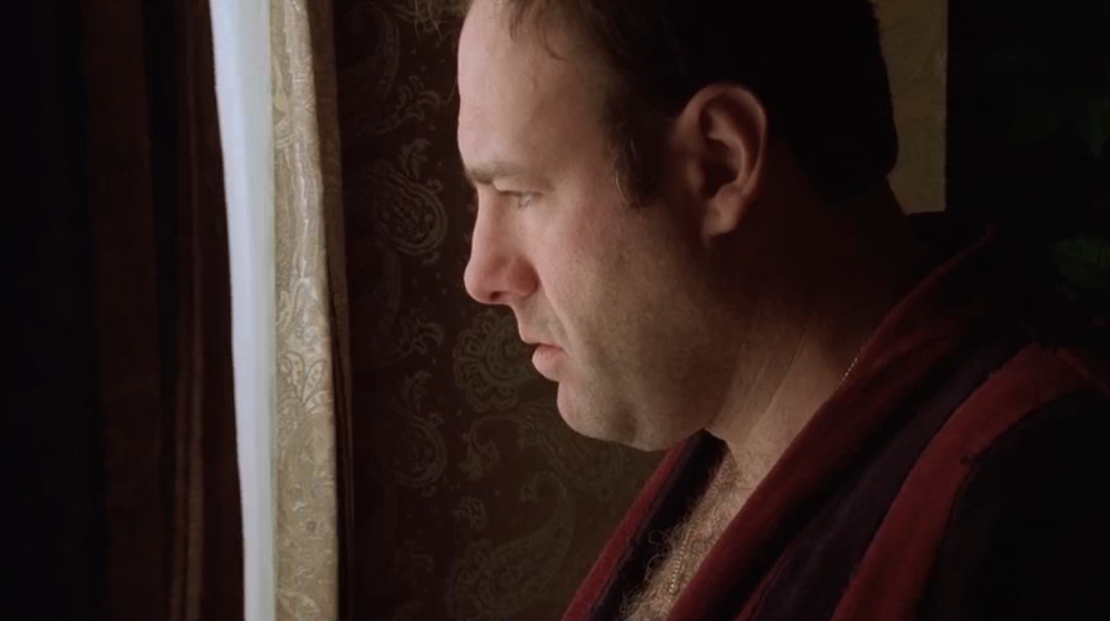
In the penultimate episode of The Sopranos Season 1, titled “Isabella,” David Chase presents us with one of the most pivotal psychological events in the series. Tony Soprano, suffering from a debilitating depressive episode, is prescribed Lithium. Shortly after, he becomes entranced by a beautiful Italian exchange student staying at the Cusamanos’ house next door.
She is named Isabella. She is serene, traditional, and maternal. And, as we discover in a jarring third-act reveal, she does not exist.
From an editing and narrative standpoint, this wasn’t just a plot twist to show side effects of medication; it was a subconscious cry for help. Isabella is the physical manifestation of the one thing Tony craves but has never had: a nurturing mother.
Who is Isabella?
To understand the hallucination, we must profile the phantom. Isabella is not a sexual object in the traditional sense of Tony’s goomar lifestyle; she is an archetype.
Isabella represents the Jungian ideal of the “Good Mother.” She is often seen hanging laundry (domesticity) or tending to a baby (nurturing). She is earthy, Italian, and soft-spoken everything Tony’s real mother, Livia, is not.
The Contrast
Livia Soprano is the Devouring Mother: caustic, cynical, and emotionally barren. Isabella is the antidote. Tony’s mind, fractured by the realization that his real mother is a source of toxicity, fabricates a replacement to soothe his psyche.
There is a crucial scene where Tony hallucinates Isabella having lunch with Livia. In this fantasy, Livia is pleasant, smiling, and engaging with Isabella.
This is Wish Fulfillment. Tony isn’t just hallucinating a pretty girl; he is hallucinating a world where his mother is capable of love. He projects the warmth of Isabella onto Livia, trying desperately to reconcile the monster he knows with the mother he needs.

📂Don’t just watch the show, analyze it. Grab Dr. Melfi’s confidential ‘Psychological Dossier’ on Tony (and the truth about the ending) here
The Physiology of the Fugue State
From a medical and editing perspective, the Isabella sequences are shot differently. They are hazy, sun-drenched, and slightly over-exposed, mimicking the numbness of a Lithium high.
The show attributes this to Lithium toxicity, but psychologically, the drugs merely lowered Tony’s defenses. The depression had stripped him of his usual armor (anger, violence, sex), leaving him raw. In this vulnerable state, his subconscious was able to override reality. The hallucination was a defense mechanism against the crushing weight of his depression: a way for his mind to generate serotonin when his biology could not.
The Subconscious Warning
The timing of Isabella’s appearance is not coincidental. She appears immediately prior to the assassination attempt on Tony’s life: a hit ordered, effectively, by his own mother.
The Guardian Angel Theory: Psychologically, Isabella serves as a “Sentinel.”
- The distraction: Her presence lifts Tony out of his catatonic state.
- The alert: While she distracts him, she also wakes him up. By engaging with her (and the subsequent realization of his vulnerability), Tony’s survival instincts are reactivated.
When the hitmen (Boyz II Men) attack Tony, the “fog” of the Lithium and the hallucination shatters instantly. The violence snaps him back to reality. It is a violent rebirth. The “Good Mother” fantasy dies so the predator can survive.
The Shattering of the Illusion
The reveal when Cusamano tells Tony there was no exchange student is the moment the tragedy solidifies.
When Tony realizes Isabella wasn’t real, he isn’t just embarrassed; he is bereft. It confirms that the “Good Mother” is a fiction. He is left with the cold reality of Livia, who is currently in the hospital faking dementia after trying to have him killed.
Isabella was Tony mourning the mother he never had. Her disappearance marks the end of his innocence regarding Livia. Following this episode, Tony’s relationship with his mother shifts from frustrated son to active adversary. He stops looking for Isabella in Livia and starts seeing Livia for who she truly is.
Isabella remains one of the most sophisticated hours of television because it uses a hallucination not to confuse the audience, but to clarify the protagonist’s internal damage. It shows us that Tony’s greatest enemy isn’t the FBI or New York: it’s the void where a mother’s love should be.